
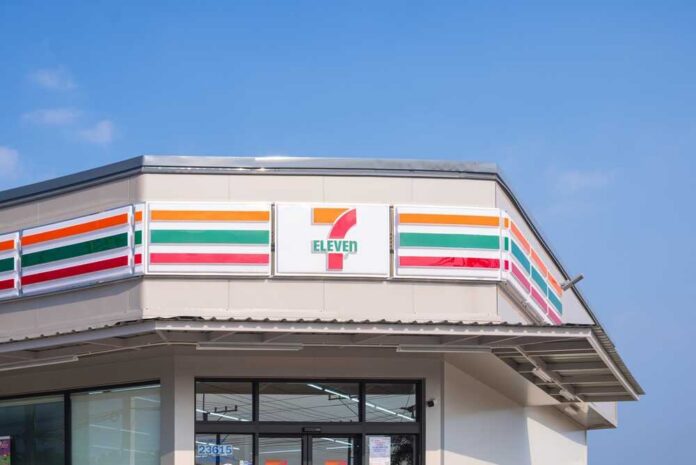
7-Eleven, the iconic 99-year-old convenience chain, plans to shutter 645 North American stores next year, signaling a radical pivot that could redefine quick-stop shopping forever.
Story Snapshot
- 7-Eleven targets 645 closures in fiscal 2026 (March 2026 start), opening only 205 new stores for a net loss of 440 locations.
- Parent Seven & i Holdings drives portfolio optimization amid traffic drops, inflation, and food trend shifts.
- Closures hit underperformers unable to adapt; some convert to wholesale fuel sites not counted in store totals.
- Net footprint shrinks to 12,272 stores from over 13,000, prepping for 2027 IPO.
- Strategic evolution from snacks-and-soda to food-focused hybrids battles rivals like Sheetz and Wawa.
7-Eleven’s Closure Announcement Details
Seven & i Holdings disclosed in Q4 earnings filings that 7-Eleven will close 645 North American stores during fiscal 2026, starting March 2026. The chain opened 205 new locations in the same period, reducing its store count to 12,272 from more than 13,000.
Some closures convert sites into wholesale fuel outlets, which are excluded from convenience store counts. This follows over 600 closures combined in 2024-2025.
Past actions included 444 U.S. and Canada closures in 2024 alone, representing 3% of the base. Inflation eroded margins, weaker traffic hurt sales, and consumers shifted behaviors. Underperformers failed to meet demand for prepared foods and beverages, which are core to sector growth.
Historical Roots and Evolving Challenges
Founded nearly a century ago, 7-Eleven dominates U.S. convenience retail with over 13,000 North American sites under Japanese parent Seven & i Holdings.
The chain pioneered quick access to essentials like snacks, drinks, and fuel. North American operations now lag, with softer performance and declines in customer traffic. Rivals like Sheetz and Wawa thrive by integrating high-quality food offerings, coffee, and seating.
7-ELEVEN CLOSING STORES | The shift reflects a broader trend in the convenience store industry.https://t.co/XvELdksBh2
— WPEC CBS12 News (@CBS12) April 15, 2026
Portfolio reviews began pre-2024, targeting sites mismatched to trends. Fuel and tobacco remain staples, but prepared foods drive industry expansion.
NIQ’s 2024 State of Convenience report underscores this shift, putting pressure on legacy models. 7-Eleven responds with remodels and large-format designs emphasizing meals over mere convenience.
Stakeholders Driving the Restructuring
Seven & i Holdings announces closures through earnings and filings, prioritizing efficiency and 2027 IPO readiness. 7-Eleven executes by evaluating stores for remodels, closures, or conversions.
Executives focus on profitability amid drops, adapting to food-heavy demands. Analysts like eMarketer’s Blake Doersch call it a transformation, not a contraction—closing more than opening reflects a hybrid evolution.
Power rests with Seven & i as parent; 7-Eleven handles operations. This aligns with common-sense business: prune weak links to strengthen the chain. Optimistic views see evolved fleets meeting consumer needs; pessimistic ones flag regional weakness, though facts tie moves to strategy over distress.
Popular convenience store chain to close hundreds of stores https://t.co/UOCSukPkEm
— FOX Business (@FoxBusiness) April 15, 2026
Impacts on Jobs, Communities, and Industry
Short-term, net 440-store cuts streamline operations and cut costs. Long-term, a leaner, food-centric footprint boosts competitiveness and supports IPO valuation.
Employees at closing sites face layoffs; communities lose quick access, especially in underperforming areas. Specific locations remain undisclosed, limiting precise effects.
Economically, job losses hit local economies, but sector efficiency rises with food integration. Socially, convenience gaps emerge in rural or low-traffic spots. Broader trends favor adaptable chains; Sheetz and Wawa could capture share if 7-Eleven stumbles.
Sources:
Iconic 99-year-old convenience store chain closing 645 stores
Popular convenience store chain to close hundreds of stores
7-Eleven closing hundreds of stores in major shakeup as convenience chains lean into food
7-Eleven closing stores strategy shift locations