

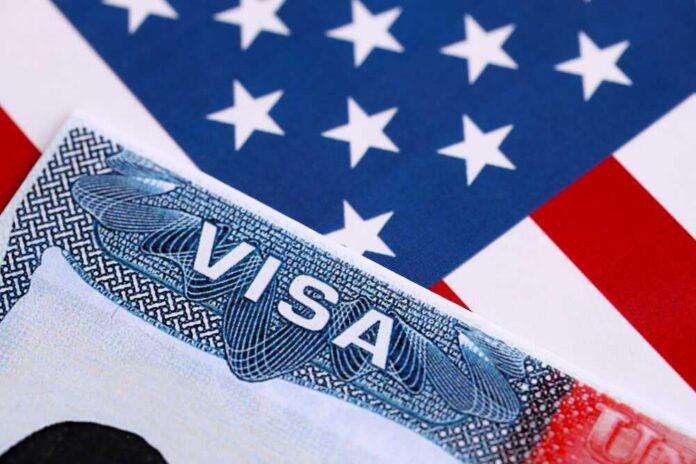
The State Department is moving to cancel up to 200,000 visitor visas tied to asylum filings, and the scale alone will reset how America polices its front door.
At a Glance
- Officials signaled a rolling plan to revoke B1/B2 visas for recent asylum applicants.
- State already reported more than 175,000 visas revoked this month across multiple grounds.
- Law grants wide discretion to revoke visas at any time for cause or in the national interest.
- Advocates warn mass actions risk weak notice and due process for some targets.
What is happening and who is affected
State Department officials described a plan to cancel B1/B2 visas from foreigners who entered for short stays and then sought asylum. Reporting tied the move to documents obtained and to two U.S. officials. A spokesperson said revocations will be “rolling,” with numbers staying “dynamic” as cases are screened.
The target pool could reach 200,000, the largest mass visa revocation in U.S. history by count. The action focuses on business and tourist visas, not work or student categories.
The government’s logic is straightforward: a visitor visa is for a brief, specific purpose. Filing for asylum after entry can signal the visa was not used as intended. That does not judge the asylum claim itself.
It asks a narrower question tied to visa rules: would officers have issued a short-term visitor visa if they had known the person planned to seek protection and remain? Secretary of State Marco Rubio has framed the standard as, “If we knew then what we know now, would we have let them in?”
Trump admin to target 200,000 foreigners in largest mass visa revocation ever: report https://t.co/rOXCrkHDg3 pic.twitter.com/xf8G8B5PSW
— New York Post (@nypost) August 25, 2026
The legal muscle behind mass revocations
Federal law gives the Secretary of State and consular officers broad power to revoke visas at any time. The Congressional Research Service explains the statutes that control issuance, refusal, and revocation, including the Secretary’s discretionary authority under the Immigration and Nationality Act.
The State Department recently underscored that power in a public release announcing more than 175,000 visa revocations for fraud, threats, and other violations, setting a record of visible enforcement momentum. Courts also recognize a narrow scope of judicial review of revocations in most settings.
Critics often ask whether mass efforts mean sloppy process. Government watchdog work shows revocation starts with a lawful base. The Government Accountability Office has documented the revocation process and its gaps, noting the Secretary, consular officers, and immigration officers can trigger it, while urging clear steps to close weaknesses.
That history supports revocation as a normal tool, though it also reminds agencies to keep notice, records, and interagency checks tight.
Asylum, visitor visas, and the policy line
The policy bet is that channeling asylum through short-term visas distorts a system built for quick visits, not open-ended stays. Other countries have faced similar surges when visitor pathways ease, and they responded by tightening.
The United Kingdom reported visitor visas accounted for a large share of asylum claims and then moved to curb abuses of that route. Those examples bolster the view that visa type should match intent, and misalignment invites strain at the border and in courts.
BREAKING: Trump administration to revoke up to 200,000 B1/B2 visas of asylum seekers.
Targets visitors who “came as tourists but filed for asylum.”
Nigerians and other nationals could be affected.
Largest mass visa revocation in US history if implemented.#US #Nigeria #Visa— Negritude Edge (@IdumonzaI) August 25, 2026
Americans will ask the simple question: does this put the rule of law first? The statute says yes; the Secretary can revoke. The policy goal—protecting a visitor system from becoming a back door—aligns with that. The prudence test is execution.
If the State Department conducts truly individualized screenings, documents the reasons, and offers clear notice, this reads as tough, fair enforcement. If it relies on loose database flags without a chance to respond, it risks court pushback and wasted effort.
Due process concerns and how to avoid unforced errors
Rights groups have warned that past status cancellations, especially for students, cut corners on notice and explanation. They allege revocations and downstream record terminations sometimes relied on database matches without case-by-case review.
Courts allowed at least one such suit to proceed, highlighting due process concerns regarding mass actions. Those cases do not block today’s plan, but they map the pitfalls. Precision now will decide whether this sweep sticks or stalls.
Two guardrails can keep the campaign durable. First, tie each revocation to a documented visa-use mismatch or statutory ground, not just category membership. Second, give timely notice and a channel to correct errors.
That keeps the effort faithful to law and harder to beat in court. The administration has the legal tools and the momentum. The question is whether it pairs speed with the discipline needed to win the long game.
Sources:
redstate.com, thehill.com, tass.com, theguardian.com, state.gov, myattorneyusa.com, congress.gov, lgilawyers.com, davisvanguard.org, nipnlg.org