

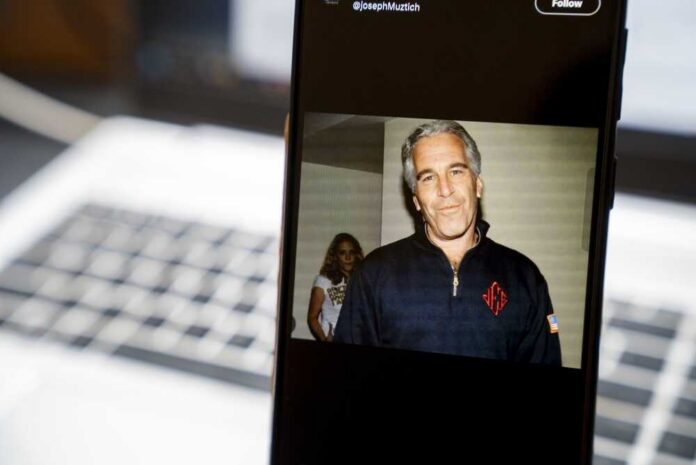
Jeffrey Epstein’s longtime accountant faces a closed-door deposition today, potentially exposing the financial web that fueled his sex-trafficking empire and elite enablers who evaded justice for years.
Story Snapshot
- House Oversight Committee deposes Richard Kahn on March 11, 2026, probing Epstein’s multimillion-dollar fortune and trafficking infrastructure.
- Kahn managed finances from the mid-2000s to Epstein’s 2019 death, co-executed the will, and denies any knowledge of crimes.
- Deposition recording expected for public release, following subpoenas in January 2026 amid DOJ file disclosures.
- Part of bipartisan probe criticizing past DOJ/FBI failures to question financial insiders like Kahn and Darren Indyke.
Kahn’s Role in Epstein’s Financial Empire
Richard Kahn served as Jeffrey Epstein’s in-house accountant from the mid-2000s until Epstein’s 2019 death. He managed investments, island renovations, and complex financial structures, including shell companies and bank accounts that funded the sex-trafficking network.
Kahn co-executed Epstein’s will with lawyer Darren Indyke and stood to inherit $25 million. Victims’ lawsuits accused him of facilitating crimes through sham marriages for immigration purposes, settled without admission of guilt via Epstein’s trust.
House Oversight Committee to depose Epstein's longtime accountant https://t.co/eawJal1Zyl
— ABC7 Eyewitness News (@ABC7) March 11, 2026
Ongoing House Oversight Probe Targets Enablers
The House Oversight Committee subpoenaed Kahn and Indyke in January 2026 after DOJ released Epstein files earlier that year. Democratic Senators called DOJ/FBI inaction on these insiders inexcusable. Today’s closed-door session examines Epstein’s fortune management and victim payments.
A recording will release publicly, building on prior depositions like Bill Clinton’s on February 27, where he denied knowledge, and Les Wexner’s in February, labeling Epstein a con man who stole funds.
Prior Depositions Yield Denials Amid Limited Insights
High-profile witnesses offered little new information. Hillary Clinton denied acquaintance with Epstein and suggested deposing President Trump. Ghislaine Maxwell invoked the Fifth Amendment. Wexner testified Epstein stole significant sums, perhaps up to $1 billion as Democrats alleged, but denied crime awareness.
These sessions contrast with today’s focus on operational enablers, not celebrities, highlighting financial infrastructures like alleged sham marriages that sustained the network.
Indyke’s deposition follows on March 19. Their attorney Dan Weiner stated last month no victim accused them of abuse or witnessing crimes, and they avoided socializing with Epstein. Kahn’s lawyer declined comment. The bipartisan probe uncovers failures across administrations, from the 2008 Florida plea deal to 2019 charges.
Impacts on Victims and Push for Accountability
Short-term, revelations could pressure the pending estate settlement and spur more subpoenas, intensifying scrutiny on DOJ under AG Pam Bondi and FBI Director Kash Patel. Victims seek transparency in payments from Epstein’s estate. Long-term, exposure of elite financial networks may drive reforms in forensic accounting for sex crimes and estate executor oversight.
This amplifies accountability for enablers prioritizing money over law, as victim attorneys claim, without direct abuse accusations against Kahn or Indyke.
President Trump’s administration welcomes such transparency, distancing from Epstein after their mid-2000s falling out, while past leftist leniency allowed these networks to thrive. Conservatives cheer probes ending government overreach that shielded predators, restoring faith in justice for American families.
Sources:
ABC News: House Oversight Committee to depose Epstein’s longtime accountant
CBS News: Richard Kahn, Jeffrey Epstein house oversight testimony
WOSU: U.S. House Oversight Committee releases video of Les Wexner’s deposition concerning Epstein
AOL: House Oversight Committee to depose Epstein’s longtime accountant