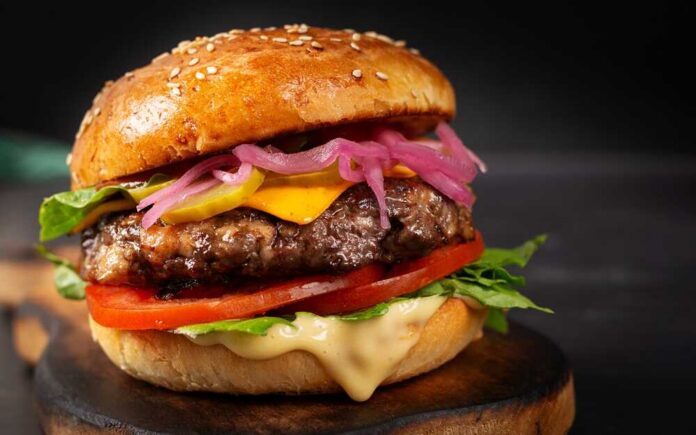
Steak ’n Shake just did something no big American burger chain has dared to do: it staked its future on grass, tallow, and a promise that an old‑school burger can be both cleaner and better.
Story Snapshot
- Steak ’n Shake says every Steakburger is now 100 percent grass-fed, grass-finished, pasture-raised beef nationwide
- The chain already ditched seed oils for beef tallow in fries, tots, onion rings, and tenders, pitching a “back to basics” revival
- Grass-fed and tallow-heavy menus thrill health-conscious and traditionalist diners but lack broad third-party verification so far
- This move tests whether Americans will pay for principled sourcing or punish anyone who messes with the classic drive‑thru formula
Steak ’n Shake redraws the burger map with a grass-fed pledge
Steak ’n Shake publicly announced that, starting June 1, all of its beef would come from pasture-raised cattle that are 100 percent grass-fed and grass-finished, with the company calling this “the healthiest kind of beef.”[1][2]
That language matters. It is not hedged, not a pilot program, and not a single premium item hidden on the menu. The claim is chainwide, and it positions the brand as the first major burger player to bet everything on grass.
Starting today, every Steak ’n Shake hamburger will be made with 100% grass-fed, grass-finished beef from pasture-raised cattle.
We hope other fast-food chains follow suit and make this simple, healthier change. pic.twitter.com/4YqztE75NU
— MAHA Action (@MAHA_Action) June 1, 2026
From a marketing standpoint, this is a sharp break with the usual “now with avocado” gimmicks. The core product did not get a new sauce; it got a new animal diet.
Corporate statements and coverage emphasize that cattle are pasture-raised, grass-fed, and grass-finished, rather than bulked up on grain in confinement systems.[1][2]
That resonates with shoppers tired of mystery meat and industrial feedlots, and it aligns with a broader cultural hunger for food that feels more like a farm and less like a factory.
Beef tallow fries and the anti–seed oil pivot
Steak ’n Shake did not stop at the patty. The company now states that its fries, tots, onion rings, and chicken tenders are cooked in 100 percent beef tallow at its restaurants, with no additives, preservatives, or artificial ingredients in the frying fat.[1]
That single line reads like a manifesto against seed oils, which many health-conscious and consumers see as symbols of processed, lab-driven food culture. Tallow, by contrast, evokes grandma’s cast-iron skillet and the pre-soybean-oil diner era.
The chain doubled down by launching a dedicated beef tallow site selling 100 percent grass-fed beef tallow and premium American Wagyu tallow for home cooking.[2][3]
The product descriptions highlight “carefully selected, pasture-raised grass-fed, grass-finished cattle” and small-batch rendering.[3]
That merchandising move shows this is not a one-off press release; it is a brand identity pivot. Steak ’n Shake wants to be the fast-food joint you brag about, not the guilty pleasure you sneak through the drive‑thru.
Does grass-fed automatically mean healthier and better?
The company clearly frames grass-fed, grass-finished beef as “the healthiest kind of beef,” and many nutrition commentators agree that grass-fed beef typically carries a different fat profile, often with higher omega‑3 content and fewer concerns about certain feedlot residues.[1][2][3]
However, the public record so far offers no independent audits, nutrient testing, or third-party certifications that verify Steak ’n Shake’s specific beef supply or quantify the health advantages of its new burgers. The rhetoric is strong, but the data trail for this specific chain remains thin.
From this perspective, the direction of travel looks right. Returning to simpler animal diets, eliminating industrial seed oils from the fryer, and using animal fats that humans cooked with for generations align with a “less processed, more traditional” food ethic.[1][3]
At the same time, responsible consumers should recognize the difference between a promising sourcing story and proven outcomes. Without transparent supplier lists or lab results, the health claims rest mostly on general science about grass-fed beef rather than chain-specific evidence.
Sustainability claims, corporate virtue, and real-world tradeoffs
Supporters of grass-fed systems often argue that pasture-based cattle can support soil health and reduce some environmental harms compared with certain confined feeding operations.
Steak ’n Shake’s emphasis on pasture-raised sourcing taps into that narrative, but the company has not released detailed life-cycle analyses or environmental impact reports for its new supply chain.[1][2] That leaves a familiar gap: bold sustainability language on the front end and limited, verifiable metrics on the back end.
Same. I’ll take some Steak n’ Shake… since they just switched to Grass-Fed and Grass-Finished burgers & use beef tallow for the fries. 😂
— The Highly Seasoned Gamer VR 🎼 (@Jayson_Composer) June 3, 2026
American conservative values tend to favor transparency over virtue signaling and personal responsibility over imposed lifestyle mandates. On that score, Steak ’n Shake’s move is refreshingly voluntary. No regulator forced this shift; the company decided that better beef and traditional fat could win customers.
If future data show meaningful environmental gains, that will further validate the experiment. Until then, the sustainability angle remains more promise than proof, even if the instincts behind it are sound.
Will American diners reward or punish this experiment?
The biggest question is not whether the switch happened; multiple outlets and the company’s own materials confirm the move to 100 percent grass-fed, grass-finished beef and beef tallow frying.[1][2][3]
The real test is whether families will taste a difference, feel better about eating there, and keep coming back. If lines get longer, other chains will notice.
If traffic slips, executives across the industry will quietly point to this as a cautionary tale about overestimating how much the average customer cares about sourcing.
For now, Steak ’n Shake has planted a flag that speaks directly to Americans who want food that honors both taste and tradition. Grass-fed burgers, tallow-cooked fries, and pasture-raised language send a clear message: the chain believes that quality and simplicity are a better long-term bet than ultra-processed shortcuts.[1][2][3]
Whether that belief becomes a new normal or a quirky detour depends on something no boardroom can fully predict: what happens when you put that burger in a real person’s hands.
Sources:
[1] Web – Steak ‘n Shake Bets Big On Grass — America’s First Major Chain To …
[2] Web – Steak ‘n Shake to switch to 100% grass-fed and grass-finished beef
[3] Web – Steak ‘n Shake to switch to 100% grass-fed beef from June 1