
Spain’s deadliest train collision in over a decade has exposed alarming questions about infrastructure safety after a supposedly “inspected” high-speed train derailed on recently renovated tracks, killing at least 39 innocent passengers.
Story Snapshot
- At least 39 dead and 245 injured in Spain’s worst rail disaster in over a decade
- Private Iryo train derailed on “recently renovated” tracks and struck a public Renfe train
- Transport minister calls incident “very strange,” given flat terrain and new equipment
- Criminal investigation pending as rail services are suspended between Madrid and Andalusia
Deadly Collision Strikes Recently Renovated Infrastructure
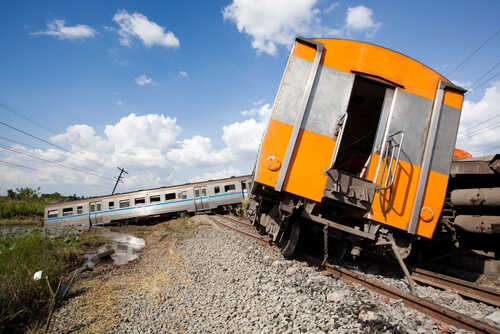
On January 18, 2026, at 7:45 p.m., an Iryo high-speed train traveling from Málaga to Madrid derailed near Adamuz in Córdoba province, crossing into oncoming traffic and striking a Renfe train bound for Huelva. The collision occurred on a straight, flat section of track that underwent renovation just eight months earlier in May 2025.
Spanish Transport Minister Oscar Puente described the incident as “very strange,” noting the anomalous circumstances of a derailment on recently upgraded infrastructure with a train less than four years old that had been inspected just four days prior.
🔴A collision between two high-speed trains in Spain killed 39 people and injured more than 70.
🇪🇸 Rail operator Iryo said around 300 people were on board its Malaga-Madrid service.
Watch the video for more 👇 pic.twitter.com/THVr8vlFAi
— FRANCE 24 English (@France24_en) January 19, 2026
The casualty toll reached at least 39 deaths and 245 injuries, with 75 passengers hospitalized and 15 in critical condition. Approximately 400 passengers and staff were aboard both trains combined, with the Iryo train carrying roughly 300 passengers and the Renfe train about 100.
Rescue operations continued through Sunday night into Monday morning as emergency responders worked to extract victims from the severely damaged Renfe carriages, which bore the brunt of the impact.
Infrastructure Operator Suspends Services Amid Investigation
Adif, Spain’s rail infrastructure operator, immediately suspended all services between Madrid and Andalusia following the collision. The suspension affects a critical transportation corridor connecting Spain’s capital with its southern regions, disrupting commerce and travel for thousands of passengers.
Córdoba Fire Chief Paco Carmona described the devastating damage to the Renfe carriages, noting twisted metal and seats that complicated rescue efforts and concentrated casualties in the first two cars of the struck train.
This represents Spain’s worst rail collision in more than a decade, raising serious concerns about the effectiveness of current safety protocols and inspection procedures. The Iryo train, operated by a private company and owned by Trenitalia, had undergone a routine inspection just four days before the fatal derailment.
The timing of the disaster, occurring on recently renovated infrastructure with newer equipment, suggests potential systemic failures in either maintenance standards or operational oversight.
Government Launches Month-Long Investigation
Spanish authorities have initiated a comprehensive investigation expected to take approximately one month, with criminal proceedings pending completion of the police report.
Transport Minister Puente emphasized the unusual nature of the incident, given that derailments typically occur on curves or problematic terrain rather than flat, straight sections of recently maintained track.
The investigation will examine track maintenance procedures, train condition assessments, and operational protocols between the private Iryo operator and public Renfe services.
The collision highlights potential vulnerabilities in Spain’s mixed public-private rail system, where private operators like Iryo operate alongside the traditional public Renfe company.
Survivors described the impact as feeling like an earthquake, underscoring the tremendous force involved when the derailed Iryo train crossed into the path of the oncoming Renfe service. This disaster demands accountability from all parties involved in maintaining the safety of Spain’s critical transportation infrastructure.
Sources:
Spain train crash: At least 39 killed in high-speed rail collision as rescuers search wreckage
At least 39 dead in Spain train collision as rescuers search for more bodies