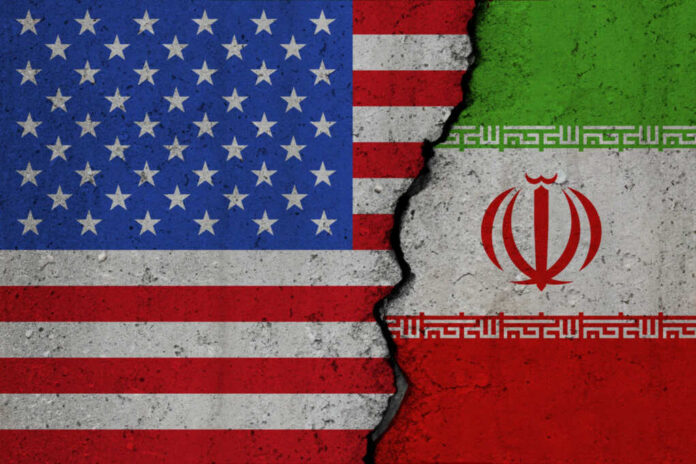
The Pentagon’s newly released torpedo footage is a blunt reminder that America’s hard-power is back on the table—and Tehran’s navy is paying the price.
Quick Take
- Defense Secretary Pete Hegseth said a U.S. submarine sank an Iranian warship with a torpedo in the Indian Ocean, and the Pentagon released video of the strike.
- Sri Lanka’s Navy reported recovering 87 bodies and rescuing 32 survivors after the sinking in international waters off Sri Lanka.
- Hegseth called it the first torpedo sinking of an enemy ship since World War II, but historical examples complicate that claim.
- Joint Chiefs Chairman Dan Caine narrowed the milestone to the first U.S. submarine torpedo sinking of an enemy vessel since 1945.
Pentagon footage and a clear message to Tehran
Defense Secretary Pete Hegseth told reporters on March 4 that an American submarine sank an Iranian warship in the Indian Ocean with a torpedo, describing a “quiet death” and pledging the U.S. will sustain the fight “for as long as we need to.”
The Pentagon also released video showing the strike. Reports identified the target as the IRIS Dena or the IRIS Soleimani, with the name varying across coverage.
U.S. statements placed the sinking in international waters off Sri Lanka, with timing described as “last night” or “yesterday,” pointing to March 3. Sri Lanka’s Navy said it recovered 87 bodies and rescued 32 survivors, making the aftermath more than a strategic talking point.
Iranian confirmation was not cited in the provided research, so casualty totals and ship identification remain dependent on third-party and U.S. accounts.
“First since WWII” claim runs into inconvenient history
Hegseth’s headline claim—that it was the first torpedo sinking of an enemy ship since World War II—triggered immediate fact-checking because torpedo warfare did not end in 1945.
The record includes the 1982 Falklands War, when a British submarine sank Argentina’s General Belgrano with torpedoes, and the 1971 Indo-Pak war, when Pakistan’s submarine sank India’s INS Khukri. Those examples undercut the broadest version of the statement.
Hegseth says U.S. torpedo sank an Iranian warship, says U.S. will fight "for as long as we need to" https://t.co/Ki64JoEE8j
— CBS Mornings (@CBSMornings) March 4, 2026
Chairman of the Joint Chiefs Dan Caine offered a narrower framing: the first U.S. submarine torpedo sinking of an enemy vessel since 1945. That distinction matters because it changes the question from a global “first” to a U.S.-specific milestone—still historically notable, but less sweeping.
Based on the research provided, the most defensible read is that the operation may be unprecedented for modern U.S. submarines, not for the world.
What the strike suggests about the wider campaign
The sinking is being presented as one piece of a larger U.S.-Iran conflict in 2026. U.S. officials described an intense early-phase campaign, claiming rapid progress toward “complete control of Iranian airspace” in coordination with Israel and portraying Iran’s navy as “ineffective” and already “decimated” by earlier actions in the Persian Gulf.
Those claims communicate momentum, but independent verification details were not provided in the research summary.
The strike location in the Indian Ocean also broadens the operational map beyond the Persian Gulf, where energy chokepoints and shipping concerns are typically concentrated. Reports referenced threats and tensions affecting multiple countries, including risks to embassies, oil infrastructure, and civilians.
For American readers who prioritize security and stability, the operational takeaway is straightforward: the administration is signaling deterrence through capability, not through speeches or multilateral process.
Why constitutional conservatives should still watch the fine print
A successful military operation does not automatically answer every policy question that follows. The research highlights strong rhetoric—“as long as we need to”—paired with dramatic imagery from Pentagon video, which can harden public expectations for escalation.
Constitutional conservatives typically support decisive defense of U.S. interests while also demanding accountability: clear objectives, honest public communication, and defined limits. When language overreaches—like an overstated “first since WWII” claim—critics will pounce, and public trust can suffer.
The humanitarian details reported by Sri Lanka’s Navy also complicate the information environment. In modern conflicts, adversaries exploit images of casualties and rescues to shape global opinion, push diplomatic pressure, and test allied unity.
Americans can recognize the necessity of force while still insisting on accuracy, disciplined messaging, and a strategy that protects U.S. personnel, deters further attacks, and avoids open-ended commitments that drain readiness and taxpayer resources.
Limited social-media research provided contained no qualifying English X/Twitter URLs, so only a YouTube link was inserted.
Sources:
Fact-checking Pete Hegseth’s claim: Was Iranian warship sinking a first torpedo kill since WWII?