Chicago Fed President Austan Goolsbee is warning that political pressure for quick rate cuts could backfire—and keep families stuck with high prices even longer.
Quick Take
- Goolsbee says inflation has stayed above the Fed’s 2% target for nearly five years, keeping the case for rate cuts uncertain.
- He signals cautious optimism that rates could decline by the end of 2026, but only if inflation continues cooling.
- He argues that “front-loading” cuts—moving too fast—risks reigniting inflation and damaging Fed credibility.
- He highlights tariffs on intermediate goods as a “tax on domestic production” that can raise costs for U.S. manufacturers and consumers.
Goolsbee’s core message: inflation progress is real, but not “mission accomplished”
Chicago Fed President Austan Goolsbee used a May 2026 interview to frame the central problem facing the Federal Reserve: inflation is lower than it was, but it remains above the Fed’s 2% target and has done so for roughly five years.
He said that reality keeps policymakers from declaring victory, even as many households and businesses plead for relief from high borrowing costs. His outlook was upbeat, but tightly conditional on incoming data.
Goolsbee said he is “pretty optimistic” that rates could come down by year-end if the disinflation trend holds. At the same time, he emphasized the danger of moving too soon, because inflation can reaccelerate if policy loosens before price pressures are truly contained.
That caution matters for voters and retirees watching credit-card rates, mortgages, and auto loans, because the path to lower rates depends more on inflation behavior than on political demands.
Fed independence collides with election-era politics and public frustration
Goolsbee also addressed a broader institutional fight that resonates beyond monetary policy: whether the Fed can remain insulated from partisan pressure in a climate where leaders openly demand rate cuts.
He described recent challenges to Fed independence as unusually intense, and he argued the central bank must stick to its mandate—price stability and maximum employment—rather than respond to the political needs of the moment. He warned that subordinating rate decisions to politics ends badly.
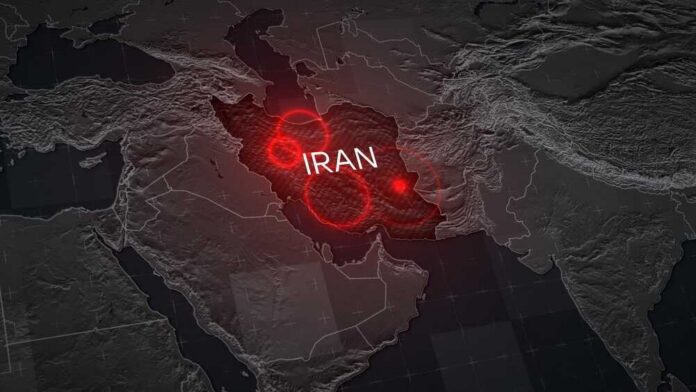
Federal Reserve Bank of Chicago President Austan Goolsbee thinks that the Iran war risks fueling inflation, which would make it harder for the central bank to ease interest rates in 2026. https://t.co/MWrdDgPVn8
— CBS News (@CBSNews) April 3, 2026
For conservatives who already distrust Washington’s expert class, this tension can cut two ways. On one hand, the Fed is a powerful institution whose decisions shape everyday life without direct accountability at the ballot box.
On the other hand, history shows that when monetary policy becomes a tool of short-term politics, inflation can become entrenched—functioning like a hidden tax that punishes savers, fixed-income households, and anyone trying to build a middle-class life.
Tariffs on inputs: “tax on production” that can hit U.S. manufacturing
Goolsbee singled out tariffs on intermediate goods—components and inputs used by American companies—as a major uncertainty for businesses trying to plan investments. In his telling, those tariffs act like a tax on domestic production because they raise the cost base for U.S. manufacturers that rely on imported parts or materials.
When costs rise at the input level, firms often face a lose-lose choice: absorb the hit to margins or pass it to customers through higher prices.
That point is especially relevant this year as inflation anxiety remains a dominant kitchen-table issue. Even voters who support tougher trade enforcement often want tariffs structured to strengthen U.S. industry without triggering avoidable price spikes.
Goolsbee’s comments underscore a practical policy question: if the goal is reshoring and industrial resilience, broad input tariffs can sometimes slow investment by injecting cost volatility—exactly the “policy fog” businesses say freezes major decisions.
What this means for rate cuts in 2026: conditions, not promises
The interview offers a useful reality check for anyone expecting guaranteed relief on interest rates. Goolsbee did not announce an imminent shift; he described a data-dependent pathway where continued cooling inflation creates room to cut, while stubborn price pressures force restraint.
He also pushed back on the idea that the Fed should prioritize markets or political narratives, stressing that the dual mandate is the guiding framework. In practical terms, 2026 cuts remain possible, but not pre-committed.
Sources:
Austan Goolsbee on the Future of the Fed