

The world just witnessed the steepest oil production collapse in four decades, and the consequences rippling through global markets make every past energy crisis look like a minor hiccup.
Story Snapshot
- Middle East oil production crashed 27% in March 2026, plummeting from 28.7 million barrels per day to 20.8 million, the sharpest drop since the 1980s
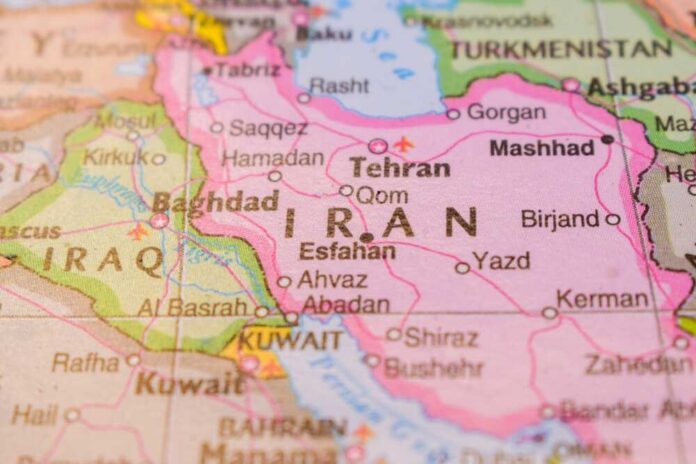
- U.S. and Israeli strikes on Iran triggered the closure of the Strait of Hormuz, choking off roughly 20% of the world’s oil supply through this critical passage
- Iraq bore the heaviest blow, with production slashed in half from 4.15 million to 1.4 million barrels daily, while OPEC’s total output sank to levels not seen since June 2020
- OPEC+ announced a modest 206,000 barrel per day increase for May, but experts dismiss the move as symbolic given war-damaged infrastructure and security threats
When Military Strategy Trumps Energy Policy
February 28, 2026 marked the inflection point when coordinated U.S. and Israeli strikes on Iranian targets transformed Middle Eastern oil markets from stable to catastrophic. The Strait of Hormuz, that narrow waterway carrying 30 to 40 percent of seaborne petroleum exports, became a war zone overnight.
Iran responded by asserting what officials call “long-term control” over the chokepoint, effectively weaponizing geography in ways that dwarf previous regional conflicts. The closure removed up to 15 million barrels daily from global circulation, creating the largest supply shock in energy history.
Middle East oil production plunges due to Iran war, OPEC data shows https://t.co/wi0xnpZat0
— Gee Tee (@GregTodd_) April 13, 2026
OPEC’s March data reveals the brutal arithmetic of war disrupting oil flows. Iraq suffered catastrophic losses, output collapsing from 4.15 million barrels to just 1.4 million daily. Kuwait, Saudi Arabia, and the United Arab Emirates each saw production decline as export routes through Hormuz became impassable.
Total OPEC output plunged 7.3 million barrels per day month-over-month to 21.57 million, a figure not recorded since the pandemic lows of June 2020. Only Venezuela and Nigeria managed production increases, while Saudi Arabia and the UAE partially mitigated losses through alternative pipeline routes bypassing the strait.
Historic Comparisons Reveal Unprecedented Scale
Energy analysts reaching back through decades of crises struggle to find parallels. The 1980s Iran-Iraq War prompted OPEC to increase production elsewhere to offset Iranian losses, but 2026’s conflict reverses that script entirely. Instead of compensating producers ramping up, the war forces involuntary cuts across multiple major exporters simultaneously.
The 27 percent regional drop exceeds anything witnessed during the 1980s Tanker War, the 2019 drone attacks on Saudi facilities, or COVID-19’s demand destruction. This time, physical infrastructure damage and military control of shipping lanes create constraints no amount of spare capacity can immediately overcome.
OPEC crude production registered a record plunge last month as conflict in the Middle East throttled exports from key members, the group’s data showed. https://t.co/T7GsUfgIJ7
— Bloomberg (@business) April 13, 2026
The contrast with pre-war expectations sharpens the shock. OPEC+ had planned to hold production steady through the first quarter of 2026, with gradual increases resuming in April. Those plans evaporated within days of the February strikes.
Energy Aspects forecasted a 7.0 million barrel daily shortfall by mid-March, a projection that proved grimly accurate when official OPEC figures emerged in early April. Reuters surveys indicated further downward revisions were likely as damage assessments continued and security concerns prevented tanker movements even during a fragile two-week ceasefire negotiated in April.
OPEC’s Symbolic Response Faces Geopolitical Reality
Eight OPEC members convened virtually on April 5 to coordinate responses, ultimately announcing a 206,000 barrel per day production increase for May. Energy market observers dismissed the gesture as meaningless theater.
The nations theoretically capable of raising output, primarily Saudi Arabia, the UAE, Iraq, and Kuwait, remain the same countries whose export infrastructure sits within range of Iranian missiles or depends on Hormuz access.
Russia pledged cooperation despite its own production constraints tied to sanctions and capacity limits, but geopolitical posturing cannot substitute for physical barrels reaching refineries.
Iran’s strategic calculus appears focused on long-term leverage rather than short-term accommodation. By maintaining control over Hormuz even during ceasefire periods, Tehran signals that energy markets will remain hostage to military decisions indefinitely.
Saudi Arabia and the UAE possess some bypass capacity through Red Sea pipelines, but those routes handle only a fraction of normal Hormuz volumes. Iraq, the hardest-hit producer with output halved overnight, lacks alternative export infrastructure entirely. Kuwait faces similar constraints, leaving both nations economically devastated as oil revenues representing 90 percent of government income vanish.
Global Markets Absorb Unprecedented Shock Waves
Oil prices surged past 110 dollars per barrel as markets absorbed the supply deficit. Refineries from Europe to Asia faced feedstock shortages, while American shale producers scrambled to increase output but couldn’t compensate for 15 million missing barrels daily. The economic implications extend beyond fuel costs.
Inflation pressures that policymakers thought contained roared back with renewed intensity. Import-dependent nations confronted energy poverty as available supplies commanded premium prices. The largest historical supply shock in petroleum markets redefined assumptions about energy security that had held for generations.
Political ramifications compound economic damage. U.S.-Iran tensions escalated further as President Trump issued threats against Iranian infrastructure, while Russia and OPEC+ members gained geopolitical leverage from energy scarcity. The fragile ceasefire enabled partial Hormuz reopening, but damaged infrastructure and persistent security risks prevent full recovery.
Tanker insurance rates skyrocketed, and shipping companies demand military escorts that few nations can provide consistently. Analysts split between cautious optimists betting on ceasefire extensions and reopened shipping lanes versus pessimists who view Iran’s strategic positioning and infrastructure damage as guarantees of prolonged disruption regardless of diplomatic efforts.
Sources:
OPEC records 27% decrease in Middle East oil production in March – Washington Examiner
OPEC oil production crashes amid conflict, hits lowest level since June 2020 – Economic Times Energy
How OPEC plans to adjust oil supply amid Iran war – Caspian Post