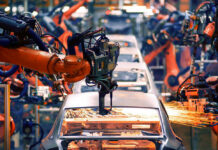

The collapse of global auto parts giant Marelli Holdings Co. has triggered widespread fears of an economic downturn reminiscent of the 2008 financial crisis, as industry experts warn of cascading bankruptcies that could devastate American workers and consumers.
Story Highlights
- Marelli Holdings filed for Chapter 11 bankruptcy, with $4.9 billion in debt, which threatens major supply chain disruptions.
- Multiple auto suppliers and retailers have collapsed in recent months, signaling systemic industry weakness.
- Dealers face inventory devaluation and warranty uncertainty as brands abandon their retail networks.
- Economic analysts draw alarming parallels to the 2008 financial crisis, which required massive government bailouts.
Major Auto Supplier Collapse Sends Shockwaves Through Industry
Marelli Holdings Co., a critical global auto parts supplier, filed for Chapter 11 bankruptcy protection on June 11, 2025, listing $4.9 billion in funded debt, which immediately raised concerns about supply chain stability.
The company, owned by private equity firm KKR, supplies major automakers including Stellantis, Nissan, and Mazda. Senior lenders led by Mizuho Bank and the Development Bank of Japan are spearheading a prearranged restructuring agreement, with 80% of senior secured lenders already on board.
Auto giant's collapse sparks recession fears in haunting parallel to 2008 crash: 'Canary in the coal mine'
The warning signs are stacking up. First Brands — a manufacturer of filters, brakes, wipers, and lighting systems — filed for Chapter 11 bankruptcyhttps://t.co/M7YzRfBuyF— JanJop@wigglewigglepoppop (@poppwigglewigg1) September 30, 2025
The collapse represents more than just another corporate bankruptcy. Marelli’s extensive supply chain relationships mean production disruptions could ripple across the entire automotive sector, potentially affecting vehicle availability and prices for American consumers.
The company’s CEO cited COVID-19 and post-pandemic market challenges as primary factors, but the underlying issues run much deeper than temporary disruptions.
Warning Signs Point to Broader Industry Crisis
Marelli’s bankruptcy is not an isolated incident but part of a troubling pattern of failures across the automotive sector.
Between September 2024 and March 2025, major suppliers, including Wheel Pros and Accuride Corp., filed for bankruptcy, while Advance Auto Parts announced mass store closures. This string of failures suggests systemic weaknesses that go beyond individual company mismanagement.
The root causes trace back to the Biden administration’s misguided economic policies that fueled inflation and forced the Federal Reserve to raise interest rates to combat runaway prices.
These macroeconomic pressures, combined with the administration’s heavy-handed push for electric vehicles, created a perfect storm for automotive companies.
Many suppliers invested heavily in EV infrastructure only to watch consumer demand crater due to high prices, limited charging infrastructure, and reliability concerns.
Dealers Face Existential Threat as Brands Abandon Networks
Industry analysts are sounding alarms about what they call a “ticking time bomb” for automotive dealers across the country.
Multiple brands are actively undermining their own dealer networks through bankruptcy proceedings, leaving franchise owners with worthless inventory and no warranty support for customers.
This represents a betrayal of the hardworking entrepreneurs who invested their life savings in these businesses based on the manufacturer’s promises.
The dealer crisis extends beyond individual business failures to threaten entire communities. Many dealerships serve as anchor employers in smaller towns, and their closure creates ripple effects through local economies.
When dealers lose warranty backing, consumers face the prospect of owning vehicles with no manufacturer support, potentially devastating resale values and leaving families with worthless assets.
Alarming Parallels to 2008 Financial Crisis
Economic experts are drawing disturbing comparisons between the current auto industry turmoil and the 2008 financial crisis that required massive government bailouts of GM and Chrysler.
The automotive sector’s vast supply chains and employment base make it a critical economic bellwether, and widespread failures could trigger recessionary contagion across multiple industries. Unlike 2008, however, this crisis stems from policy-driven market distortions rather than purely financial speculation.
The Biden administration’s reckless spending and monetary policy created the inflationary environment that pushed interest rates to punishing levels, while simultaneously forcing an unrealistic transition to electric vehicles that consumers clearly rejected.
Now American taxpayers may once again face the prospect of bailing out an industry hobbled by government overreach and misguided central planning. This represents exactly the kind of economic mismanagement that conservative voters rejected in 2024.
Path Forward Requires Market-Based Solutions
The Trump administration has an opportunity to address this crisis through pro-business policies that restore market confidence rather than doubling down on failed government intervention.
Reducing regulatory burdens on automakers, allowing natural market forces to determine the pace of EV adoption, and supporting American energy independence can help stabilize the industry. The administration should resist calls for taxpayer-funded bailouts and instead focus on creating conditions for genuine economic recovery.
Industry consolidation may be inevitable and even beneficial if it eliminates weak players and strengthens surviving companies. However, this process must occur through market mechanisms rather than bureaucratic mandates.
The collapse of companies like Marelli serves as a stark reminder that government cannot successfully pick winners and losers in complex markets, and attempts to do so inevitably harm the very workers and consumers such policies claim to protect.
Sources:
TheStreet – Huge Auto Parts Company Files for Chapter 11 Bankruptcy
Alot Finance – Automotive Companies on the Brink of Bankruptcy
Car Coach Reports – Is the Auto Industry Collapsing? Will There Be Bankruptcies?
Jalopnik – These Are the Automakers You Think Will Go Bankrupt Next