
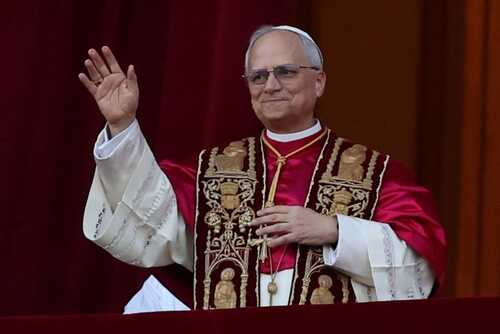
Pope Leo XIV’s doctors say the lung tumor was localized and surgery was enough, which resets the Vatican’s calendar and the world’s attention.
Story Snapshot
- Doctors confirmed a localized lung adenocarcinoma and said no further treatment is needed.
- Surgeons removed the lower lobe of the right lung at Gemelli Hospital on October 13.
- The operation was successful and without complications, with steady recovery milestones.
- The operating surgeon saw no clinical reason to cancel a planned November trip.
A clear diagnosis, a decisive surgery, and a direct message
The Holy See Press Office relayed a plain verdict from Pope Leo XIV’s medical team: the tumor was a pulmonary adenocarcinoma, the disease was localized, and no additional treatment was medically necessary after surgery. Surgeons had already removed the entire lower lobe of his right lung at Rome’s Gemelli Hospital on October 13, a standard approach when doctors find a confined tumor. Intraoperative tissue checks confirmed the expected diagnosis, strengthening confidence in a surgery-first plan.
The surgical team reported a smooth procedure and no complications. Post-operative updates described a textbook recovery: stable tests, controlled pain, and a return to simple routines like eating, walking, and breathing exercises. These are small wins that mean a lot after lung surgery. Each sign points to lungs re-expanding, airways clearing, and strength returning on schedule. Good surgical margins and clean lymph nodes often drive similar decisions, though the full pathology details were not publicly released.
What “no further treatment” means in practical terms
The phrase “no further treatment” signals that chemotherapy, immunotherapy, or targeted drugs are not indicated at this time, based on the clinical read the team made after surgery. Doctors reach this call when imaging, operative findings, and tissue analysis agree that the cancer stayed local and that resection likely removed it fully. Many lung cancer patients with early disease follow this same path: surgery, then structured surveillance instead of immediate drugs or radiation, unless risk factors demand more.
Standard recovery and follow-up for lung surgery move in firm steps. The first outpatient review usually lands within a few weeks, then routine surveillance visits and periodic chest imaging continue for years to watch for recurrence or a new primary tumor. This schedule is not pessimism; it is common sense and good medicine. Modern oncology separates “no evidence of disease today” from promises about forever. That clarity avoids hype, keeps focus on healing now, and respects real but often small future risks.
Signals on the Pope’s capacity to lead and travel
The operating surgeon, Professor Stefano Margaritora, told Vatican News that the case fit routine surgical standards for a tumor of that size and that there was no clinical reason to cancel Pope Leo’s planned November visit to South America. That message matters far beyond a flight plan. It tells the faithful, heads of state, and everyday observers that the Pope can resume public duties as energy allows. Institutions depend on continuity, and health clarity reduces rumors and needless churn.
Pope Leo will not need any further therapy after undergoing lung cancer surgery last week, his doctors said on Wednesday, indicating that his tumor had not spread. https://t.co/xg2rqSKVCH
— Interaksyon (@interaksyon) October 22, 2026
Public updates connected the Pope’s physical recovery with his visible role. The Vatican’s reports highlighted normal tests, steady mobility, and good spirits, and later confirmed discharge after a clean chest X-ray and blood work. That is the arc you want to see. It also tracks with a conservative medical ethos many Americans share: fix the problem with precision, avoid extra drugs when they add no clear benefit, and then monitor with discipline. Less medicine, when safe, is not neglect; it is wisdom earned in data and experience.
Why this call aligns with mainstream thoracic oncology
Localized lung adenocarcinoma often yields the best results when surgeons remove the affected lobe and nearby nodes with clean technique. When pathology and imaging support a local-only picture, many teams recommend surveillance rather than adjuvant therapy. The benefits are straightforward: avoid side effects, preserve function, and reserve powerful drugs for when they clearly improve survival. The Pope’s team described exactly that pathway, paired with a recovery that checked the right boxes day by day.
One brief caveat belongs here and no more: “no further treatment” today does not equal a lifetime guarantee, and the Vatican did not claim that. The doctors reported what they saw and decided, and they did so with their names attached. For a global figure who must travel, speak, and lead, that kind of frank, bounded clarity is the gold standard. It respects privacy while giving the public what it needs to know: the surgery succeeded, the disease was local, and the road ahead looks open.
Sources:
abcnews.com, vaticannews.va, nbcboston.com, my.clevelandclinic.org, roswellpark.org