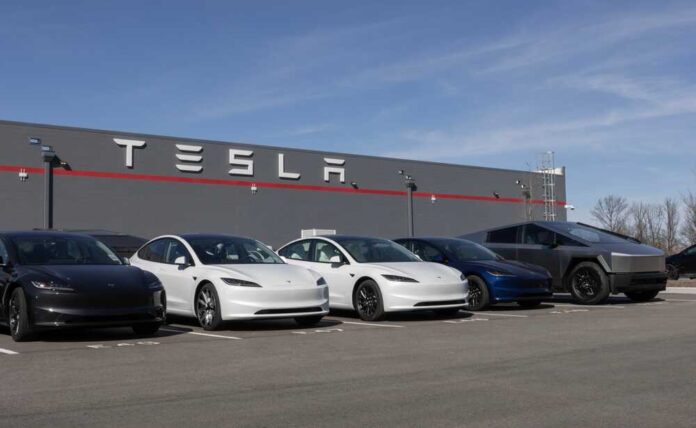
In a stunning shift in the electric vehicle landscape, Tesla has lost its crown as the world’s largest EV maker to Chinese competitor BYD, raising questions about the future of American innovation.
Story Highlights
- Tesla’s global car sales dropped 8.6% in 2025, marking its second consecutive year of decline.
- BYD now leads the world in EV sales, with over 2.2 million units sold in 2025.
- Analysts predict a potential Tesla recovery, aiming for over 3 million sales by 2029.
- European market challenges and political factors contribute to Tesla’s decline.
BYD Overtakes Tesla in Global EV Market
In 2025, Tesla faced a significant decline in its global car sales and production for the second year in a row. With deliveries down 8.6% to 1,636,129 units and output down 6.7% to 1,654,667 units, Tesla lost its position as the world’s top electric vehicle brand.
Chinese competitor BYD surged ahead, selling 2,256,714 all-electric cars, cementing its place as the global leader in EV sales.
Tesla is no longer the world's biggest EV maker after its sales drop for second year in a row. https://t.co/QDrT2IWbj1
— CBS News (@CBSNews) January 2, 2026
Factors Behind Tesla’s Decline
Tesla’s downfall is attributed to several factors, including a sharp decline in production for its “other models” and significant challenges in the European market.
Despite a 27% growth in the European BEV market, Tesla’s sales in the region fell 28% to 203,382 units. Political factors and intensified competition contributed to this decline, allowing BYD to capitalize on the opportunity and surpass Tesla.
While Tesla’s Model 3/Y remained the focus, accounting for 96% of its 2025 production, the overall sales dip highlighted vulnerabilities. The company’s struggles were further compounded by its failure to adapt to the rapidly changing market dynamics and consumer preferences.
Outlook for Tesla’s Recovery
Despite its current challenges, analysts remain optimistic about Tesla’s potential recovery. Projections suggest a modest growth in 2026, with deliveries expected to rise to a median of 1,743,856 units.
Looking longer-term, Tesla aims to achieve over 3 million sales by 2029, driven primarily by its Model 3/Y lineup. However, this recovery hinges on Tesla’s ability to address its production inefficiencies and regain consumer trust in competitive markets like Europe.
The broader implications of Tesla’s decline are significant, underscoring the shifting power dynamics in the global EV market.
BYD’s rise pressures Western manufacturers to innovate and compete more aggressively. As the industry evolves, Tesla’s response to these challenges will be crucial in determining its future role in the electric vehicle sector.