
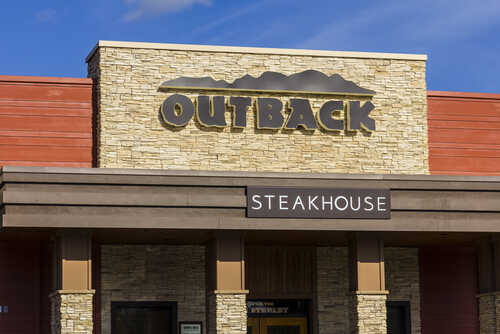
Outback Steakhouse’s largest U.S. franchisee filed Chapter 11 and lined up a $26.3 million stalking-horse bid from the brand’s parent to keep 61 restaurants on the grid.
Story Snapshot
- The franchisee operating 61 Outback locations filed Chapter 11 in Delaware.
- Bloomin’ Brands agreed to a $26.3 million stalking-horse bid for those assets.
- Up to $5.5 million in debtor-in-possession financing will fund operations during the case.
- The units span California, Arizona, Nevada, Colorado, and New Mexico.
What Filed, Who Is Involved, and Why It Matters
Bloomin’ Brands disclosed that Cerca Trova Restaurant Group Holdings, doing business as Out West Restaurant Group, and its subsidiaries filed voluntary Chapter 11 in the U.S. Bankruptcy Court for the District of Delaware. The filing covers 61 Outback Steakhouse restaurants in the western United States and names Out West as an independently owned franchisee, not a corporate arm of Bloomin’ Brands. The clear message to guests and workers is continuity during the case while the court reviews a proposed sale and financing structure.
Bloomin’ Brands agreed to purchase substantially all of Out West’s assets for a base price of $26.3 million. The agreement sets Bloomin’ Brands as the stalking-horse bidder. That means the court can run a fair auction and accept a higher qualified offer if one arrives. The price can adjust for assumed liabilities. The disclosed package shows a path to keep restaurants open under court oversight while ownership issues get sorted.
How The Money Flows During Chapter 11
To keep the lights on, Bloomin’ Brands agreed to provide up to $5.5 million in debtor-in-possession financing. This facility carries no interest, according to the company’s filing, and depends on court approval and conditions. Debtor-in-possession funds pay wages, vendors, utilities, and rent during the case. They also set milestones to push the sale along. The amount is modest for 61 stores, suggesting tight cash control and a fast timeline to a sale hearing.
The $26.3 million headline number is not the final economic tab. The agreement allows deductions for amounts drawn on the financing facility and certain assumed obligations. A stalking-horse deal often includes a breakup fee or expense reimbursement, which helps anchor the auction process. These common features do not lock in a buyer. They set the floor. The court still seeks the highest and best offer for the estate and its creditors.
Where These Stores Operate and What Guests Should Expect
Out West’s footprint sits in California, Arizona, Nevada, Colorado, and New Mexico. Reports tie the full count of 61 restaurants to those states. The company and its parent said the process would not immediately affect guests or staff, consistent with a Chapter 11 built around a going-concern sale. Store-level plans, lease decisions, or closures, if any, will show up later in court filings and sale documents. For now, normal service remains the operating goal.
🤠 Cerca Trova Restaurant Group Holdings, a franchisee of Outback Steakhouse owner Bloomin' Brands, filed for Chapter 11 bankruptcy protection on Monday.
▪️ The company, which does business as Out West Restaurant Group, operates 61 Outback Steakhouse restaurants in the western… pic.twitter.com/Hz2rkzOY6n
— DailyJobCuts . com – Layoffs / Job / Economy News (@dailyjobcuts) November 2, 2026
Several outlets echoed the disclosure and the numbers soon after the filing. They confirmed the 61-unit scale, the Chapter 11 venue, and the $26.3 million stalking-horse structure. This alignment across sources supports the central facts: the filing occurred, the restaurants are operating under a court process, and a brand-led bid seeks to keep the network intact. The deal still needs court approval and could face competing bids before a sale order hits the docket.
Why This Fits a Larger Restaurant Bankruptcy Pattern
This case matches a wider wave of franchisee restructurings. Rising labor, food, rent, and debt costs have hit margins while traffic wobbled. Industry tracking shows restaurant bankruptcies and broader business filings climbed since 2024. One analysis cited a 17 percent year-over-year rise in total U.S. business bankruptcies through mid-2026. Trade coverage also tallied more multi-unit franchisee filings in 2026 than in all of the prior year.
The method also looks familiar: file in Chapter 11, seek debtor-in-possession cash, name a stalking-horse, and run a court auction. That path aims to protect jobs, stabilize suppliers, and give landlords a real buyer. The Out West plan fits that model. It swaps panic closures for a structured process that can deliver an owner with the scale and systems to support operations. That approach reflects common-sense triage in a lean-margin business.
What To Watch Next: Auctions, Approvals, and Assumptions
Watch the court calendar for bidding procedures, the qualified-bid deadline, and any auction. Follow the sale hearing date and the final order. Track which leases the buyer assumes or rejects and how gift cards and loyalty points are treated. Look for any changes to vendor terms under the assumed-liability schedules. These steps decide who owns the restaurants, who gets paid, and which units keep operating under the Outback flag.
Readers should keep one caveat in mind. A stalking-horse bid is a proposal, not the final sale. The court could approve a different buyer or new terms if they are better for the estate. Until the judge signs a sale order, details can shift. Still, a branded buyer with cash and operational muscle often signals continuity for guests and crews, which is the point of this path in the first place.
Sources:
foxbusiness.com, sec.gov, mlive.com, stocktitan.net, finance.yahoo.com, restaurantbusinessonline.com