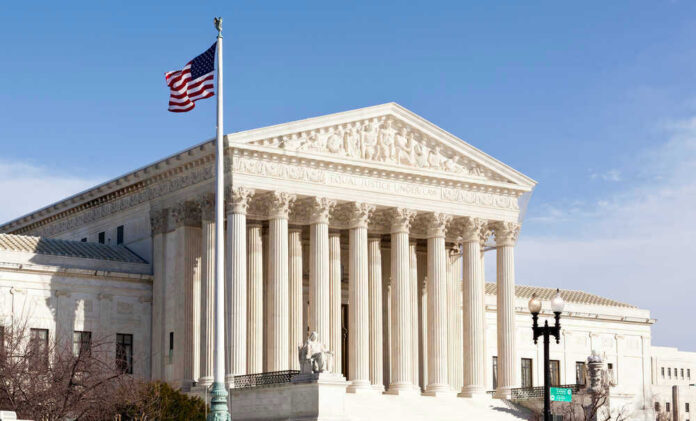
The Supreme Court has blocked President Trump’s constitutional authority to deploy National Guard troops to Chicago, prioritizing liberal governors’ defiance over federal immigration enforcement and public safety.
Story Snapshot
- Supreme Court rejected Trump’s bid to send National Guard to Chicago for immigration enforcement
- Court cited Posse Comitatus Act, ruling Trump lacked authority for Illinois deployment
- Three conservative justices dissented from the majority decision
- Trump has successfully deployed troops to D.C., Los Angeles, and Portland despite local opposition
Court Blocks Presidential Immigration Enforcement
The Supreme Court on Tuesday delivered a setback to President Trump’s immigration enforcement efforts, rejecting his request to overturn a lower court injunction blocking National Guard deployment to Chicago.
The decision came after Illinois Governor JB Pritzker and local officials challenged Trump’s October 2025 proposal to send federal troops to assist with immigration crackdowns in the Chicago area. The ruling represents a rare instance where the high court has limited Trump’s executive authority on immigration matters.
Supreme Court won’t allow National Guard deployment to Chicago in major loss for Trumphttps://t.co/65uZnnZopl
— The Hill (@thehill) December 24, 2025
Legal Constraints on Military Deployment
The court’s unsigned order cited the Posse Comitatus Act, which restricts military involvement in domestic law enforcement without explicit constitutional or congressional authorization. The justices concluded that “the Government has failed to identify a source of authority that would allow the military to execute the laws in Illinois.”
However, three conservative justices—Samuel Alito, Clarence Thomas, and Neil Gorsuch—filed dissenting opinions, suggesting disagreement within the court about presidential powers during immigration enforcement operations.
Previous Successful Deployments Continue
Despite the Chicago setback, Trump has successfully deployed National Guard forces to Washington D.C., Los Angeles, and Portland over recent months, even facing local opposition. These deployments have sparked additional lawsuits from Democratic governors including California’s Gavin Newsom and D.C. officials.
The White House defended these actions through spokesperson Abigail Jackson, emphasizing the president’s commitment to “enforce our immigration laws and protect federal personnel from violent rioters” while ensuring federal property remains secure.
Constitutional Authority Under Challenge
The ruling highlights ongoing tensions between federal immigration enforcement and state resistance, particularly in Democrat-controlled jurisdictions. While this preliminary injunction blocks Chicago deployment, it doesn’t establish permanent precedent limiting presidential authority.
The decision underscores how liberal state officials continue obstructing federal efforts to secure American communities from illegal immigration consequences.
Trump’s determination to fulfill campaign promises on immigration enforcement faces judicial roadblocks, though successful deployments elsewhere demonstrate his administration’s resolve to protect American citizens despite political opposition.