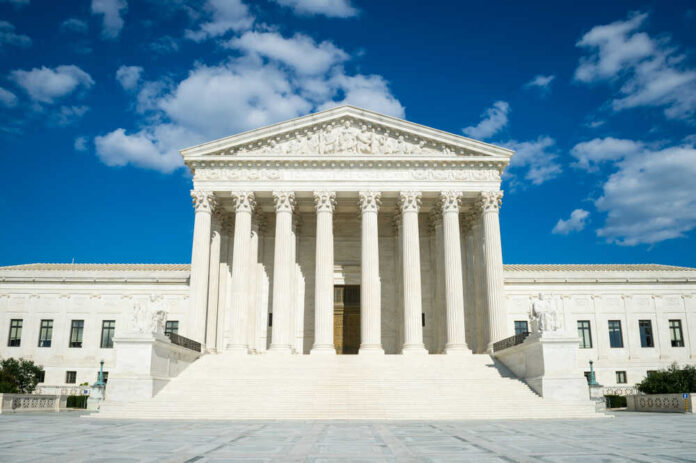
The Supreme Court let President Trump keep building the White House ballroom while the lawsuit continues, signaling the challengers likely cannot stop it right now.
Story Highlights
- Supreme Court allowed construction to continue during the legal fight.
- Majority focused on standing, not the project’s legality.
- Chief Justice Roberts dissented, calling the build “likely unlawful”.
- Lower courts previously said Congress must approve the project.
What The Supreme Court Actually Decided
The Supreme Court allowed work on the White House ballroom to continue while the case moves forward. The order did not settle whether the project is legal.
The majority focused on whether the group suing has a right to bring the case now. That means the Court saw a likely standing problem for the challengers. The practical effect keeps crews working as arguments continue in lower courts and in Congress.
A divided Supreme Court has given Pres. Trump the greenlight to keep building his sprawling 90,000 square foot, $400 million ballroom. Chief Justice John Roberts dissents, calling the construction "likely unlawful." @marykbruce has details. https://t.co/uyLC8AE6u8 pic.twitter.com/EUHdwhEwxM
— World News Tonight (@ABCWorldNews) August 31, 2026
Reporters noted the ruling said the group bringing the lawsuit appears to lack standing to challenge the project. That approach does not judge the final merits.
It simply says the plaintiffs may not be the right party to seek a stop-work order at this time. This kind of emergency action is common when timing matters and the law is still being sorted out. It can shape the real-world outcome even before a final ruling arrives.
Why Lower Courts Tried To Halt The Project
Earlier this year, a federal appeals court ordered the administration to stop building the ballroom. That panel said the project needs approval from Congress. Judges framed the question as one for lawmakers to decide, not the executive acting on its own.
They also highlighted the size and cost of the planned ballroom, which critics put at about four hundred million dollars, and the removal of the East Wing as core concerns.
Coverage of those rulings stressed that prior courts believe no current law clearly authorizes such a large structural change. Those judges said Congress controls federal property and the purse and must sign off first.
The Supreme Court’s new order does not erase those findings. It pauses their impact while the justices consider if the challengers can be in court and while the wider issues proceed on a normal track.
Roberts’s Dissent And The Separation-Of-Powers Fight
Chief Justice John Roberts dissented and said the construction is “likely unlawful.” He argued the decision lets a likely breach of Congress’s power of the purse continue.
He also pointed to Congress’s control over federal property in Washington, D.C. Roberts joined the Court’s three liberal justices in that view. His dissent signals deep concern about letting the work go on before Congress gives any clear authorization.
That warning highlights a classic separation-of-powers clash. Presidents often act first in urgent or security matters. Courts then sort out who has authority, and whether anyone is concretely harmed enough to sue.
Emergency orders like this one often hinge on standing and timing. They can carry big practical effects while leaving the core legal question open. That is what happened here: work continues, but the legal debate is not over.
What Comes Next: Congress, Courts, And The Clock
Congress can still step in. A bill was introduced that would expressly let the president design and build a ballroom on White House grounds. If that measure passes, it could remove the main legal obstacle.
If it stalls, the courts will remain the main arena. The administration has argued national security and continuity of government needs support the project and its timeline, which keeps pressure on both branches to act.
For many, the immediate takeaway is clear. The Supreme Court did not shut the project down. The ruling respects limits on who can drag policy into court. It keeps elected branches in the lead on big structural choices at the People’s House.
The fight now moves to whether Congress will authorize the build and how the lower courts resolve the merits if standing can be shown. Until then, construction continues under the Court’s order.
Sources:
newsmax.com, bbc.com, nytimes.com, rollcall.com, npr.org, thehill.com, cnn.com, congress.gov