
America just watched the Supreme Court admit a man’s religious rights were violated — then say the law offers him no way to collect a single dime for it.
Story Snapshot
- Louisiana guards shaved a Rastafarian inmate’s dreadlocks after trashing a court ruling that said they could not.
- The Supreme Court agreed his religious rights were violated but said the statute gives no clear right to money damages.
- A 6–3 ideological split held that the law binds the state as a fund recipient, not individual employees.
- The case exposes a growing gap between “rights on paper” and real-world consequences inside American prisons.
How a five-month drug sentence became a test of religious freedom
Damon Landor entered Louisiana’s prison system in 2020 with something most inmates never have: a federal court opinion in his hand that said the state could not cut his religious dreadlocks.[12]
He is a devout Rastafarian, and for more than 20 years, he has worn his hair in dreadlocks as part of a Nazarite vow central to his faith.[7]
Intake staff at his first two facilities respected that. Then he reached Elayn Hunt Correctional Center, and the paper proof of his rights met its end in a trash can.
According to court records, a guard took the opinion from the United States Court of Appeals for the Fifth Circuit and threw it away.[3] The warden then demanded “proof” of Landor’s religion from his sentencing judge, something he could not provide on the spot.[13]
When Landor offered to call his lawyer, guards told him it was “too late for that.” They handcuffed him to a chair and shaved his head bald, wiping away decades of religious practice in minutes.[12]
Every level of the court system later agreed that this violated federal law protecting religious exercise.
The law that protects prisoners’ faith but won’t pay for its violation
The statute at the center of the case is the Religious Land Use and Institutionalized Persons Act.[12] Congress passed it in 2000 to stop prisons from trampling inmates’ religious rights unless the prison had a truly compelling reason and no less restrictive way to meet it.[11]
The law applies to state prisons that accept federal funds and allows individuals to sue for “appropriate relief” when their religious exercise is burdened.[12]
For people outside prison, similar language in a sister law has already been read to include money damages against federal agents in some cases.[12]
Louisiana Rastafarian man can’t sue prison staff who shaved his dreadlocks, Supreme Court says https://t.co/YGmG7cYCN3 pic.twitter.com/4jon5aAFEk
— The Advocate (@theadvocatebr) June 23, 2026
That 2020 case let Muslim men sue Federal Bureau of Investigation (FBI) agents who put them on a no-fly list because of their faith.[12] Landor’s lawyers, backed by 22 “friend of the court” briefs, argued the same logic should protect inmates when state officers ignore clear religious rulings.[12]
They said Congress can tie federal prison funding to a state’s promise that its officers will either respect religious exercise or face personal liability if they do not. Support even came from the Trump administration, which backed Landor’s religious freedom claim.[7]
Why the Supreme Court said the guards can’t be made to pay
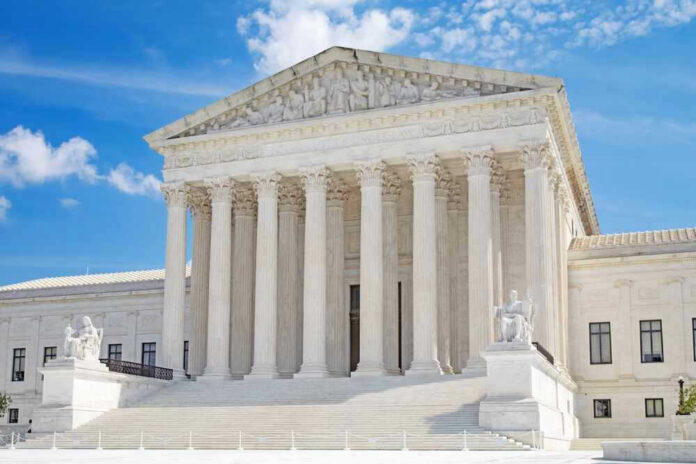
The Supreme Court’s majority drew a sharp line between the state that took federal funds and the individual guards who shaved Landor’s head.[1] Justice Neil Gorsuch wrote that Religious Land Use and Institutionalized Persons Act is a “Spending Clause” deal between Washington and the state prison system.[1]
Louisiana accepted money and agreed that its system would honor inmates’ religious rights, but the individual officers never personally signed that contract with the federal government.[2] In the majority’s view, nothing in the text tells those employees they can be sued for cash in their own names.
That reading aligns with what ten different federal appeals courts have already held over the past two decades: prisoners cannot use this law to recover damages from officials in their personal capacity.[16]
The Supreme Court also refused to stretch its 2020 no-fly list precedent to cover state prison guards, even though the wording on “appropriate relief” is similar.[3]
For the conservative justices, Americans say Congress must speak very clearly before courts drain personal bank accounts or state insurance funds over statutory duties.
The blunt warning from the dissent and what conservatives should wrestle with
The three liberal justices accepted that the text is not explicit but saw a different danger. Justice Ketanji Brown Jackson argued the ruling guts the practical force of the Religious Land Use and Institutionalized Persons Act inside prisons.[1]
If a guard can handcuff a man, shave away his religious identity, discard a binding court decision, and face no personal financial consequence under the very law meant to stop that, what incentive is left to obey federal religious protections?[1]
She warned that “state-empowered prison officials will have little incentive to abide by federal law” when the worst outcome is a scolding in an opinion.
The Supreme Court on Tuesday barred a former Louisiana inmate from suing prison officials who cut off his dreadlocks in violation of his Rastafari religious beliefs. https://t.co/pJFA5IZByP
— WGNO-TV (ABC) New Orleans (@WGNOtv) June 24, 2026
From this rule-of-law standpoint, the majority’s textual focus has real appeal. Judges should not invent remedies Congress never wrote, and state budgets should not be wrecked by open-ended damage claims.[16]
When a state officer ignores a clear court ruling that he has in his hand and uses force to strip away a man’s faith practice, many Americans expect more than sympathy and a shrug from the law.[12]
The bigger pattern inside American prisons and the next move for Congress
Landor’s case is not a one-off story. The United States Commission on Civil Rights has documented a long list of religious abuses in prisons: mislabeled halal meals, denial of vegetarian diets for Sikh inmates, bans on religious head coverings, and more.[19]
Civil rights groups argue that these happen because prisons know that, under current law, damages against individual officers are almost impossible to win.[18]
The Religious Land Use and Institutionalized Persons Act gives strong rights on paper, but courts have steadily trimmed back the tools prisoners can use to enforce those rights against specific people.
The Supreme Court’s ruling leaves a clear path forward, but not through more lawsuits. If Americans want guards who trash court orders and shave religious dreadlocks to face financial consequences, Congress must say so plainly.
Lawmakers could amend Religious Land Use and Institutionalized Persons Act to authorize personal-capacity damages or create a narrower remedy for intentional violations proved by strong evidence.[12]
Until then, prisoners like Damon Landor can win the argument that their rights were violated and still walk away with nothing more than a line in the law books saying the state is sorry.
Sources:
[1] Web – Supreme Court rules Rastafari man can’t sue Louisiana prison officials …
[2] Web – Supreme Court rules former inmate cannot sue prison guards … – BBC
[3] Web – Supreme Court denies Rastafarian’s damages claim over shaved …
[7] Web – The Supreme Court ruled 6-3 against Damon Landor, a Rastafarian …
[11] Web – Supreme Court rules Rastafarian can’t sue La. prison officials who …
[12] YouTube – Supreme Court bars Rastafarian man from suing prison officials who …
[13] Web – Supreme Court says Rastafarian can’t sue prison officials over shorn …
[16] Web – A narrowly divided Supreme Court on Tuesday denied a Louisiana …
[18] Web – [PDF] CHAPTER 27 RELIGIOUS FREEDOM IN PRISON
[19] Web – Court to consider prison inmate’s religious liberty claims