
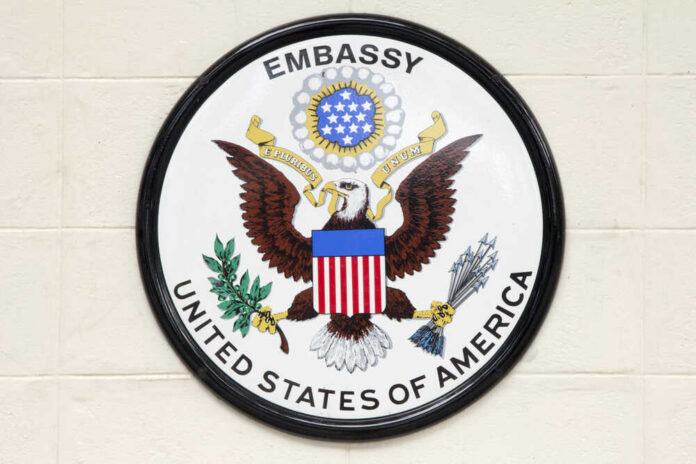
French riot police fired tear gas and water cannon at crowds in Paris as fires burned through the night, pushing the United States Embassy to warn Americans to steer clear of the chaos.
Quick Take
- Student protests over school funding cuts grew into citywide riots in Paris, Lille, and other French cities.
- Police arrested more than 2,400 people as looting, arson, and clashes spread across the country.
- French officials set overnight curfews in parts of Paris and Nice to try to calm the streets.
- The US Embassy told Americans in France to avoid unrest zones and watch for local safety updates.
School Protests Over Funding Cuts Turned Into Street Riots
The trouble started small. In late September, French high school students began blocking campus entrances to protest budget cuts and crowded classrooms. Teenagers set fire to trash bins and threw objects at police outside schools like Lycée César Baggio in Lille, and officers answered with batons and tear gas. What looked like a local school dispute soon spread to cities across the country.
By early October, the unrest had grown far beyond students. French police detained more than 600 people in a single day as protests escalated, with dozens of officers hurt in the clashes. Interior Minister Laurent Nuñez reported that 83 police officers were injured as demonstrations widened from school grounds into open confrontations with riot squads nationwide.
Paris became the flashpoint. Roughly 550,000 people marched in what officials called largely peaceful demonstrations, but masked groups broke off to set fires, smash windows, and loot stores along the way. Riot police responded with tear gas and water cannon late into the evening as burned-out cars and shattered glass littered central streets.
Arrests Pass 2,400 as Curfews Return to French Cities
The French government reported roughly 2,400 arrests tied to the unrest, a number that kept climbing as disorder continued into Sunday. President Emmanuel Macron called for “calm and order,” acknowledging that a day of protest had turned into rioting and looting in multiple cities. His government now faces the delicate task of addressing student grievances while restoring public order.
Authorities imposed overnight curfews in parts of Paris and Nice after the weekend violence, and more than 350 arrests happened in Paris alone during one night, with at least five shops looted. The curfews mark a rare step for the French capital, signaling how seriously officials now view the risk of repeat clashes after dark.
A Stun Grenade Injury Forces a Pause on a Controversial Weapon
The violence has also reopened debate over police crowd-control tools. After a boy’s hand was blown off during a protest incident in Lens, Nuñez ordered a temporary halt to stun grenades until officials could clarify what happened, noting that protesters and police gave conflicting accounts. The incident has become a flashpoint in its own right, drawing scrutiny to tactics French police have used for years.
Americans living in or visiting France should expect disruptions to continue as tensions remain unresolved. The State Department’s guidance for travelers is a standard precaution, not a sign the unrest is unprecedented, but it reflects real risk on the ground: burned vehicles, blocked streets, and unpredictable clashes between demonstrators and police in major cities.
France prepares for new protests with plans to deploy army and extend curfews
♦️ #France is preparing for another wave of protests on Saturday, with plans to increase security deployments and protect public infrastructure following last weekend’s violence and looting.
♦️… pic.twitter.com/JANZVN90D5
— Al Majalla (@AlMajallaEN) October 21, 2026
France has faced this kind of reckoning before. During the Yellow Vest protests years earlier, crowd-control weapons caused serious injuries and later led to criminal convictions against officers involved. Whether this round of unrest fades quickly or drags on, the pattern looks familiar: a genuine grievance, a smaller violent fringe, and a government forced to choose between dialogue and a harder crackdown.
Sources:
youtube.com, bbc.com, bbc.co.uk, straitstimes.com, english.ahram.org.eg, cnn.com, hudoc.echr.coe.int