

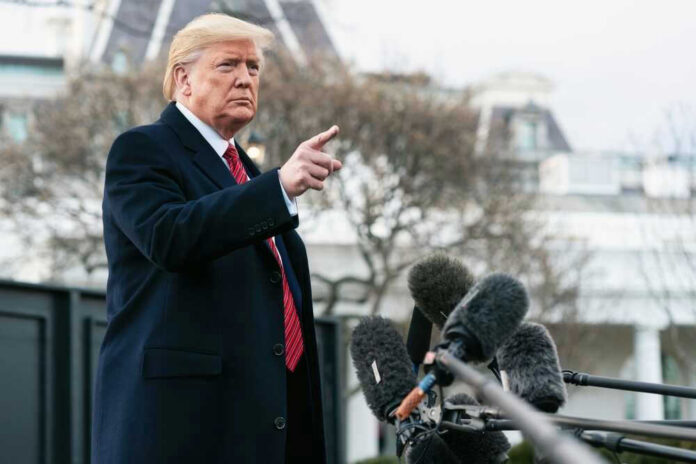
President Trump is weighing whether to move the White House press corps out of the West Wing and out of the building entirely.
Story Snapshot
- Trump has discussed relocating reporters to another building; no final decision yet.
- Allies, including Steve Bannon as reported, have pushed the idea in recent weeks.
- The Brady Room has anchored daily press access on White House grounds since 1970.
- Past presidents have shifted briefing locations during renovations and for space needs.
What Trump Is Considering And Why It Matters
CBS News reported that President Trump discussed moving the press corps to another building, according to two people close to him, with no final decision made. The idea would remove reporters from the James S. Brady Press Briefing Room, which sits steps from the Oval Office. That room holds briefings, houses workstations, and supports live television feeds. Moving it would change how reporters see, hear, and question officials in real time. The White House communications shop did not rule out changes when asked publicly.
🚨 EVICTING THE FAKE NEWS CARTEL! President Trump is looking at moving the corrupt White House press corps out of the Brady Briefing Room—and the legacy media is melting down! 🔥 For too long, weak Democrats let CNN & Politico act as radical left-wing propagandists while coddling…
— Did I Piss You Off? (@DIPYOMUCH) October 21, 2026
The push has outside champions. Reports say former strategist Steve Bannon has urged a move, echoing views he aired after the 2016 election about reshaping media access. The New York Times reported Trump also floated restoring an indoor swimming pool where the briefing room now stands, which would require ousting the press from that footprint. White House messaging under this administration has favored tight control and fewer open press scrums inside the West Wing. Supporters say relocation could streamline operations and reduce chaos; critics warn it would curb daily accountability.
How We Got Here: Space, Control, And A Room That Became Power
The James S. Brady Press Briefing Room grew from a practical fix into an institution. President Richard Nixon approved building it above Franklin Roosevelt’s old pool to fit the television age and a growing press corps. Since 1970, reporters have worked and briefed there on White House grounds. Proximity has real bite. A shouted question in the hallway can make news. A quick walk-by can force clarity. Move reporters off-site, and those moments shrink. That is not theory; it is how news is made inside the West Wing every day.
History shows location choices swing with a president’s needs. Harry Truman shifted press conferences to the Indian Treaty Room across the way in 1945 to manage space and order. During the 2006–2007 renovation, President George W. Bush’s team moved the press to a conference center on Jackson Place, then brought them back after overhauling aging systems. Those shifts were framed as temporary or logistical. Today’s discussion centers on a lasting relocation that would end the press’s on-grounds base. That would be a sharper break from the modern norm than a renovation detour.
What Relocation Would Change Day To Day
Moving the press corps outside the White House gates would reset the daily rhythm. Reporters could still attend scheduled briefings and events. But they would lose the countless unscripted moments: glancing a visitor on the West Wing driveway, catching a deputy with a quick follow-up, or spotting a policy team huddling late. Live stand-ups would face new limits without the North Lawn backdrop and ready access to officials. Technology can bridge some gaps. Geography still wins when seconds matter and power players walk past your desk.
American conservative values balance transparency with order. A White House should set rules that keep work moving, avoid spectacle, and protect security. It should also face tough questions in the building where public power is exercised. The CBS report says no decision is final. The White House has left “all options on the table” when asked about the briefing room’s future. If Trump proceeds, the test will be whether a new setup preserves meaningful, daily access, not just stage-managed briefings, and whether it reflects confidence in the case the administration wants to make.
Sources:
cbsnews.com, nytimes.com, ca.news.yahoo.com, politico.com, georgewbush-whitehouse.archives.gov, whitehousehistory.org