
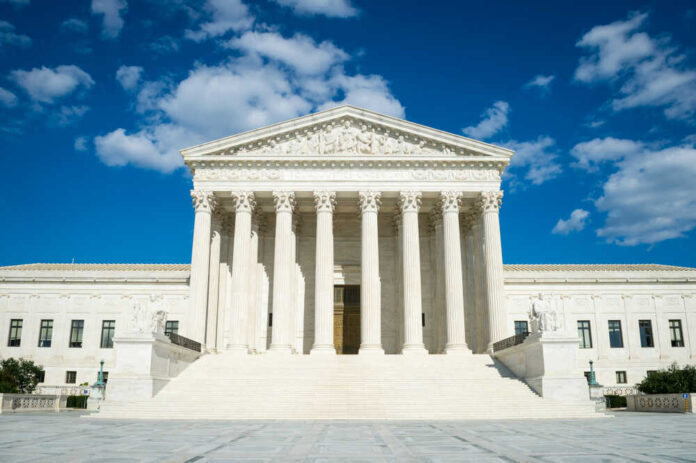
The Supreme Court said no to stopping California from counting about 20,000 disputed mail ballots, and the timing explains why.
Story Snapshot
- The Justice Department flagged about 20,000 voters as likely noncitizens and asked for a pause on counting their mail ballots.
- Lower courts rejected the emergency request, warning it would disrupt election operations days before voting ended.
- The Supreme Court declined to intervene, leaving California free to count those ballots.
- California officials questioned the accuracy of the federal list and said it lacked supporting data.
What the Supreme Court Actually Did
The Supreme Court declined the Department of Justice request to block California from counting a defined set of disputed mail ballots. The request landed on the eve of the election. That timing triggered a well-known caution in election law: courts should avoid last-minute changes that can confuse voters and burden officials. The lower courts had already rejected the pause, citing risk of chaos. The Supreme Court kept those rulings in place, without a full opinion, and the count continued.
BREAKING: The Supreme Court denied the Trump administration's emergency request to force California to set aside mail-in ballots from roughly 20,000 suspected noncitizens until their citizenship could be verified, one day before the midterm elections. pic.twitter.com/hjQzYV7Ht3
— SCOTUS Wire (@scotus_wire) November 2, 2026
The Court’s move did not judge the full merits of noncitizen voting claims. It reflected urgency and practicality. Judges often lean on the “do no harm” rule when an order could upend ballot handling at scale right before deadlines. Here, segregating and delaying targeted ballots would have forced new processes across many counties, midstream. That kind of late change can invite errors that hit lawful voters first. The justices chose stability while litigation proceeds.
What the DOJ Asked For, and Why
The Department of Justice filed a complaint on October 15 seeking to hold aside mail ballots tied to about 20,000 voters the federal government said were likely noncitizens, based on a Department of Homeland Security dataset. The legal hook was a federal statute that bars noncitizens from voting in federal elections. The Department of Justice sought a targeted remedy: set those ballots aside until citizenship could be confirmed, rather than a broad freeze.
This framing matters because it focused on a concrete list, not a general fraud claim. On paper, that is stronger than a vague allegation. But the list itself became the fight. The government signaled that the names were “likely” ineligible, not proven. With Election Day at hand, the court demanded more than a screening flag before interrupting normal counting. That gap, between “likely” and “verified,” proved decisive at the emergency stage.
Why California Pushed Back
California officials said the federal list came without the data and methods needed to vet each name. The Secretary of State reported that requests for details about an earlier, larger federal estimate went unanswered. The Attorney General said a county review of sample names showed many problems, including canceled or inactive registrations and people with United States birthplaces. State lawyers argued that counting rules already block noncitizen voting and that mass segregation would disenfranchise eligible voters.
Judges flagged the same concerns. The district court held that forcing new ballot-sorting systems days before the election risked errors and voter harm. The public record did not show how many flagged voters had actually cast ballots or whether any contest’s outcome was at stake. With no verified, individualized findings and no workable last-minute fix, courts saw more danger in halting the count than in letting it proceed under existing law.
The Conservative Lens: Rule of Law Meets Rule of Order
American law bans noncitizen voting in federal races. Enforcing that ban honors both sovereignty and consent of the governed. The Department of Justice was right to treat the claim seriously and to seek a narrow remedy. But emergency power requires proof that is both specific and administrable. A last-minute filter built on a screening list, without transparent methods, falls short. Conservative principles favor strong election integrity and also demand clear, workable rules that protect lawful voters.
The Supreme Court late on Nov. 2 rejected a Department of Justice (DOJ) request to order California to sequester about 20,000 mail ballots the department says likely belong to noncitizens, the day before Election Day.
The emergency application came after a federal district judge… pic.twitter.com/y9D3GtxvQf
— NTD News (@NTDNews) November 3, 2026
Two tracks now matter. First, facts: the government can disclose its matching methods and error rates, and counties can document which names, if any, are truly ineligible. Second, remedies: parties can design a tested segregation protocol that counties can run without breaking their systems. Courts respond to plans that are precise, proven, and on time. Build that record well before ballots go out, and the legal path gets straighter.
Sources:
cnbc.com, abcnews.com, cnn.com, sbsun.com, jurist.org, latimes.com, newsweek.com, gov.ca.gov, sandiegouniontribune.com, npr.org