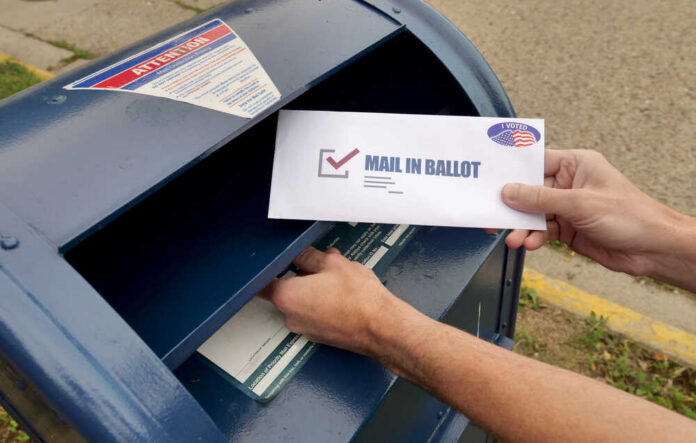
Federal prosecutors say a Utah letter carrier threw away about 300 mail-in ballots before a primary election, and the paper trail is stark.
Story Snapshot
- A federal grand jury indicted a former postal worker over discarded ballots
- About 300 mail-in ballots for Eagle Mountain voters were allegedly dumped
- The worker pleaded not guilty and denied any political motive
- Cases like this are rare but cut to the heart of election trust
What The Indictment Says Happened In Utah
The United States Department of Justice announced an indictment against Damon Matai Seei, a former United States Postal Service letter carrier, for unlawfully discarding mail that included about 300 mail-in ballots for Utah County voters ahead of the June 2026 primary.
Prosecutors say the ballots were meant for Eagle Mountain residents and ended up in a church parking lot dumpster. The charge is unlawful secretion, destruction, and delay of mail, a federal crime with teeth if proven.
Officials stated the disposal happened not long after the carrier’s shift began. That detail adds urgency, because it suggests the ballots never entered the last stretch of delivery. Prosecutors framed the act as a clear break of public trust.
They stressed that the United States Postal Inspection Service and local authorities acted after the ballots were found. The case moved fast to a public filing and arrest, signaling a system that at least responded as designed.
🚨Acting Deputy Attorney General @PADAGMcCotter announces the unsealing of an indictment charging a former USPS Postal Worker for allegedly disposing of HUNDREDS of Mail-In Ballots in Utah ⬇️ pic.twitter.com/QPv0E6o3GC
— U.S. Department of Justice (@TheJusticeDept) September 22, 2026
What The Defendant And Prosecutors Agree And Dispute
The defendant pleaded not guilty in his first court appearance. Officials said he told investigators he did not intend to throw away ballots and had no political motive.
Reports describe claims that he tried to toss advertising mail to lighten his load, which is not a legal defense if ballots were mixed in and “clearly marked.”
Prosecutors said the ballots were separated and discarded in bulk. That alleged sorting step weakens any claim of an honest mistake.
Prosecutors must still prove the charge in court, and a plea is not a conviction. That said, the indictment and public statements from the United States Attorney’s Office give specific counts, dates, and location.
This is not a rumor or a social clip. It is a federal case with sworn filings and a chain of custody for the recovered mail. On facts, that carries more weight than a vague denial. On motive, the record remains thin and may stay that way unless trial evidence shows more.
Why This One Route Matters To Millions Of Voters
One worker on one route can shake trust. Voters see 300 ballots in a dumpster and wonder if their own ballot made it. That fear is rational, and public institutions must answer it with action and proof.
The United States Postal Inspection Service, county clerks, and courts need speed, transparency, and consequences when a route fails. The case shows the pressure point: mail ballots depend on many people doing their jobs with care, every day.
A former Utah postal worker has been federally indicted after allegedly throwing away approximately 300 mail-in ballots intended for voters in Eagle Mountain during the June primary election. He reportedly told authorities he discarded the mail to “lighten his workload.”
— Velstrád24 (@velstrad24) September 22, 2026
Broader research says mail ballot fraud and mishandling remain rare, far below one in ten thousand ballots. Studies from the Massachusetts Institute of Technology Election Data and Science Lab and the Brookings Institution find very few proven cases, even as vote-by-mail use soared.
That data matters because it keeps scale in view. A shocking case can be both real and still an outlier. Both truths can hold at once, and policy should track both risk and math.
The Common-Sense Fixes People Should Demand
Ballot custody works best with simple steps that honor local control and personal duty. Require daily barcode scans that flag unusual holds or dumps by route and time. Enforce strict chain-of-custody logs at every handoff.
Add clear, bold ballot markings and separate tubs that make mixing with ads less likely. Post real-time delivery status to voter portals so citizens can see when a ballot is out for delivery and when it arrives at the clerk. None of this burdens honest workers; it protects them.
Accountability also matters. When a carrier betrays trust, prosecution should be swift and public, as in this case. When processes fail, managers should fix them within days, not months. Citizens should get prompt notice and replacement ballots with tracked delivery if a break occurs near an election.
The Bottom Line For Voters
The Utah case is a hard lesson. A single person can cause harm, but a strong system can catch it, cure it, and deter the next attempt. Hold two ideas together. First, trust is earned through proof and performance, not slogans.
Second, rare does not mean never, so design for the rare event. If the government keeps showing receipts—arrests, audits, delivery data—voters will keep showing up. That is how election trust survives the next viral headline.
Sources:
spectrumlocalnews.com, justice.gov, nbcnews.com, about.usps.com