

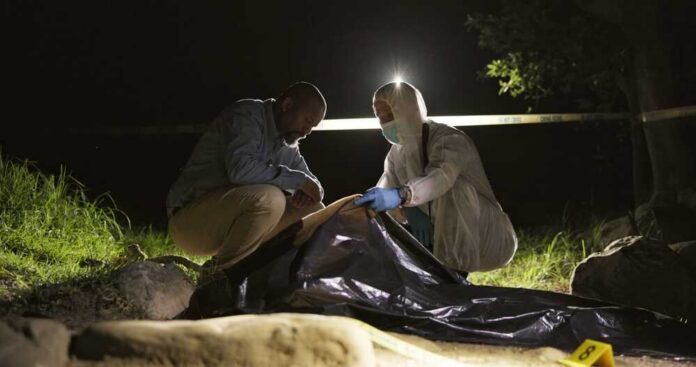
A Mexican court said three men hunted campers for their gear, then executed them and hid the bodies in a well.
Story Snapshot
- A judge convicted three men of aggravated homicide and robbery in Baja California.
- Testimony described a robbery plan, pleas for life, and a 9mm confession claim.
- Ballistics tied a 9mm round and.45-caliber casings to the scene; premeditation was found.
- Defense said there was no murder weapon match and evidence handling fell short.
Verdict: Three Guilty, With Premeditation
Judge Raúl Hernández found all three defendants guilty of aggravated homicide and related offenses after a bench trial in Ensenada. The ruling covered aggravated robbery, violent robbery, and grand theft auto tied to the beach campsite attack that left two Australian brothers and their American friend dead. Separate outlets reported that the court also found premeditation, a key factor in Mexican sentencing. Families asked for the maximum penalty allowed by state law and praised the verdict.
Reporters said prosecutors sought 210 years for each man, though Baja California’s limit is about 60 years. That gap does not touch guilt, but it shows how public pressure and horror can drive calls for symbolic terms that exceed statute. The judge’s words also acknowledged tourism stakes. He warned the crime could scar Mexico’s image, underscoring how cross-border tragedies test faith in institutions as well as in promises of safe travel.
The Evidence: A Planned Robbery That Turned Deadly
Prosecutors built their theory around a robbery plan that targeted the victims’ trucks, phones, and tires. Ari Gisell Silva Raya, the ex-girlfriend of accused shooter Jesús Gerardo, told the court he arrived with a 9mm pistol, described the surrender of belongings, and recounted that one victim begged for his life. Prosecutors said she had tipped him off about the foreigners’ gear, and that the men later hid the bodies in a makeshift well near Punta San José.
Physical clues filled in the timeline. Ballistics experts recovered a 9mm bullet from Jake Robinson’s thigh and found two.45-caliber casings at the campsite. Prosecutors linked a 9mm handgun to Gerardo’s truck and said a co-accused often carried a.45-caliber weapon. A protected witness, identified as Gerardo’s stepson, placed himself in a Ford Ranger used that night and said he faced threats during the attack. The court treated these strands as a coherent web.
The Defense: No Murder Weapon, No Direct Forensics
Defense lawyers argued the case lacked a direct bridge from each man to each killing. They said no biological or genetic evidence tied the accused to the bodies. They pressed the point that none of the state’s witnesses stood at the scene during the shots. They also attacked the stepson’s account, saying he was too far away to hear what he claimed he heard. They alleged crime-scene contamination and contradictions about the abandoned truck.
The sharpest clash centered on the guns. A ballistics expert said the fatal head wounds came from a.45-caliber weapon, not the 9mm linked to Gerardo’s truck. That left, in the defense’s view, no murder weapon matched to any defendant. One forensic witness even said a shell casing found in the well could have been old, and its age could not be fixed. The court still found the chain of proof sufficient beyond a reasonable doubt.
How The Court Likely Weighed It—and Why It Matters
Mexican homicide cases often turn on three pillars: witness accounts, scene forensics, and motive. This case followed that pattern. The judge heard a first-hand confession story from a close associate, crime-scene ballistics tying two calibers to one event, and a clear theft motive tied to the victims’ vehicles and phones. While the .45-caliber gap matters, the court likely treated multiple guns and joint action as enough to establish shared intent and coordinated roles.
🚨BREAKING: Three men have been found guilty of murdering Australian brothers Jake and Callum Robinson and their American friend Carter Rhoad during a surfing trip in Baja California in 2024.
A judge in Ensenada ruled on Friday that Jesús Gerardo García, known as “El Kekas,”… pic.twitter.com/dqdUlUwJLU
— Annie🇺🇸 (@ag_0012) October 10, 2026
Common-sense standards say motive plus means plus concealment signals guilt. Conservative instincts also say victims deserve justice delivered by steady courts, not mob pressure. That bar is higher than outrage. The defense raised real concerns about ballistics specificity and scene control. Yet the judge weighed testimony, physical finds, and the well concealment. The verdict does not end debate over investigative rigor, but it sets legal accountability and a roadmap for appeals where those issues can be tested.
Sources:
foxnews.com, abc.net.au, aljazeera.com, bbc.co.uk, courthousenews.com, thewest.com.au, amp.dw.com, sbs.com.au, ksl.com