
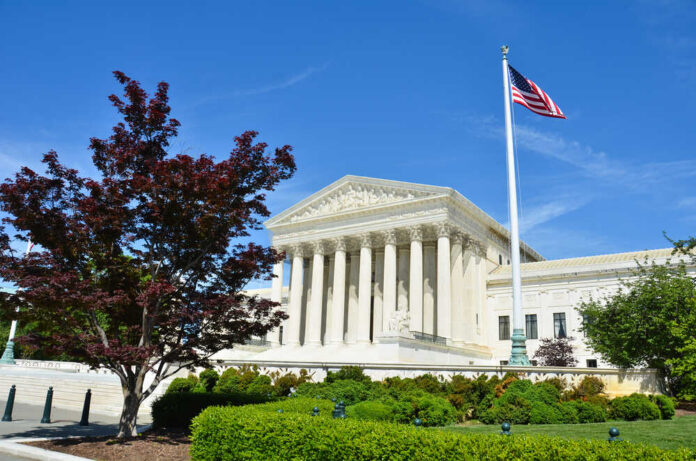
The Supreme Court left Donald Trump stuck with a $5 million jury verdict that found he sexually abused E. Jean Carroll and defamed her.
Quick Take
- The Supreme Court declined to review Trump’s appeal, so the verdict stands.[2]
- The jury rejected Carroll’s rape claim under New York law but still found sexual abuse and defamation.[1][7]
- Courts later upheld the trial judge’s evidence rulings, including testimony from other women and the Access Hollywood recording.[7]
- The case now sits at the fault line between legal proof, public belief, and political loyalty.
What the Supreme Court Refused to Undo
The Supreme Court rejected Trump’s push to erase the jury’s finding that he sexually abused Carroll and then defamed her online. That brief refusal mattered because it left the lower-court judgment in place without further review. For Trump, that means the legal fight over this $5 million verdict is over. For Carroll, it means the central finding remains on the books, unchanged and enforceable.[2][5]
The verdict grew out of Carroll’s account of a 1990s encounter in a Bergdorf Goodman dressing room. The jury found Trump liable for sexual abuse, not rape, and also found that his public denial in 2022 defamed her. The trial record shows the jury awarded damages for both the abuse claim and the defamation claim, with punitive damages added on top.[1][6]
Why the Legal Labels Matter
The word “rape” became a political flashpoint because the jury did not use that label under New York law. Judge Lewis A. Kaplan later said Carroll’s accusation was “substantially true” under the common meaning of rape, even though the legal verdict used the narrower term sexual abuse. That gap between legal wording and ordinary language kept the case in headlines long after the jury spoke.[1][3]
President Donald Trump said he will continue fighting what he called a fake case after the Supreme Court declined to hear his appeal of a $5 million civil judgment in favor of writer E. Jean Carroll. https://t.co/rQYRblYY1y
— NEWSMAX (@NEWSMAX) June 29, 2026
That distinction matters because courts do not always use the same terms the public uses. A jury can reject one legal label while still accepting the core accusation. In this case, the court record and later appellate rulings left little room for Trump to argue that the verdict was just a technical slip. The legal system did not erase the conduct; it defined it with precision.[6][7]
Trump’s Main Argument, and Why It Failed
Trump’s lawyers focused on evidence they said should never have reached the jury. They objected to testimony from two other women who accused him of past sexual assaults and to the 2005 recording in which he spoke about grabbing women without consent. The Second Circuit Court of Appeals rejected those objections and held that the trial judge acted within his discretion.[7]
That ruling was the last major legal wall standing between Trump and the verdict. The appellate court said the disputed evidence fit the federal rules that allow prior sexual assault evidence in sexual assault cases. It also found no harm serious enough to undo the judgment. Once the Supreme Court declined review, Trump’s path narrowed to political argument, not legal reversal.[7]
What This Case Reveals About Power and Proof
This case shows how hard it is to fight a civil verdict once a jury has spoken and appellate courts have signed off. It also shows how public figures live under a brutal double lens. They face the same court rules as everyone else, but their statements echo far beyond the courtroom. Trump’s denials traveled faster than the legal record, which is why the final court action still feels unfinished to many observers.
The deeper story is not only about one verdict. It is about how American law handles old accusations, thin physical evidence, and powerful defendants. Carroll won without a courtroom full of eyewitnesses or forensic proof from 1996. The jury still believed her. That is the part many people miss when they reduce the case to politics: in civil court, credibility can carry the day when the story is detailed, consistent, and legally supported.[1][6]
What Comes Next
The Supreme Court’s refusal to hear the case does not end Trump’s wider legal battle with Carroll. A separate and much larger defamation judgment remains in the background, and that fight has its own path through the courts. But on this $5 million verdict, the legal door is shut. What remains is the public argument over what the verdict means, and whether voters trust the courts more than they trust the loudest voice in the room.[2][5]
Sources:
[1] Web – Supreme Court rejects Trump’s push to toss $5 million verdict in E. …
[2] Web – Jury finds Trump liable for sexual abuse, awards accuser $5M
[3] Web – Supreme Court Lets $5 Million Sex Abuse Verdict Against Trump …
[5] Web – Judge clarifies: Yes, Trump was found to have raped E. Jean Carroll
[6] Web – CARROLL v. TRUMP (2023) – FindLaw Caselaw
[7] YouTube – Supreme Court Rejects Trump Appeal in E. Jean Carroll …