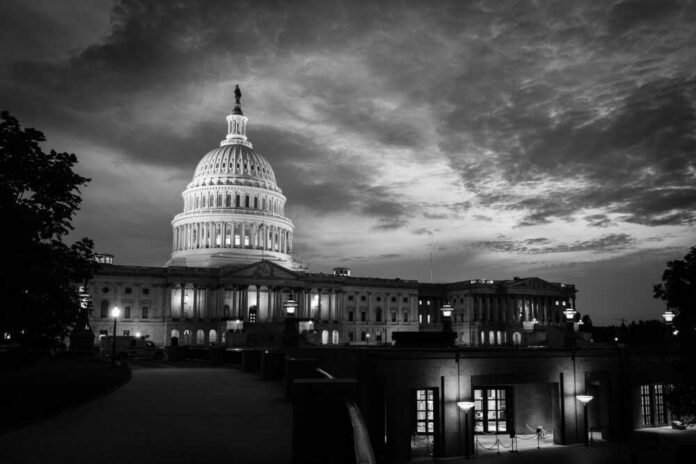
A loaded shotgun, a tactical vest, and a sprint toward the U.S. Capitol is the kind of security failure that forces Americans to ask who gets disarmed next—citizens, or the people threatening public officials.
Story Snapshot
- Police detained an 18-year-old who allegedly ran toward the U.S. Capitol carrying a loaded shotgun and wearing a tactical vest.
- Early reporting indicates a fast law-enforcement response, but public details about motive and charging decisions remain limited.
- Separate state-level debates in 2026 show lawmakers weighing tighter Capitol security against gun-rights and self-defense concerns for law-abiding visitors.
- Multiple capitols are expanding screening and access controls, raising questions about where security ends and government overreach begins.
What Police Say Happened at the U.S. Capitol
Police reports cited by major outlets say an 18-year-old was arrested after running toward the U.S. Capitol with a loaded shotgun while wearing a tactical vest. Initial accounts describe officers stopping the individual before any shots were fired or the building was breached.
Public reporting reviewed here does not provide a detailed timeline of the encounter, nor does it include verified information about the suspect’s stated intent or any political motive.
Man arrested running toward Capitol with shotgun and wearing tactical vest, police sayhttps://t.co/AFLgEkrICu
— Scott MacFarlane (@MacFarlaneNews) February 17, 2026
Several news stories also emphasize the suspect’s age and the presence of a tactical vest, details that raise the stakes for Capitol Police and for the public that expects basic perimeter security to work.
At the time of the research provided, the available material did not include a complete list of charges, court filings, or an official statement laying out what the suspect planned to do. That missing information matters because serious claims require documented facts.
Why the Details Matter Before Congress Reacts
Washington’s reflex after a high-profile scare is often to push sweeping “security” changes that end up landing on ordinary Americans instead of criminals. Without confirmed facts—motive, planning, accomplices, and how the weapon was carried to the area—policy responses risk becoming performative.
If lawmakers cannot show what specifically failed, they tend to reach for broader restrictions: more checkpoints, more controlled access zones, and tighter rules for everyone, including peaceful citizens.
State Capitols Are Tightening Security in 2026
The user’s research shows a wider trend at state capitols: more screening, clearer weapons policies, and stricter visitor procedures. Minnesota’s “Plan Your Visit” guidance and related reporting describe new steps visitors need to follow, consistent with a push for more controlled entry.
Oregon’s Capitol materials similarly discuss security at the building. Nebraska Public Media also covered Capitol security measures as an active issue for lawmakers and the public during the 2026 session.
Those steps can be reasonable when they are narrowly tailored, transparent, and focused on stopping threats rather than harassing families on a school trip. Problems arise when temporary measures become permanent and expand beyond the building footprint.
Conservative voters have watched “emergency” policies metastasize in other areas—spending, surveillance, and COVID-era mandates—and they are right to demand clear limits, clear accountability, and proof that new rules actually address the identified threat.
Security vs. Gun Rights: The Debate Is Real, Not Theoretical
One of the clearest tensions in the research is that Capitol security policies frequently collide with constitutional carry, lawful self-defense, and the basic principle that rights do not disappear at the door of a government building.
The cited article about a Capitol security bill frames that conflict directly—new safety measures weighed against gun rights and self-protection. That is the key fault line: stopping violence is essential, but blanket restrictions can punish the compliant.
What’s Known, What Isn’t, and What to Watch Next
Based on the material provided, the U.S. Capitol incident has broad headlines but limited verified detail beyond the central allegation: a loaded shotgun, a tactical vest, and a run toward the building followed by an arrest.
Readers should watch for primary-source documentation—charging papers, sworn statements, and official briefings—before accepting narratives that inevitably follow. The same standard should apply to any new push for restrictions sold as “common sense” in the aftermath.
Capitol security can be strengthened without turning public spaces into permanent screening gauntlets or using a single incident to justify wider crackdowns on the law-abiding.
The constitutional test is not whether government feels safer; it is whether measures are limited, justified, and applied in a way that respects due process and individual rights. Until the full facts are public, the most responsible posture is vigilance—against real threats and against opportunistic overreach.
Sources:
https://oregoncapitol.com/portfolio/security-at-the-capitol/
https://www.house.leg.state.mn.us/sessiondaily/Story/18864
https://www.ncsl.org/resources/details/states-strengthen-safety-measures-for-legislators-and-staff