

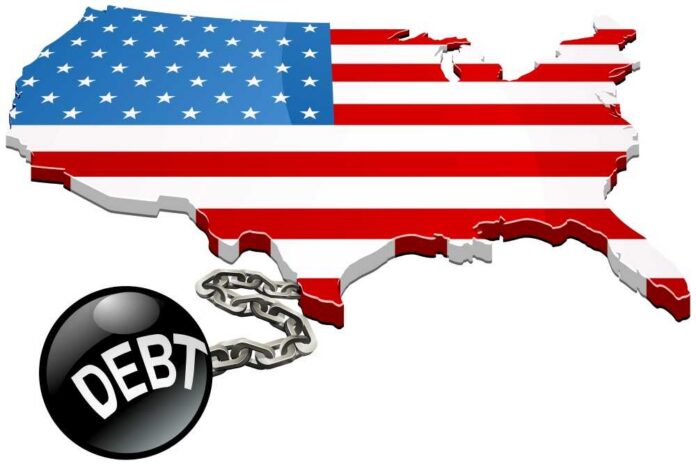
America’s debt interest payments will double to $2.1 trillion by 2036, devouring the federal budget and risking a spiral that burdens future generations—what happens when borrowing yesterday’s money today leaves nothing for tomorrow?
Story Snapshot
- Net interest surges from $970 billion in FY2025 to $2.1 trillion by FY2036, growing 121% amid 86% debt increase and higher rates.
- Debt hits 120% of GDP by 2030, exceeding WWII peak, as interest becomes the second-largest expense and crowds out priorities.
- Total decade interest costs $16.2 trillion, fueling deficits averaging over 6% of GDP.
- By 2048, interest eclipses all other spending; long-term projections show $6.6 trillion annually by 2056.
- Reforms are essential to avoid a debt spiral if rates exceed growth post-2031.
Debt Interest Explodes from Pandemic Surge
US debt held by the public rocketed post-2020 pandemic spending, pushing interest costs from $352 billion in 2021. Debt reached 99% of GDP in 2025, approaching the WWII high of 106%. Rising short- and long-term rates amplified these expenses.
From FY2020 levels, interest nearly tripled by 2025 and doubled again from FY2022. Pandemic borrowing laid the foundation for today’s fiscal strain.
Interest on US debt is becoming a top driver of future deficits, as the sheer size of past borrowing overwhelms the fiscal outlook https://t.co/vhDqXqtGfg
— Scott Odenbach (@ScottOdenbach) May 3, 2026
CBO Baseline Projects Alarming Trajectory
Congressional Budget Office baselines under current laws forecast net interest at $970 billion in FY2025, or 3.2% of GDP. Costs climb to $1.0 trillion in FY2026, surpassing 1991’s 3.2% peak.
By FY2036, interest hits $2.1 trillion, or 4.6% of GDP, with debt growing 86% to add $26 trillion. Average rates rise 16%, or 0.5 points, driving 121% total growth. Deficits average over 6% of GDP.
Interest Overtakes Major Budget Categories
Interest exceeds Medicare spending by FY2028 and defense plus nondefense discretionary by FY2038. It becomes the largest federal expenditure by FY2048. Over the next decade, total interest payments reach $16.2 trillion.
Long-term, costs hit $6.6 trillion by FY2056, up 538% from FY2026. Government prioritizes servicing past debts over future investments, squeezing all sectors.
Congressional Budget Office projections align with fiscal watchdogs. Committee for a Responsible Federal Budget highlights the doubling trend. Peter G. Peterson Foundation tracks annual exceedance of $1 trillion.
Bipartisan Policy Center warns of spiral risks. These nonpartisan analyses demand action, resonating with calls for spending restraint and fiscal responsibility.
Legislation and Tariffs Shape Recent Outlook
February 2026 CBO baseline reveals deficits up $1.4 trillion versus January 2025 projections. Legislation like the One Big Beautiful Bill Act adds $3.4 trillion; economic shifts add $0.7 trillion.
Tariffs offset via $2.7 trillion technical adjustment, potentially cutting primary deficits $3 trillion over 11 years. Interest rises 13-14% year-over-year in 2026, securing second-largest expense status.
INTEREST ON US DEBT IS BECOMING A TOP DRIVER OF FUTURE DEFICITS, AS THE SHEER SIZE OF PAST BORROWING OVERWHELMS THE FISCAL OUTLOOK
U.S. debt is expected to continue soaring in the coming decades not because of excesses committed by future lawmakers, although that’s certainly… pic.twitter.com/loaOEbFZtv
— FXHedge (@Fxhedgers) May 2, 2026
Debt reaches 120% of GDP by FY2030. Post-FY2031, average interest rates may surpass GDP growth, triggering a debt spiral without reforms. Taxpayers shoulder higher burdens; future generations inherit the load. Governments forfeit flexibility for critical investments. Economic growth slows under higher rates; social services face cuts.
Sources:
Net Interest Costs Will Double, Again, Over the Next Decade
New Report: National Debt Outlook Gets Worse as Interest Costs Exceed $1 Trillion Annually
Interest Payments on the National Debt: the Near- and Long-term Outlook
Interest Costs on the National Debt – Peterson Foundation