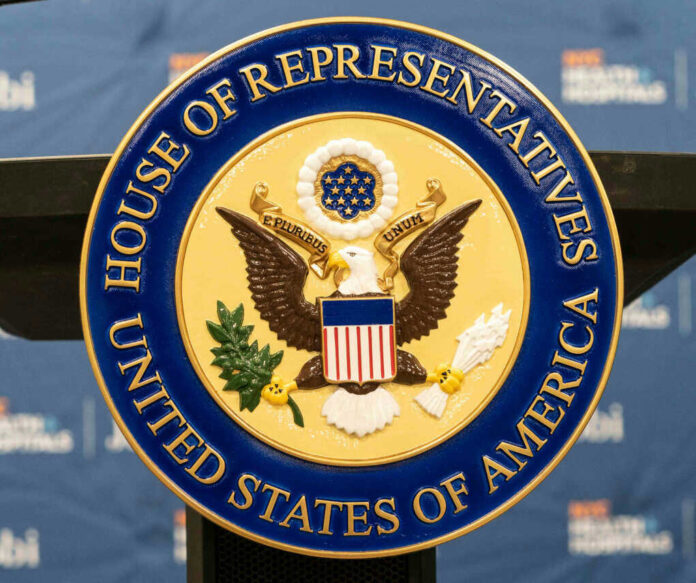
What happens when political maneuvering meets a notorious scandal? The House of Representatives takes an early vacation!
At a Glance
- The House of Representatives starts August recess early to dodge votes on Jeffrey Epstein files.
- Speaker Mike Johnson leads the GOP to avoid “political games” and contentious votes.
- The Epstein Files Transparency Act sparks bipartisan calls for public disclosure.
- Internal GOP divisions and procedural standoffs cause legislative gridlock.
The Maneuver to Recess
The House of Representatives, spearheaded by Speaker Mike Johnson, has initiated its August recess earlier than planned.
This surprising move comes amidst a storm of political debate regarding the release of Justice Department files related to Jeffrey Epstein.
The internal GOP split and Democratic maneuvers to force votes on this contentious issue have halted legislative progress and canceled scheduled votes. It’s a classic case of ‘when in doubt, recess it out.’
Epstein, a financier and convicted offender, left a trail of mystery upon his death in 2019.
The chaos surrounding his associates continues to prompt public demands for transparency.
The Epstein Files Transparency Act, introduced by Rep. Thomas Massie, aims to mandate the release of all documents related to Epstein. Yet, the Justice Department maintains that no secretive “client list” exists, which adds more fuel to this fiery debate.
Key Players in the Game
The political landscape resembles a dramatic game of chess.
Speaker Mike Johnson leads the House GOP’s strategy, emphasizing the need to bypass “political games.” Meanwhile, Rep. Thomas Massie is pressing for public disclosure of Epstein files, advocating for transparency. The House Democratic Caucus, on the other hand, is pushing votes to force the release of these files, turning the issue into a political accountability battleground.
The White House under President Trump adds another layer to this puzzle by petitioning courts to release some sealed documents. While GOP leadership seeks to avoid politically risky votes, transparency advocates view this as an opportunity for greater accountability.
The Ripple Effect
The decision to start recess early has left the House in a state of legislative limbo. The cancellation of votes and the procedural standoff has created a gridlock, unable to advance major legislation. Speaker Johnson’s accusations of Democrats playing “political games” have only added to the tension. Meanwhile, Rep. Massie remains committed to his cause, anticipating increased support after the recess.
The public perception isn’t too forgiving either. The lack of action and the early recess could potentially fuel conspiracy theories, casting doubt on the accountability of political elites. The GOP’s move is seen by some as a necessary step to prevent “political theater,” while others perceive it as an attempt to dodge accountability.
What Lies Ahead
As the House takes its early recess, the Epstein files remain a contentious issue likely to resurface come September. Rep. Massie is gearing up for renewed efforts and increased support for disclosure. The situation sets a precedent for future congressional standoffs over sensitive investigative files, a scenario not entirely unfamiliar given past incidents like the 9/11 documents and JFK files.
This political drama also has broader implications. It deepens partisan divides and erodes public trust in congressional processes. Legal and investigative sectors may feel the ripple effect, influencing how high-profile cases are handled in the future. The media, meanwhile, continues to spotlight the Epstein saga, keeping public interest alive.