Sparking cheers from those who’ve waited years for common sense to return to Washington, federal employees across the nation are now free to openly display their faith at work.
At a Glance
- The Trump administration officially mandates robust protection of religious expression for all federal employees.
- New guidance allows personal religious displays, group prayer, and faith-based conversations in federal workplaces.
- Agencies must approve religious accommodations generously and update their policies to comply.
- Move reignites debate over religious liberty, workplace neutrality, and the meaning of “American values.”
Trump’s Federal Workforce: Faith No Longer Silenced by Bureaucracy
After years of watching federal workers tiptoe around their own beliefs—while every wacky agenda under the sun was given a parade—President Trump has turned the tables.
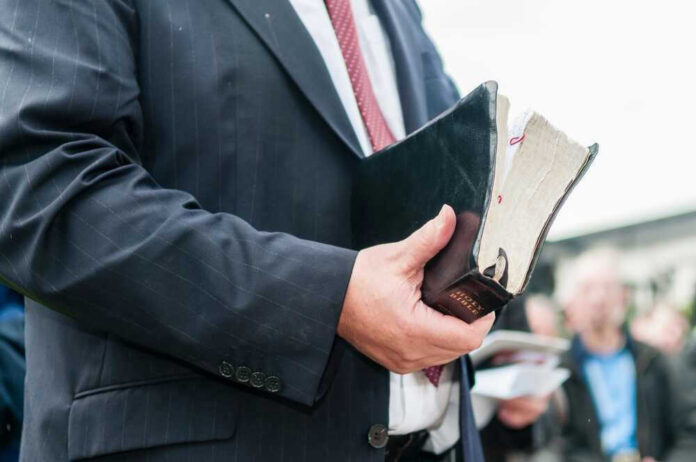
The Office of Personnel Management (OPM) dropped a bombshell memo: federal employees now have the green light to display Bibles, crucifixes, mezuzahs, pray in groups during off-duty hours, invite colleagues to religious gatherings, and talk about their beliefs without fear of some HR busybody calling the speech police.
OPM Director Scott Kupor didn’t mince words, making it clear: “Federal employees should never have to choose between their faith and their career. This guidance ensures the federal workplace is not just compliant with the law but welcoming to Americans of all faiths.”
“For ordinary Catholics… these commitments are not mere policy,” said Kelsey Reinhardt, president of CatholicVote.
“Living our faith in public… has always been part of the American promise.”@catholickelseyhttps://t.co/ikXT1oRzmM
— CatholicVote (@CatholicVote) July 28, 2025
For too long, the federal government treated religious Americans like they were ticking time bombs, ready to “offend” someone if they dared mention Christmas or wore a visible cross.
The new policy flips the script, restoring the rights guaranteed by the First Amendment and putting faith back where it belongs: out in the open, not stuffed in a desk drawer.
Federal agencies are now on the hook to update every rule and policy, making sure religious expression isn’t just tolerated—it’s protected.
From Lip Service to Action: Guidance with Real Teeth
This isn’t another toothless memo gathering dust. The OPM directive follows a January 20, 2025, Presidential Memorandum and a July 16 guidance, both calling for agencies to approve religious accommodations “generously.”
The Supreme Court’s Groff decision set the legal table by clarifying what counts as “undue hardship” when it comes to accommodating faith in the workplace. Now, agencies must allow personal religious expression to the fullest extent possible, unless it would actually interfere with their core operations. That means no more hiding prayer groups, no more side-eye for a Bible verse, and no more bureaucratic excuses.
Of course, the usual suspects are already clutching their pearls. Critics predict a tidal wave of proselytizing and hand-wring over workplace neutrality. But let’s be honest: the only “neutrality” enforced by the old regime was making sure religious Americans kept quiet while every radical leftist cause got a megaphone.
This administration has made clear that those days are over. Faith-based organizations and community leaders, long shut out by ideologues, are now consulted and empowered. The Trump White House isn’t just restoring religious liberty—it’s giving it teeth, and the bureaucrats have to listen.
What Changes for Federal Workers—and Why It Matters
On the ground, the memo means federal employees of every faith—Christian, Jewish, Muslim, you name it—can finally stop worrying that a misplaced prayer or a religious book will land them in hot water.
Agencies are tasked with reviewing and updating rules, setting up clear channels for employees to request religious accommodations, and approving those requests unless there’s a genuine conflict with agency work.
For the first time in decades, the federal government isn’t just paying lip service to “diversity”—it’s backing up the constitutional right to religious freedom.
There’s a reason this move hits a nerve. During the Biden years, religious liberty was trampled in the name of “tolerance”—except, of course, for those who actually wanted to live out their faith. Federal workers were forced to tiptoe around their beliefs while the government bent over backward to accommodate every fringe agenda.
This new policy sends a message: Americans’ constitutional rights don’t stop at the office door. The result? An immediate uptick in religious accommodation requests, a major cultural shift inside federal agencies, and—predictably—a wave of lawsuits from groups who’d rather see faith erased from public life altogether.
Long-Term Impact: A Return to American Values or the Start of New Battles?
The Trump administration’s move could reshape not just federal workplaces, but the entire approach to religious liberty across the country.
As federal agencies implement these changes, state governments and private employers are put on notice: the era of suppressing faith in the name of “neutrality” is over. Experts say the new guidance is consistent with recent Supreme Court rulings and could set a strong precedent for the private sector. But the road ahead isn’t without bumps.
Legal challenges are certain, especially from those who claim the policy goes too far or risks marginalizing non-religious employees. The administration’s answer? The Constitution is clear, and the First Amendment applies to everyone—regardless of the latest woke fad.
This is more than a policy change. It’s a return to the values that built this country: faith, freedom, and the right to live your beliefs without fear.
For conservatives sick and tired of watching their values trampled by bureaucrats and activists, it’s a long-overdue course correction. And for those still pining for the days when Washington dictated what Americans could say, wear, or believe at work—well, those days are now a bad memory.