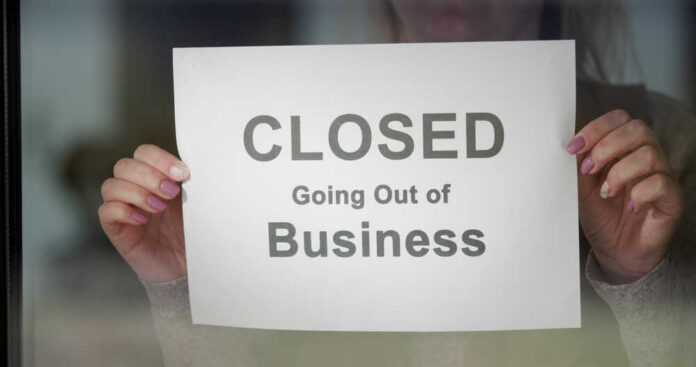
A giant Carl’s Jr. franchisee in California is trying to shut 10 restaurants and unload 49 more after years of rising costs finally caught up with him.
Story Snapshot
- One longtime Carl’s Jr. franchisee in California has filed for Chapter 11 bankruptcy protection after more than two decades in the business [1][2].
- Court filings and news reports say he aims to close 10 underperforming restaurants and sell the other 49 locations he controls in the state [2][3][6].
- The operator blames rising costs, a new $20 fast-food minimum wage, weak sales, and tougher burger competition for losses topping $600,000 a month [2][3].
- Carl’s Jr. corporate insists this is a one-franchise problem, not a collapse of the brand’s broader California footprint [1][2][5].
Bankruptcy reveals the scale of the Carl’s Jr. shake-up
Friendly Franchisees Corporation and several related companies tied to founder Harshad Dharod filed for Chapter 11 bankruptcy protection in federal court in April after years of running Carl’s Jr. locations across California [1][2].
Bankruptcy records and news coverage say these entities control about 59 Carl’s Jr. restaurants in the state and employ close to 1,000 workers [2]. That scale matters. This is not one lonely store going dark on a corner. This is a chunk of the brand’s home-state network getting taken to court.
Restaurant Dive, a trade outlet that tracks the industry, reported that Friendly Franchisees Corporation and its affiliates had previously operated around 65 Carl’s Jr. restaurants statewide, representing about 11 percent of Carl’s Jr. locations in California [1][5].
That share has slipped as some sites changed hands or shut, but it still shows how concentrated the risk is when one big operator runs so many locations [1][5]. When a franchisee of this size stumbles, whole communities feel it quickly.
Closures, lease rejections, and a fire sale of “underperforming” stores
Filings in the bankruptcy case show the debtor asked the court to reject leases on at least 10 underperforming restaurants, the legal step that often precedes closing those sites for good [2].
Reporting by Fast Company identified specific addresses around Southern California, from Tarzana and Granada Hills to Pasadena and San Gabriel, as locations on the chopping block [2].
Local posts already show that at least one site in Agoura Hills is permanently closed, with signs down and doors locked [4]. For nearby families and workers, this is not theory. It is lunch that vanished.
Major Carl’s Jr operator reportedly set to shutter, sell dozens of California locations https://t.co/rwkXjWhZd8
— FOX Business (@FoxBusiness) June 10, 2026
The plan does not stop with those 10 locations. The same court record and follow-up stories say the franchisee wants to sell the other 49 Carl’s Jr. restaurants he controls in California to new owners [2][3][6].
A broker, National Franchise Sales, is overseeing the process and says buyers are already interested [2].
That means most of these restaurants will not disappear. They will likely get new operators, fresh financing, maybe new staff. But workers still face weeks or months of limbo while lawyers and bidders sort the pieces.
Why the numbers stopped working in California
Sun Gir Incorporated, named the lead debtor in the case, told the court that the restaurants generate over $6 million in monthly sales but still lose more than $600,000 this year [2]. That is a huge red flag.
You can only bleed ten percent of your revenue for so long before the math forces something to break. Rising operating costs, weak sales, and fierce burger competition all piled up, according to those filings and related reporting [2][3].
This is not the old “people stopped liking burgers” story. It is the margins getting sanded down from every side.
Coverage of the case ties the margin squeeze directly to California’s new $20 minimum wage for fast-food workers, as well as higher rents, insurance, and food prices [2][3].
One Instagram report about the bankruptcy says the franchisee cited the wage hike as a key factor and described a broader squeeze from California costs and employee unrest [3].
From this lens, this tracks with what many warned about. When the government forces a large wage increase overnight, low-margin businesses struggle to absorb the hit, especially if they cannot raise prices quickly enough without scaring off customers.
Is this about bad policy, bad management, or both?
Some will say this is a pure management failure, not a policy story. The company’s complex web of subsidiaries, spanning both restaurants and real estate, raises questions about how well leadership managed debt, leases, and day-to-day operations [1][5].
The court filings made public so far do not break down which losses were due to rent, wages, or poor site choices [1][2]. That lack of detail leaves room for spin from all sides, including activists who want to defend the wage hike at all costs.
Yet the pattern does not exist in a vacuum. Restaurant Dive notes that Carl’s Jr. already saw its broader California footprint shrink from 613 restaurants in 2023 to 588 in 2025, even before this bankruptcy [5].
Other fast-food franchisees across brands such as Subway and Applebee’s are also filing for relief in 2026 as they face higher labor and food bills with customers trading down or eating at home more often. The system is straining. Politics aside, that is what the data show.
What Carl’s Jr. says, and what California should learn
Carl’s Jr. corporate has been careful to frame this mess as a one-off problem. A spokesperson told Restaurant Dive that this situation is specific to this franchisee and will not affect other Carl’s Jr. locations in the state [1][2].
Legally, that is true. Franchise contracts keep the brand shielded while local operators take the hits. But from a policy and Main Street view, seeing dozens of locations close or change hands in the chain’s home state sends a louder message than any press release ever could.
California lawmakers pushed a fast-food wage that sounded compassionate but largely ignored how tight restaurant economics already were. This Chapter 11 case shows what happens when costs rise faster than real productivity or customer demand.
The best lesson here is not that workers do not deserve better pay. It is that heavy rules and sudden cost shocks tend to land hardest on local owners, entry-level workers, and the neighborhoods that lose one more lit sign on the corner. Voters should remember that the next time they hear promises that ignore basic arithmetic.
Sources:
[1] Web – Major Carl’s Jr operator reportedly set to shutter, sell dozens of …
[2] Web – One of Carl’s Jr.’s largest California franchisees just filed … – …
[3] Web – Major Carl’s Jr franchisee in California files for bankruptcy
[4] Web – Carl’s Jr. closing stores? List of burdensome franchise locations
[5] Web – Born as a South L.A. hot dog cart, Carl’s Jr. now faces a reckoning in …
[6] Web – Carl’s Jr. closing 10 Cali locations after bankruptcy filing #CarlsJr