
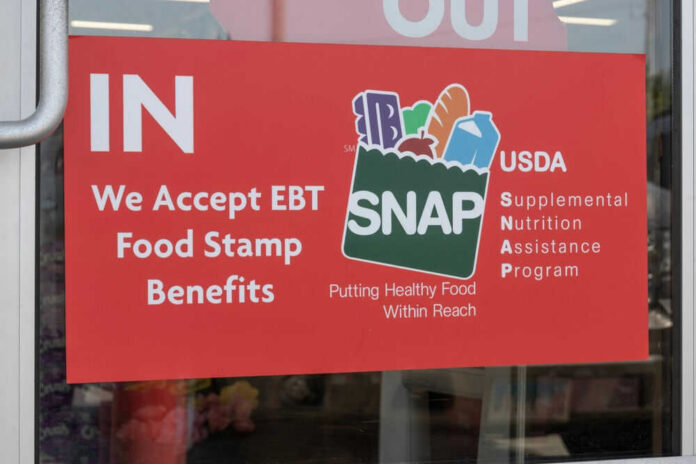
A new federal rule could strip food assistance from 6.3 million Americans by 2029, all over a paperwork pathway states have used for nearly three decades.
Story Snapshot
- The Department of Agriculture (USDA) proposed ending a policy called broad-based categorical eligibility, which lets states use noncash services to qualify families for the Supplemental Nutrition Assistance Program (SNAP).
- USDA projects the change would cut 3.2 million households, or 6.3 million people, from SNAP rolls in fiscal year 2029.
- The agency estimates federal savings of $44.649 billion between fiscal years 2027 and 2031.
- Agriculture Secretary Brooke Rollins has cited unverified figures on dead and duplicate recipients that USDA has not released for outside review.
What The Rule Actually Changes
The proposal targets a specific legal mechanism. Right now, states can grant SNAP eligibility to households that receive noncash services funded by Temporary Assistance for Needy Families (TANF), even if they never get a TANF check. The new rule would require households to actually receive TANF cash assistance, as defined in federal regulation, to qualify this way. That narrows a door states have used to simplify enrollment since the 1996 welfare reform law.
USDA frames this as restoring the original purpose of categorical eligibility, which was meant to cut red tape for families already proven needy through TANF, not to expand income limits beyond what Congress set in law. The agency’s own impact analysis says 16.9 percent of SNAP households exceed federal income or resource limits under the old noncash standard. That is the group the rule aims to remove.
The Numbers Behind The Fight
Three-point-two million households. Six-point-three million people. Those are USDA’s own projected losses for 2029, and both sides of this debate keep repeating them for very different reasons. Supporters see proof the old rule let too many households skip federal income tests. Critics see proof the rule will yank food aid from millions, regardless of why they qualified in the first place.
🚨 Big news: The Trump administration is looking to shake things up with SNAP (you know, food stamps). This could affect more than 6.3 million people—roughly 18% of recipients—by cutting off automatic eligibility for families who rely on other aid like TANF.
Here’s what you… pic.twitter.com/EW7GxHx9CU
— Thomas Huffman (@ThomasHuffman79) November 12, 2026
The Food Research and Action Center calls the plan an attack on working families and older adults who rely on this flexibility to avoid sudden benefit cliffs. Advocacy groups argue households just above strict income lines still struggle to afford groceries, especially with prices still elevated. That is a fair point worth weighing, but it does not change the fact that federal law sets income limits for a reason, and states extending eligibility through noncash workarounds stretches that intent.
Fraud Claims Still Lack Public Proof
Secretary Rollins has pointed to data suggesting 186,000 deceased people and 500,000 duplicate enrollments turned up across 29 states. These numbers get repeated often, but USDA has not released the underlying records for independent researchers to check. That is a real weakness in the administration’s public case. Claiming fraud without showing your work invites skepticism, even from people who support tighter eligibility rules on principle.
A federal court has already stepped in once, temporarily blocking USDA from threatening to cut funding to states that resisted handing over recipient data. That legal fight matters because it shows the data-sharing push is contested, not just by advocacy groups, but by courts weighing whether USDA followed proper process. Transparency would strengthen the administration’s hand considerably here.
Why This Fight Echoes Past SNAP Battles
Broad-based categorical eligibility was never a fringe loophole. Research from the Center on Budget and Policy Priorities notes it has functioned as a standard tool for simplifying enrollment and protecting working families from abrupt benefit cuts when a raise pushes income slightly over the line. Ending it reverses decades of bipartisan administrative practice, not just one program feature.
This also arrives on the heels of the 2025 reconciliation law, which already delivered the deepest SNAP cuts in the program’s history. Participation has been falling since, a pattern not seen at this pace since the 1996 welfare reform cuts. Whether that counts as fiscal discipline or a rollback of the safety net depends entirely on which side of this debate you start from.
What Comes Next
The rule remains a proposal, not a final regulation, meaning public comment periods and possible revisions still lie ahead. Lawmakers like Representative Jahana Hayes have already blasted it publicly, arguing it targets struggling families rather than fraud. Governors and state agencies, meanwhile, are bracing for what reduced federal eligibility rules would mean for school meal programs tied to SNAP enrollment.
The Trump administration is moving to cut millions from SNAP food assistance under a new proposal. https://t.co/bvCxQWNAJP
— NBC 7 San Diego (@nbcsandiego) November 11, 2026
The core argument conservatives should find persuasive is simple: federal benefits ought to match federal income limits set by Congress, not expand through a state-by-state side door. But that argument only holds up if USDA backs its fraud claims with real, checkable data. Until that happens, the rule’s integrity case will keep getting overshadowed by its headline number.
Sources:
abcnews.com, fna.usda.gov, federalregister.gov, khq.com, newsfromthestates.com, cbpp.org