
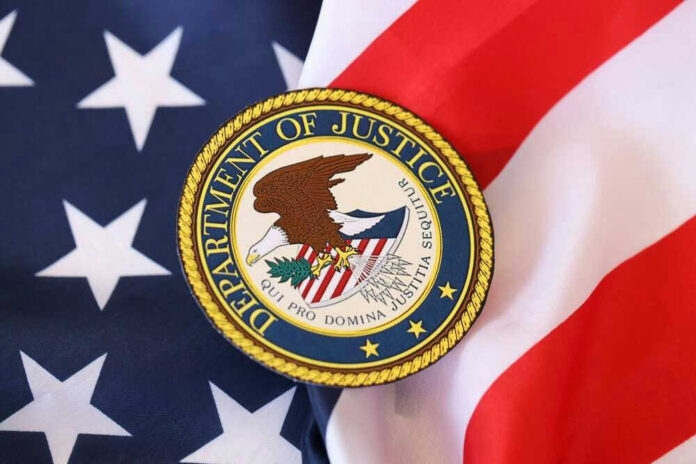
The Justice Department just walked away from its own election lawsuit, days after the votes it wanted blocked had already been counted.
Quick Take
- The Department of Justice (DOJ) sued California in October, claiming over 20,000 likely noncitizens were registered to vote.
- California officials and Los Angeles County said the federal list was unreliable and lacked proof.
- Multiple courts, including the Supreme Court, refused to block California from counting the disputed ballots.
- The DOJ dropped its own lawsuit on Friday, November 6, 2026, after the midterm election ended.
What The Lawsuit Actually Claimed
The Justice Department, working with the Department of Homeland Security, filed its complaint on October 15, 2026. It said data matching turned up more than 20,000 people on California’s voter rolls who were likely noncitizens. Some of them, the department said, had already received vote-by-mail ballots. The DOJ asked a federal court to force California and Los Angeles County to set those ballots aside until citizenship could be confirmed.
Before the lawsuit even landed, the department sent California a list of names on October 13. It wanted those ballots held back right away. California refused. State officials said they would not segregate ballots based on a list they could not verify, setting up a legal fight that would run through the entire final stretch of the midterm campaign.
Federal prosecutors did not stop at the lawsuit. They also arrested 11 foreign nationals on charges of illegally registering and voting, framing the case as proof the broader concern was real. Supporters of the lawsuit pointed to those arrests as evidence the state’s rolls needed a harder look before ballots went out the door.
California’s Pushback At The County Level
California Secretary of State Shirley Weber told the Justice Department it had not shown its work. She called the demand to segregate ballots an unprecedented move built on methodology the department refused to explain. Los Angeles County went further, actually testing the list the feds had sent.
County reviewers checked a sample of 200 names from the federal list. They found that 42.9% had already canceled their registrations and another 4.6% were inactive, meaning no ballot was ever mailed to them. More than 71% of the sample had never voted at all. Among records with a usable birthplace entry, 38.9% showed the person was born in the United States. The county called the list unreliable.
Courts Across The Board Said No
A federal judge in California rejected the DOJ’s request to block the state from counting the ballots in late October. The Justice Department appealed. A federal appeals court turned down that request too, keeping the ballots in the count. The fight escalated all the way to the Supreme Court on the eve of the election, and the justices denied the department’s emergency request there as well.
By the time Election Day arrived on Tuesday, November 3, every court that had looked at the request had declined to stop California from counting the ballots. The legal path the Justice Department had been pursuing for weeks had effectively run out before voters even finished casting their ballots.
Why The Case Became Moot
On Friday, November 6, the Justice Department filed a notice to voluntarily dismiss its own lawsuit. Government lawyers argued the relief they wanted was now impossible, since the midterm election had already concluded and the ballots had already been processed. In plain terms, there was nothing left for a court to set aside.
The dismissal closed out a legal effort that had been rejected at every turn, from the trial court to the Supreme Court. It does not resolve whether the original 20,000 names were accurate. It simply means the specific court order the department wanted no longer makes sense now that the election is over.
Why This Keeps Happening Nationwide
Noncitizen voting in federal elections is against the law, and real cases do occur, as the California arrests show. But research on past allegations, including a Brennan Center review, found confirmed noncitizen votes typically make up a tiny sliver of ballots cast, far below the scale political rhetoric often suggests. The gap between a name flagged by a database and a person who actually cast an illegal ballot is wide, and it is where most of these disputes live.
The Justice Department on Friday voluntarily dismissed its California ballot lawsuit, ending its bid to set aside mail ballots from roughly 20,000 voters on its likely noncitizen list.
DOJ told the court the ballots can no longer be segregated before the Nov. 13 hearing. Judge…
— Frontier Signal (@FrontierSigHQ) November 7, 2026
That gap is exactly what played out in California. A list of 20,000 names sounds alarming on its face. A county sample showing many of those people never voted, already canceled their registration, or were born in the United States tells a very different story. Conservatives who want election integrity taken seriously should want DOJ to bring airtight evidence next time, not a list it couldn’t defend in court.
Sources:
cbsnews.com, nbcnews.com, bostonglobe.com, latimes.com, ajc.com, pbs.org, supremecourt.gov