
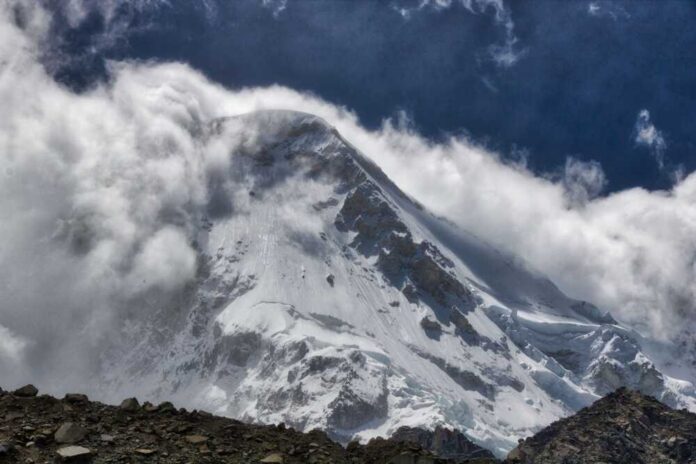
A glacier in the Swiss Alps just closed a 34-year-old missing persons case, giving two Belgian families the answer they waited more than three decades to hear.
Story Snapshot
- A hiker found two bodies on the Trift Glacier on July 26, 2026, near the Italian border in southern Switzerland.
- DNA testing confirmed the remains as Marcel Bastyns and Jos Van Deun, Belgian climbers who vanished in September 1992.
- Valais regional police sent the remains to the Institute of Forensic Medicine at Wallis Hospital in Sion for identification.
- The find fits a growing pattern of melting Alpine glaciers releasing bodies lost for decades.
A Hiker’s Discovery Ends a Decades-Old Mystery
On July 26, 2026, a hiker walking near the Trift Glacier spotted two bodies partly freed from the ice. The location sits in southern Switzerland, close to the Italian border, in a rugged stretch of alpine terrain near Saas-Grund.
Police in the canton of Valais confirmed the discovery and moved quickly to recover the remains before further melt or weather could damage them.
A thawing Swiss glacier has given up the bodies of two Belgian climbers who vanished more than three decades ago. Police in the canton of Valais on Wednesday said a hiker spotted… https://t.co/UmLKH15fou
— Newser (@Newser) August 19, 2026
Authorities transported the remains to the Institute of Forensic Medicine at Wallis Hospital in Sion. There, forensic scientists ran DNA comparisons against family samples tied to missing persons cases. Today, police announced the results.
The remains belonged to Marcel Bastyns and Jos Van Deun, two Belgian mountaineers who disappeared during a climb in September 1992.
Identification Documents Found Near the Remains Backed Up the DNA Match
Reports out of Belgium noted that identification documents were recovered alongside the bodies, offering an early clue before laboratory testing confirmed the match.
Family members had reportedly received word in late July that the recovered remains might belong to their missing relatives, though DNA testing was still needed to make it official.
That confirmation arrived weeks later, closing a case that had stayed open since the two men vanished without a trace over three decades ago.
The men had set out on an alpine route in the Valais region in 1992 and never returned. Search efforts at the time turned up nothing, and the case went cold for 34 years.
Glaciers move slowly, but they also bury and eventually release what they trap. In this instance, the Trift Glacier’s retreat did what search parties in 1992 could not.
Retreating Ice Keeps Turning Up the Alps’ Lost Climbers
This case is not an isolated event. Swiss glaciers have been giving up long-hidden remains for years as rising temperatures speed up ice loss.
In 2023, DNA tests confirmed a body found near the Matterhorn belonged to a German climber missing since 1986, more than 37 years earlier. A similar pattern played out in 2017, when a melting glacier released the mummified remains of a couple lost 75 years prior.
Swiss police have warned for years that hundreds more bodies could surface as glaciers keep shrinking, since so many climbers went missing in the mountains over the past century.
Scientific researchers studying glacier retreat note that once remains are exposed, they need fast, careful recovery to preserve forensic evidence before weather and movement degrade it further. The Trift Glacier case followed that same protocol, and it worked.
A Pattern That Reflects Real Physical Change in the Mountains, Not a Mystery to Solve
None of this requires speculation about what happened to the two men in 1992. The facts here are straightforward: they climbed, they disappeared, and decades later, the ice that swallowed them moved and let go.
Forensic science, not guesswork, delivered the final answer their families needed. That is the story, and it stands on its own without any added drama.
For readers watching these discoveries pile up year after year, the takeaway is less about mystery and more about how physical processes in nature eventually surface what was once lost.
Mountain rescue teams, regional police, and forensic labs across Switzerland have built a quiet but effective system for handling these cases when the ice cooperates. This latest identification adds one more resolved file to that growing list.
The remains of two Belgian climbers who vanished in 1992 have been found in Swiss Alps after a hiker in July reported finding the bodies on the Trift glacier in Switzerland https://t.co/695XjuwUzw
— TRT World (@trtworld) August 19, 2026
Bastyns and Van Deun’s families now have what so many others who lose loved ones to the mountains never receive: certainty. Their case joins a running record of climbers, hikers, and even wartime dead recovered from Alpine ice, a reminder that the mountains eventually return what they take, even if it takes a lifetime to happen.
Sources:
cbsnews.com, snowbrains.com, nampa.org, newser.com, mk.co.kr, dhnet.be