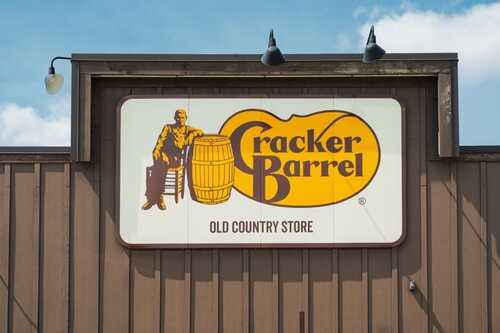
Cracker Barrel CEO Julie Masino is stepping down, nearly a year after a logo redesign sent loyal customers into revolt and cost the company more than $100 million in market value.
Story Snapshot
- Cracker Barrel announced Masino will leave as CEO and board member effective August 10, staying on in an advisory role until October 9.
- David Deno, former CEO of Bloomin’ Brands, takes over as the new chief executive.
- The exit follows last year’s rebrand backlash that stripped the “Old Timer” mascot and simplified the logo, drawing criticism from customers and President Trump.
- Shareholders had voted to keep Masino in November, but an activist investor kept pushing for her removal.
A Year After The Logo Fiasco, The CEO Finally Exits
Cracker Barrel confirmed Monday that Masino will step down as chief executive and leave the board, with her last day set for August 10. She will stick around in an advisory capacity through October 9, giving the company time to steady itself.
David Deno, a restaurant industry veteran with more than 40 years of experience, will take her seat immediately.
NEW: Cracker Barrel CEO Julie Felss Masino is stepping down following the company's controversial rebrand last year that sparked fierce backlash from longtime customers.
The effort to modernize the chain included removing the iconic Uncle Herschel mascot and redesigning… pic.twitter.com/gE1U5HboJx
— FOX Business (@FoxBusiness) July 27, 2026
Deno previously ran Bloomin’ Brands, the parent company of Outback Steakhouse, giving him deep experience steering a legacy casual-dining chain. His arrival signals a company eager to project stability after a rough stretch.
The Wall Street Journal noted the change caps roughly three years in which Masino faced steady criticism, including public pushback from President Trump himself over her rebrand strategy.
How A Simplified Logo Triggered A Customer Revolt
The trouble started last August when Cracker Barrel unveiled a stripped-down logo that dropped the man in overalls leaning on a barrel and removed the words “Old Country Store.”
The chain framed it as part of a wider plan to modernize its restaurants and appeal to younger diners across its 660 locations in 43 states. Customers saw it differently, accusing the brand of abandoning its Americana roots for a bland, corporate look.
Backlash spread fast online, and within days Cracker Barrel reversed course, restoring the original logo and pausing further redesign plans. Stock prices dropped 15%, wiping out more than $100 million in market value almost overnight.
Masino later admitted the effort “missed the mark,” insisting it was meant to improve the guest experience rather than erase the brand’s identity.
Shareholders Kept Her, But The Pressure Never Let Up
By November, activist investor Sardar Biglari pushed hard to oust Masino entirely, but shareholders voted roughly 75% in favor of keeping her on despite the turmoil.
Board member Gilbert Dávila, who championed diversity-focused marketing initiatives, was not so lucky. He lost his seat in that same vote, a clear signal that investors wanted accountability somewhere even as they stood by the chief executive.
Masino later told reporters she felt “fired by America,” describing the public reaction as deeply personal even after keeping her job. That comment captures the strange middle ground she occupied for months: technically retained, but politically and financially wounded beyond repair. Conservative commentators and customers alike had made clear the trust was broken long before the board made it official.
The CEO of Cracker Barrel, Julie Masino, is stepping down after the company’s DISASTROUS woke rebrand that faced MASSIVE backlash.
Fox & Friends: “David Deno is expected to take over next month. He previously served as CEO of Bloomin’ Brands, which does own Outback Steakhouse.” pic.twitter.com/gMEk8kqIGw
— RedWave Press (@RedWavePress) July 28, 2026
This saga offers a blunt lesson for any legacy brand tempted to chase trend-driven modernization at the expense of heritage. Cracker Barrel’s core customers were never asking for a sleeker logo or a scrubbed-down dining room.
They wanted the nostalgic, cluttered charm that built the brand over five decades, and management learned the hard way that ignoring that loyalty carries a real financial cost. Deno now inherits the job of proving the company can move forward without repeating the same mistake.
Sources:
pjmedia.com, finance.yahoo.com, foxbusiness.com, apnews.com, marketwatch.com, nypost.com