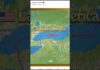
President Trump publicly praised the idea of renaming New Mexico to “New America,” complete with a crossed-out map and a burst of follow-up posts that turned a meme into a national talking point.
Story Snapshot
- Trump boosted “New America” for New Mexico on Truth Social with map graphics.
- Coverage confirmed multiple posts and images reinforcing the idea over Labor Day.
- Presidents can influence federal place names, but not a state’s official name.
- Recent orders show a wider naming push: Gulf of America, “Lake America”.
What Trump Posted And How It Landed
Trump wrote that “many people suggested” changing New Mexico’s name to “New America,” calling it more “prestigious and beautiful,” and said he loved the idea. His post ran with a map that crossed out “Mexico” and wrote “America” below it.
Regional and national outlets captured the timing and imagery, noting a rapid series of similar posts and graphics that kept the topic trending through the long weekend. The White House reposted related content, which helped the meme jump from social media to cable chyrons.
Supporters saw a branding play that matches Trump’s larger “America-first” motif. Critics in state leadership dismissed the notion. The exchange showed Trump’s method: spark with a line, lock attention with visuals, then amplify with repetition.
That cadence matters. It moves the fight onto home ground for him—cultural identity, symbolism, and the map itself—where clarity beats complexity and speed beats process.
What A President Can And Cannot Rename
Federal power reaches many map labels but not state names. The United States Board on Geographic Names standardizes federal usage for natural features and some places. Presidents can steer that process, and the Interior Department can act for federal use.
Changing a state’s name sits in a different box: it belongs to the state’s own law and constitution, not to federal order. That boundary explains why the idea made noise but not law.
Trump has used executive tools to press naming battles. On day one of his second term, he signed an order to rename the Gulf of Mexico as the Gulf of America for federal use. He also moved to restore Mount McKinley in place of Denali.
Later, he ordered “Lake America” in place of Lake Ontario, directing agencies to coordinate with the Board on Geographic Names. These steps show both the reach and the limits of executive naming power.
Why This Flashpoint Stuck
Maps are emotional. A few words on a label can feel like a claim of ownership or a rewrite of history. Trump’s post tapped that nerve. The map edit was simple, repeatable, and shareable, which gave it legs.
The strategy also fits a pattern: use symbolic changes to frame bigger fights over sovereignty and identity, then let critics argue process while supporters enjoy the punchline. That split keeps attention where Trump wants it—on the brand of America rather than the gears of government.
Trump proposes renaming New Mexico to 'New America' https://t.co/E1WGZN3sPP via @thecentersquare
— Donald M Wiencek (@WiencekDonald) September 8, 2026
Common sense check: the Constitution leaves state identity to states. That is the rule of federalism. Yet a president can still shape the map most Americans see in federal products and media that mirror them.
Expect more attempts to rename high-visibility features where executive direction can bite. Expect resistance when the target crosses into state-defined names. The New Mexico moment proved both truths at once: a viral spark and a legal wall.
Sources:
youtube.com, usatoday.com, forbes.com, indiatv.in, nypost.com, scholarlycommons.law.northwestern.edu, pbs.org