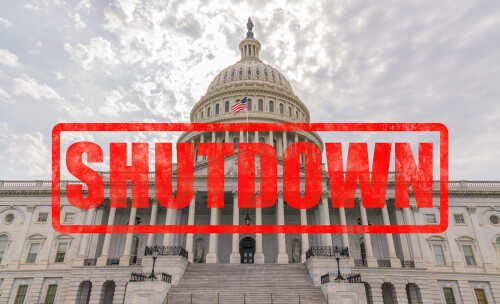
Congress hit the brakes on a shutdown and kept the lights on through early December.
At a Glance
- The House passed a short-term funding bill by a 370-48 vote, extending funding through early December.
- Leaders framed the move as a way to block a shutdown before the midterm elections.
- A member’s official statement confirmed the continuing resolution keeps funding steady into December.
- Major outlets reported Senate action cleared the path, signaling a bicameral deal.
House Locks In Stopgap To Keep Government Running
The House approved a continuing resolution to extend federal funding at current levels into December, with a resounding 370-48 vote that crossed party lines. The vote gave agencies breathing room and took a shutdown off the table before voters head to the polls.
Representative Emanuel Cleaver’s office stated that the measure maintains funding through December 11, underscoring leadership’s intent to avoid service disruptions and pay delays that accompany appropriations lapses.
The House passed a short-term measure Tuesday to fund the federal government into early December, a move designed to avoid a chaotic shutdown as lawmakers campaign for reelection. https://t.co/GqV3vUpc6o
— NBC4 Washington (@nbcwashington) September 1, 2026
Major reports described the action as part of a bicameral understanding, with Senate clearance smoothing the way for final passage and prompt enrollment. The decisive House margin also reflected an appetite to avert brinkmanship after a year of budget whiplash.
The outcome tracked recent history, in which stopgaps have become the default when full-year bills stall. Voters may see that as basic competence; markets and agencies see it as relief from chaos.
What The Bill Does, And Just As Important, What It Does Not Do
The resolution keeps agencies funded at levels near last year’s, rather than rewriting priorities. That means no new large programs, no deep cuts, and no shutdown furloughs. Agency leaders can keep operations stable and avoid the need for emergency planning.
That stability matters for Social Security checks, air traffic control, food safety, veterans’ services, and defense readiness. A short runway also means talks on full-year appropriations must speed up once the election passes, or Congress will need another patch.
Reports differed on the exact end date, citing either December 4 or December 11; the member statement pointed to December 11 as the target. The variance reflects fast-moving coverage. The core point stands: the stopgap spans the election window and punts the larger fight to December.
If leaders fail to align on full-year bills, they will face the same cliff again. That cycle is now common in Washington budgeting, but it is not ideal governance.
Why Shutdown Prevention Matters Beyond Politics
Shutdowns rarely save money and often cost more in lost work, delayed pay, and catch-up hiring. The Government Accountability Office has long warned that stopgaps and shutdowns drive waste and planning headaches across agencies.
Avoiding a shutdown also reduces risk for small businesses that rely on federal permits and loans, for families expecting refunds or benefits, and for travelers who want safe skies. The stopgap steadies those routines while elected leaders argue over longer-term choices.
This vote passes two tests: keep government functioning and avoid collateral damage to taxpayers. It does not fix the debt or reform runaway spending, but it stops avoidable harm now. That is the minimum standard for stewardship.
The harder work comes next. Lawmakers must set priorities, cut bloat, and lock in a real budget. Short-term patches are not victories; they are timeouts. Use the timeout to draw a better play.
How We Got Here, And What To Watch Next
Congress often turns to continuing resolutions when appropriations talks stall. The pattern is clear, and it shows why deadlines drive action. Leaders used the calendar to force a truce before voters judge results. The December date will do the same.
Watch the committees that write the 12 annual bills. If they post text early and mark up in public, odds of a stable deal rise. If they slip into silence and delay, expect another sprint and a fresh cliff.
🇬🇧 THE NEWS SYNDICATE — GEOPOLITICAL ROUND UP
1/16 🇺🇸 N.AMERICA — The US House passed a short-term funding bill 370-48 on Tuesday, keeping federal agencies funded at current levels through December 11. The measure, already cleared by the Senate, now goes to President Trump for…— The Syndicate (@SyndicateRSS) September 2, 2026
The Senate’s earlier movement, paired with the House’s broad margin, suggests the White House will receive a clean package for signature without drama.
Agencies can now plan through the holidays. Voters will judge the bigger picture later: whether this Congress can fund the government the old-fashioned way, on time and in order, without lurching from patch to patch. The next weeks will tell if this pause becomes progress or only a reset of the countdown clock.
Sources:
cbsnews.com, npr.org, theguardian.com, conference-board.org, nbcnews.com