One helicopter flight with President Trump on board exposed a quiet flaw in how Washington manages risk in the sky.
Story Snapshot
- Marine One departed the White House while commercial flights still moved near Reagan National Airport.
- Federal aviation officials say there was a brief loss of separation, but no real danger to President Trump.
- The incident highlights a protocol created after a deadly crash near the same airport and why it matters now.
- The case shows how safety rules, government trust, and media drama collide over a few tense seconds of flight.
Federal officials probe a tense moment above the capital
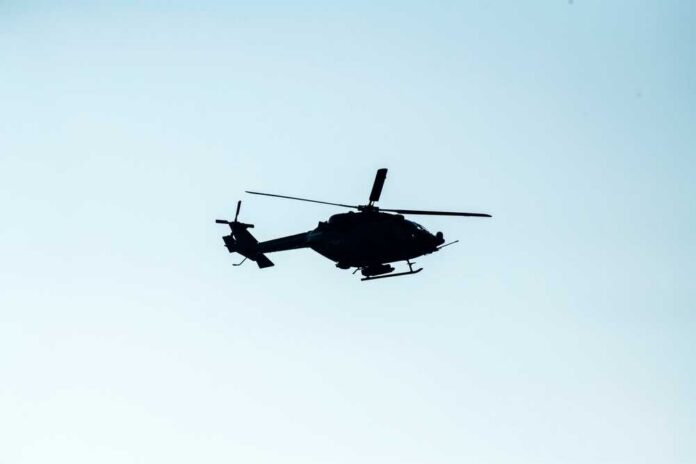
Federal aviation officials are reviewing an air traffic safety incident that happened while Marine One carried President Trump away from the White House toward the Washington region.
The event took place as the helicopter flew near Ronald Reagan Washington National Airport, one of the most tightly controlled pieces of airspace in the country. A commercial passenger jet also moved through the area during that window, setting off alarms in the safety world and headlines in the media.
The Federal Aviation Administration said its preliminary review found a momentary loss of separation between Marine One and the commercial aircraft, followed by the aircraft moving away from one another.
Federal Aviation Administration officials also said the air traffic controller stayed in contact with both pilots during the event, which supports the claim that the situation remained under control. From a technical viewpoint, that means there was a procedural lapse, not an uncontrolled near collision.
What the safety protocol demands when Marine One moves
The key rule at issue is simple on paper and serious in practice. After a deadly crash in 2025 between an Army helicopter and a regional jet near Reagan National, officials adopted a new protocol that requires commercial traffic to halt when certain helicopter operations occur near the airport.
Marine One falls inside that rule. When the president’s helicopter departs, commercial flights are supposed to stop for a short window, creating a clean bubble of airspace around the movement.
Tuesday 'safety incident' with Marine One flight carrying Trump under investigation
Air traffic at nearby Reagan National Airport wasn’t stopped despite chopper take-off
'At NO point was the President in harm’s way' — White House pic.twitter.com/HZRd4j9GcL
— RT Intl (@RT_on_X) August 5, 2026
Reports now say that bubble never fully formed. Marine One departed the White House while commercial traffic at Reagan National had not yet been halted as required. One outlet described a passenger jet taking off from the airport as Marine One was preparing to depart, tightening the timeline and raising questions about coordination.
That gap between what the protocol demands and what actually happened is why the Federal Aviation Administration and the National Transportation Safety Board stepped in to investigate.
Media drama versus the dry language of regulators
Television segments and social posts quickly framed the story as a “near crash” or “close call” involving the president’s helicopter. Some headlines spoke of a jet coming “dangerously close” to Marine One, even though they did not cite exact distances or altitude differences.
The Federal Aviation Administration, in contrast, used narrow language, stressing that the event did not appear to be a dangerous close call and that the aircraft were not converging. That split is common in aviation disputes and can mislead busy readers about real risk.
An ex–air traffic controller and other commentators pointed to reviewed tower audio, saying Marine One’s crew made repeated calls while the controller’s first response was “broken and unreadable.”
Later, the controller warned about a regional jet already taking off, showing the timing was tight and the process less clean than the protocol intends. This sounds less like looming disaster and more like a reminder that government systems need constant discipline to stay sharp.
Risk, responsibility, and what Americans should watch
For Americans who value limited but competent government, the incident raises clear questions. First, why did the ordered shutdown of commercial traffic not occur on time when Marine One moved?
Current reporting does not yet say whether the problem came from controller error, unclear communication, or a timing mismatch between the White House and the airport. Second, who owns the responsibility chain when a high-profile movement depends on everyday workers following special rules under pressure?
The FAA has launched an investigation into the failure to halt commercial flights at Washington Reagan National Airport during the takeoff of Marine One carrying President Donald Trump.https://t.co/zcU204nCoB pic.twitter.com/8KDQMzy2wn
— Ally Daily (@allydailycom) August 6, 2026
The Federal Aviation Administration’s early statement that the president was never in danger deserves fair weight, since regulators have direct access to radar and incident logs.
At the same time, the fact that a rule created after a fatal crash may have been broken near the same airport is not trivial. Treat the event as a serious procedural failure to fix and learn from, not as proof of looming catastrophe in the skies or an excuse to grow bureaucracy without focus.
Why this minor incident still matters for future flights
Aviation safety experts often explain that accidents rarely come from one big mistake. They usually come from a chain of small failures that line up over time. A brief loss of separation, a rushed controller, and a protocol that slips “just this once” can look harmless on their own.
Yet if that pattern repeats, it can slowly bend the risk curve in the wrong direction. That is why investigators chase small lapses before they grow into tragedies.
This Marine One case will likely end with findings that highlight human factors and communication, not heroics or scandal. Systems that protect leaders also protect everyone flying coach under them.
When Washington sets a rule to shield the president’s helicopter, citizens have every right to expect that rule to be followed every time, without drama, excuses, or spin.
Sources:
cbsnews.com, wsj.com, nbcnews.com, youtube.com, foxsanantonio.com, facebook.com, forbes.com, aa.com.tr