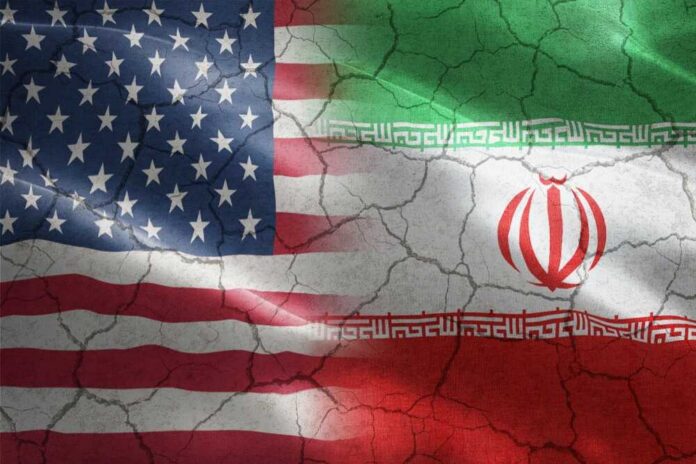
President Trump has drawn a red line with Iran, warning that any move to kill him will trigger a massive U.S. strike with 1,000 missiles aimed at the regime’s power centers.
Story Snapshot
- Trump says 1,000 U.S. missiles are “locked and loaded” on Iran if Tehran tries to assassinate him.
- His warning comes as the Treasury Department sanctions an alleged Iranian oil financier tied to the Revolutionary Guard.
- Iran’s leaders publicly deny plotting to kill Trump, but have a long record of threats and assassination schemes against U.S. officials.
- The standoff raises big questions about deterrence, civilian safety, and how far America should go to stop a hostile regime.
Trump’s 1,000‑Missile Warning: A Personal Red Line
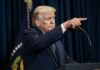
President Donald Trump used his Truth Social platform to issue one of his clearest warnings yet to Iran, tying U.S. military action directly to his own personal safety.
He said that 1,000 American missiles are “locked and loaded” and aimed at the Islamic Republic of Iran and that the U.S. military has standing orders to “decimate and destroy” Iranian targets for at least a year if Tehran attempts to assassinate him. This is not vague talk; it is a specific number, clear target, and defined trigger meant to send a deterrent message.
Trump threatens to 'decimate' Iran if it tries to kill him, as Treasury sanctions alleged Iranian financier https://t.co/gsTgxJ8bIX
— CNBC (@CNBC) July 11, 2026
Trump’s language fits a pattern that has built over years of Iranian threats against American leaders and the U.S. strike that killed Iranian commander Qasem Soleimani.
U.S. documents and public briefings have described Iranian plots against U.S. officials and dissidents, including Trump himself, as part of Tehran’s effort to retaliate for that killing.
By stating that any assassination attempt would lead to overwhelming force against Iran, Trump is telling both Iran’s rulers and America’s enemies that attacks on U.S. leaders will carry a heavy price.
Treasury Sanctions Hit Alleged Iranian Oil Financier
Trump’s threat did not stand alone; it came as his administration used economic power against Iran’s networks. The Department of the Treasury’s Office of Foreign Assets Control announced new sanctions on 12 individuals and entities that help the Islamic Revolutionary Guard Corps move and sell Iranian oil to buyers in China.
These actors coordinate payments through front companies and foreign partners, giving Iran hard currency that can fuel its military and intelligence operations. Cutting off those funds is meant to weaken Iran’s reach without firing a shot.
The Trump administration has leaned on sanctions as a key tool to squeeze Iran’s economy and limit its nuclear and terror activities. Earlier orders set up systems to punish any country that buys goods or services from Iran, using tariffs and financial pressure to isolate the regime.
This is classic peace-through-strength: use America’s unmatched economic and military power to force a hostile regime to change course or face ruin, rather than simply accept its threats against our president and our people.
Iran’s Denials and a History That Tells Another Story
Iranian officials publicly deny any plot to assassinate Trump, calling U.S. claims “unspecified” and urging confidence‑building instead. The country’s foreign minister has also accused the United States of violating past agreements by revoking licenses that allowed Iran to sell oil, trying to frame the dispute as purely economic rather than about security and terrorism.
On paper, these denials sound moderate. But they clash with years of fiery statements and documented efforts to target Americans and U.S. partners.
Reports and U.S. threat assessments show that Iran and Iran‑backed groups have repeatedly tried to carry out assassination plots against U.S. officials and allies, including attempts inside the United States. Analyses of the Iran war and terror threat describe attacks on diplomats, religious sites, and dissidents, as well as plans to kill leaders seen as enemies of the regime.
When a government keeps promising revenge and has already tried to act on those threats, its denials of a specific plot do not erase the larger danger. That is the reality Trump’s supporters see and that shapes his hard line.
Deterrence, Civilian Risk, and the Constitution
Human‑rights groups have raised alarms about Trump’s broader warnings of “obliteration” and large‑scale strikes on Iran’s infrastructure, fearing mass civilian harm. One statement highlighted his talk of ending “a whole civilization” and destroying power plants and bridges, saying this could lead to atrocity crimes if carried out.
This creates a sharp debate: how do you stop a hostile regime that threatens American leaders without crossing moral lines or endangering innocent people who have no say in their rulers’ actions?
For conservatives, the stakes are serious. The first duty of a U.S. president is to protect American lives and defend the nation, including against foreign assassination plots. At the same time, our values demand respect for civilian life and careful use of force.
Trump’s 1,000‑missile warning and the new Treasury sanctions show a two‑track strategy: pair overwhelming military deterrence with aggressive economic pressure. The message to Iran’s rulers is simple: stop targeting Americans and their elected president, or face consequences that their regime—and not the United States—may not survive.
Sources:
nypost.com, newscord.org, iranintl.com, youtube.com, time.com, reddit.com, cfr.org