A single judge’s order just turned a long-shot sex abuse claim against a president into hard cash in E. Jean Carroll’s bank account, and the path it took says a lot about power, truth, and what American courts now do with decades-old allegations.
Story Snapshot
- A federal jury found President Trump sexually abused and defamed writer E. Jean Carroll and awarded her $5 million in 2023.
- Appeals failed all the way up the ladder, and the Supreme Court refused to hear Trump’s challenge, leaving the verdict in place.
- A federal judge has now ordered $5.8 million, including interest, released from escrow and paid to Carroll.
- The case rested on memory and credibility, not physical evidence, and the jury rejected Carroll’s claim of rape as defined by New York law.
How a decades-old encounter turned into a multimillion-dollar judgment
E. Jean Carroll says President Trump assaulted her in a dressing room at Bergdorf Goodman, a luxury department store in Manhattan, sometime in 1996. She did not go to the police.
She did not seek a rape kit or gather physical proof. For years, the story lived only in her memory and in conversations with a few friends. That is the first key point: this case was always going to rise or fall on whether a jury believed her word over his.
Carroll eventually went public, and Trump responded the way he responds to most critics: by attacking her credibility and calling her story a hoax. Those denials became the backbone of her civil case, not just for sexual abuse, but for defamation.
To win, she had to convince jurors that he assaulted her and then lied about it in 2022 statements, harming her reputation. Twelve citizens in New York heard both sides and said yes on both counts.
What the jury actually decided about sex abuse
The jury’s verdict is more precise than most headlines. Jurors found that Trump sexually abused Carroll under New York law, based on their conclusion that he forcibly penetrated her with his fingers.
That is legally serious and morally grave. But they stopped short of finding “rape” as New York defines it, which focuses on penile penetration. The same set of facts led to a split legal label. That gap now fuels political arguments on both sides about what really happened.
Writer E. Jean Carroll can collect $5.8 million awarded to her after a jury found that President Donald Trump sexually abused and defamed her, a federal judge ruled Wednesday. MORE: https://t.co/ixCAMJ46kg pic.twitter.com/3hgyli7kQ8
— NEWSMAX (@NEWSMAX) July 8, 2026
On damages, the jury granted Carroll $2 million for the sexual battery itself and additional punitive damages, plus $2.7 million for defamation and another layer of punitive damages. The total: $5 million. That number is not random.
The trial judge later explained the award was anchored in evidence of Carroll’s physical and emotional harm and in established Supreme Court guideposts for punitive damages. In other words, the court said the jury did not just swing at Trump out of anger; it worked within existing legal rules.
Trump’s appeal strategy and why the courts did not buy it
Trump’s legal team did not simply say “the jury got it wrong.” They attacked how the case was tried. Their briefs argued that the judge allowed “indefensible” and “inflammatory” evidence, including testimony from two other women who accused Trump of similar conduct and the Access Hollywood tape where he boasts about grabbing women without consent. They claimed this turned the trial into a character assassination rather than a focused review of Carroll’s story.
The United States Court of Appeals for the Second Circuit reviewed those claims and said no. The appeals court pointed to specific rules that let judges use evidence of other sexual assaults to show a pattern in sexual assault cases.
It concluded that the trial judge stayed within those rules and that any possible errors did not change the outcome. In plain language, the appellate judges believed the jury’s verdict came from the evidence, not from unfair bias triggered by Trump’s past behavior.
When the Supreme Court stays out and money starts to move
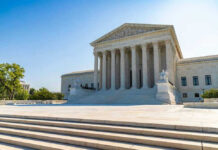
With the appellate loss on the books, Trump’s last hope was the Supreme Court of the United States. His lawyers asked the justices to take the case and rein in what they cast as a dangerous expansion of “propensity evidence” against a polarizing political figure.
The Supreme Court declined to hear it. As usual, the justices did not explain why. But the effect was clear: the lower-court judgment stood, and Trump’s legal road on this verdict effectively ended.
Once the Supreme Court stepped aside, the case shifted from “did this happen” to “when does Carroll get paid.” The money had been parked in an escrow account during the appeals. A federal judge, Lewis Kaplan, then ordered the clerk of court to release $5.8 million, including interest, to Carroll.
In his ruling, Kaplan said Trump had been stalling the case for years and reminded everyone that a jury’s unanimous verdict had survived every level of review. That is the quiet but powerful part: courts move slowly, but once they finish, they expect judgments to be honored.
What this case says about credibility, power, and concerns
For many, this case raises hard questions about fairness. There was no physical evidence. There were no medical records. There were no third-party witnesses from 1996 to confirm Carroll’s story. Everything depended on a nearly 30-year-old memory and on a jury’s read of body language, consistency, and supporting testimony.
Skeptics worry that once mere accusation, plus pattern evidence, becomes enough, famous men become soft targets and juries can punish disliked figures without hard proof.
On the other hand, the legal system in this case did not ignore safeguards that usually protect public figures. Defamation law forces plaintiffs to prove more than hurt feelings; they must show false statements of fact that cause real harm. Appellate courts checked the trial judge’s decisions and found them within the law.
The Supreme Court had a chance to correct any major error and chose not to intervene. From that perspective, the Carroll judgment reflects the system saying that even a president cannot say anything about an accuser without consequence.
Sources:
apnews.com, en.wikipedia.org, law.justia.com, caselaw.findlaw.com, instagram.com, latimes.com