
The Supreme Court just ruled that the President can fire federal agency heads at will — and in doing so, erased a 91-year-old legal shield that let bureaucrats operate beyond the reach of the voters’ elected leader.
Story Highlights
- The Supreme Court ruled 6-3 in Trump v. Slaughter that for-cause removal protections for Federal Trade Commission (FTC) commissioners are unconstitutional.
- The ruling overturns Humphrey’s Executor v. United States (1935), which had shielded independent agency heads from presidential removal for over 90 years.
- Chief Justice John Roberts wrote that FTC commissioners “unquestionably exercise executive power” and must answer to the President.
- The decision likely extends beyond the FTC, putting other so-called independent agencies — such as the Equal Employment Opportunity Commission and the National Labor Relations Board — under direct presidential control.
What the Court Decided
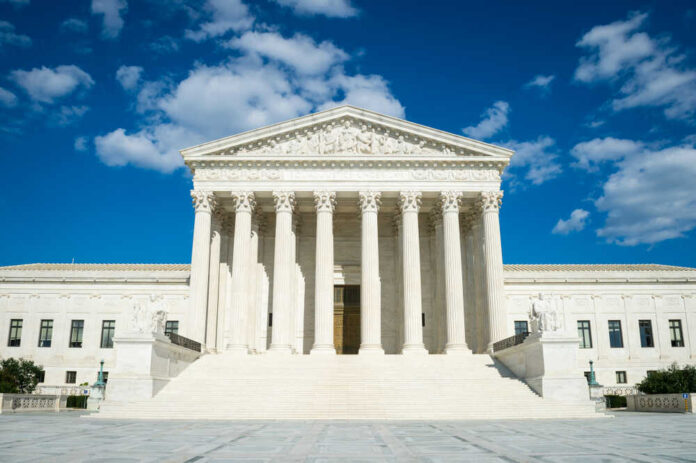
On June 29, 2026, the Supreme Court handed down one of the most important government structure rulings in decades. In a 6-3 vote, the Court ruled that the FTC Act’s for-cause removal protections are unconstitutional.
The case started when President Trump fired two Democrat FTC commissioners — Rebecca Slaughter and Alvaro Bedoya — citing policy disagreements. The commissioners fought back in court, arguing the law protected their jobs. The Supreme Court disagreed.
Chief Justice Roberts wrote plainly: “What text, history, and structure settle, our precedent confirms — the President may remove his subordinates at will.” The Court said the FTC “unquestionably exercises executive power” by filing lawsuits, writing rules, and deciding cases.
Because that power belongs to the executive branch under Article II of the Constitution, the President must be able to control — and remove — those who wield it.
A 91-Year Precedent Falls
The ruling kills off Humphrey’s Executor v. United States, the 1935 case that first allowed Congress to protect agency commissioners from being fired without cause. That old ruling called the FTC’s work “quasi-judicial” and “quasi-legislative” — meaning partly like a court, partly like Congress. The new majority called that view a “legal fiction” that no longer reflects what the FTC actually does today.
The Court noted that prior rulings — including Seila Law v. Consumer Financial Protection Bureau in 2020 — had already chipped away at Humphrey’s Executor for years. Roberts wrote that if anything of Humphrey’s remained, the Court was overruling it now.
The three liberal justices — Sonia Sotomayor, Elena Kagan, and Ketanji Brown Jackson — dissented sharply. Justice Sotomayor called the ruling “grievously wrong” and warned it gives the President “far greater power than ever before.”
6 conservative Supreme Court Justices have increased Trump's power over independent federal agencies.
This ruling allows Trump to fire Democratic appointee and former FTC Commissioner Rebecca Slaughter. pic.twitter.com/CDu1FKfuEg
— Headquarters (@HQNewsNow) June 29, 2026
What This Means Going Forward
The ruling reshapes how the federal government works. Agencies like the Equal Employment Opportunity Commission (EEOC) and the National Labor Relations Board (NLRB) could now face the same standard — their members serving at the President’s pleasure.
Importantly, the Court did not touch the agencies’ actual legal powers. Their authority to regulate, investigate, and enforce the law stays intact. The change is about who controls the people running those agencies.
One notable carve-out: a companion case, Trump v. Cook, suggests the Federal Reserve Board of Governors may keep some insulation from presidential removal, based on a “special arrangement sanctioned by history” tied to central banking.
For those who have long argued that unelected bureaucrats answer to no one, this ruling is a real win. It restores a basic principle: the President, who answers to voters, must be able to supervise those who carry out executive power. That is how accountability in a republic is supposed to work.
Critics on the left frame this as a power grab. But the Constitution vests executive power in the President — not in a network of agency commissioners insulated by statute.
For decades, those protections let regulators pursue agendas without meaningful oversight from anyone voters actually elected. This ruling puts the chain of command back where the founders placed it.
Sources:
abcnews.com, npr.org, yalejreg.com, sidley.com