
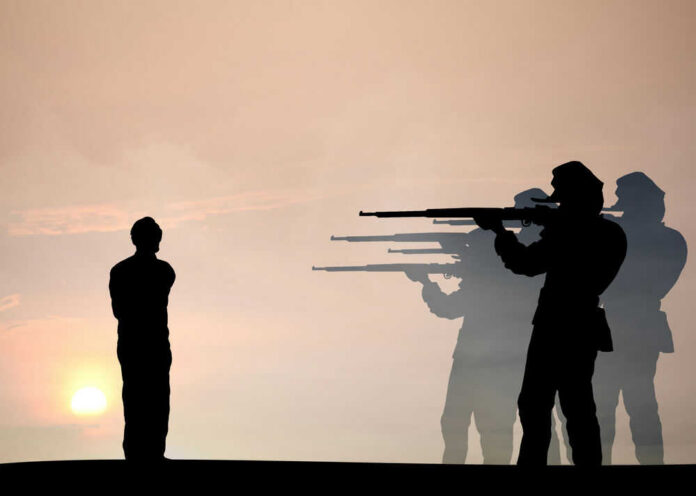
The Pentagon says Nidal Malik Hasan will face a U.S. Army firing squad, with President Trump’s approval and the Army to set the time and place.
Story Snapshot
- President Trump approved death by firing squad for Nidal Hasan after a defense recommendation.
- Hasan was sentenced to death by a court-martial in 2013 for the 2009 Fort Hood attack.
- The Army says 13 people were killed and at least 32 were wounded in the shooting.
- This would be the first U.S. military execution since 1961, an exceptionally rare step.
What Was Decided And Who Has The Authority
The Pentagon stated that Defense leadership recommended execution by firing squad, and President Trump approved it. The spokesperson said the Army Secretary will set the time and place. Military law requires a president to approve any court-martial death sentence before it can proceed. After presidential approval, the Army executes the judgment and handles logistics and security through its corrections and legal commands. This sequence matches how the military justice system merges law and command authority.
Hasan’s conviction and sentence anchor the decision. An Army court-martial found him guilty of the November 5, 2009, Fort Hood shooting. The panel sentenced him to death on August 28, 2013. The Army reported that deliberations on the sentence lasted less than two hours, which signaled a clear verdict to the panel. Automatic appeals followed, as required by military law for any death sentence, before the case could reach a president for action.
What Happened At Fort Hood And Why It Still Matters
Reporters and officials agree on the core facts. Hasan opened fire at Fort Hood, Texas, killing 13 people and wounding 32 others, or more than two dozen as some outlets summarize. The attack struck the heart of a U.S. Army post during a workday. Survivors, families, and the force have carried the loss for 17 years. The conviction for premeditated murder and attempted murder put Hasan on the rare military death row, a track that almost never reaches an execution date.
Media organizations framed the new step around its rarity. They reported this would be the first U.S. military execution since 1961 if carried out. That gap spans generations of service members who have never seen the system enforce a death sentence. That historical weight helps explain why the Pentagon announcement drew immediate national attention. It also shows how, in military justice, final punishment is not only a legal outcome but a command decision with broad meaning.
Why A Firing Squad And What Comes Next
Reports state President Trump approved death by U.S. Army firing squad for Hasan after a recommendation from defense leadership. The Pentagon said the Army Secretary will set the time and place. That means Army channels will assign the location, procedures, and personnel. Federal reporting also noted Hasan is held at the U.S. Disciplinary Barracks at Fort Leavenworth, Kansas, after losing his final appeal earlier in 2025, which positions the Army to move once logistics are set.
TRUMP APPROVES USE OF FIRING SQUAD: President Donald Trump has approved the execution by firing squad of Army Maj. Nidal Malik Hasan for the 2009 shooting rampage at Fort Hood, Texas. https://t.co/J0266om5c9
— WPLG Local 10 News (@WPLGLocal10) October 6, 2026
Conservative readers often judge policy by clarity, justice, and deterrence. On those measures, the facts align. The jury spoke. The appeals ran. The commander in chief approved as the law requires. The Army now owns the timing and procedures. Critics may argue about methods, but the core authority is not vague. A nation that asks young men and women to bear arms must enforce standards when one of its own murders his comrades. That is harsh, but it is also common sense.
Sources:
bbc.com, cnbc.com, rte.ie, army.mil