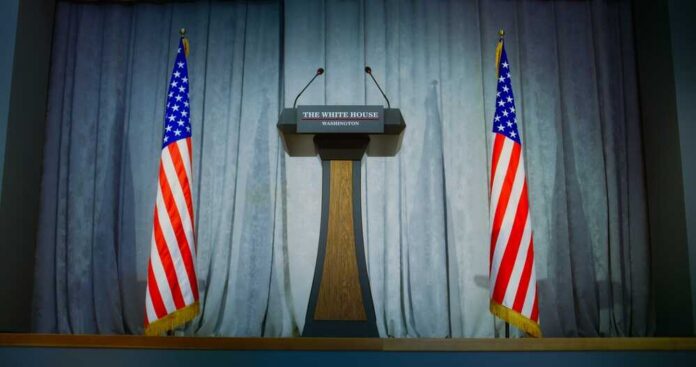
Karoline Leavitt is stepping down as White House press secretary at month’s end, and the reason says as much about modern power as it does about motherhood.
Story Snapshot
- President Trump said Leavitt will leave the post by the end of August.
- Leavitt cited family and young children as the reason for her decision.
- No successor was named at the time of the announcement.
- The move follows her recent return from maternity leave.
What Happened And Why It Matters
President Trump announced that Karoline Leavitt will resign as White House press secretary by the end of August. He praised her and said she is leaving to spend more time with her young children and family.
Leavitt confirmed the decision in a written statement, calling it bittersweet and pointing to the strain of the job’s nonstop demands after the birth of her second child. The White House had not named a replacement when the news broke, which keeps attention fixed on the choice ahead.
Leavitt, 28, returned to the podium this summer after maternity leave. Reporters noted her speed, her sharp rebuttals, and her comfort with television combat. Allies saw a disciplined messenger. Critics saw a flinty tone.
Both sides saw someone who did not waste words. That style fit a West Wing that prizes clear lines and quick pushback. The human cost, though, is obvious: the job can swallow nights, weekends, and any plan that depends on sleep.
The Demands Of The Podium, Stripped Of Spin
The press secretary job is a daily stress test. It mixes policy, politics, and media in real time. You face cameras on short notice after a surprise court ruling or a foreign flare-up. You prep for briefings while fielding calls from agencies, lawyers, and lawmakers.
You fight rumors, correct numbers, and hold many facts in your head at once. That pace makes family tradeoffs sharp. Leavitt’s exit tracks with that reality more than any Beltway drama.
California native emerges as possible replacement for White House press secretary Karoline Leavitt https://t.co/XHcys66jCJ pic.twitter.com/wZsi3JB6kG
— New York Post (@nypost) August 12, 2026
Washington often treats departures like a riddle. This one is not. The president spoke on the record. Leavitt posted her own words. Multiple outlets reported the same core facts the same day.
Some online voices will try to turn any timing into a plot. That is the internet’s business model. Common sense says take yes for an answer when the public accounts line up and the rationale matches the workload people can see with their own eyes.
What This Signals For The West Wing
The message operation now faces a two-front task: finish August without a misstep and pick a successor who can keep pace. The podium sets tone for the whole team. Markets, allies, and agencies listen to it. Voters judge the White House by it.
A strong successor will protect clarity and continuity. A weak pick will invite noise. Personnel is policy because messengers shape how policy lands in homes and boardrooms. That is not theory; it is daily cause and effect.
Many read this moment with two values in mind. First, family is not a talking point; it is a priority. When a parent says the calendar no longer works, respect that boundary. Second, accountability does not pause.
The next press secretary must keep answers short, facts tight, and the press briefed without drift. Voters reward straight talk and punish fog. That is why the seat matters more than the ceremony around who fills it.
What To Watch Next
Three details will tell the real story of the transition. The first is the date certain for Leavitt’s final day and any interim setup. The second is the name, background, and first week of the successor.
The third is whether the briefing room keeps a steady rhythm: regular guidance, crisp answers, and quick corrections when needed. If those lights stay green, the operation will not miss a beat. If they flicker, the rest of Washington will notice fast.
Sources:
apnews.com, cnbc.com, youtube.com, forbes.com