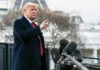

One man just rode a rocket-fueled stock debut to a “trillionaire” title that is both real and not real at the same time.
Story Snapshot
- SpaceX’s record-breaking IPO instantly priced Elon Musk’s fortune above $1 trillion on paper.
- Musk’s stake in SpaceX plus Tesla and other assets created a net worth bigger than most countries’ economies.
- Lockups, paper wealth, and wild valuations mean that “trillionaire” is more fragile than the headlines.
- The fight over Musk’s number exposes a deeper battle about markets, risk, and extreme wealth.
How a rocket company printed the first trillionaire headline
SpaceX went public at $135 a share, valuing the company at about $1.78 trillion and instantly rewriting the record books for initial public offerings.[1]
That price alone made it the largest stock debut ever, and it did something else that captured every headline editor’s heart: it pushed Elon Musk’s reported net worth over the one trillion dollar mark.[1] When trading closed near $161 a share, the market value crossed $2 trillion and locked in those “world’s first trillionaire” chyrons.
Financial reporters built that trillion-dollar figure from fairly simple math. Forbes and others estimated that Musk owned roughly 38 to 40 percent of SpaceX after the offering, worth around $715 billion at the IPO price, plus about $50 billion in options.
Add his Tesla stake, worth roughly another $163 billion, plus options valued near $113 billion, and his other holdings, and you land north of $1.1 trillion in total net worth.
The difference between paper wealth and spendable money
ABC News was careful with its language and said Musk became a trillionaire “at least on paper,” and that small phrase carries more weight than most viewers notice.[1]
Musk cannot sell his SpaceX shares for about a year because of a standard lockup in the offering documents, which means that mountain of wealth is illiquid for now.[1] If SpaceX stock falls below the IPO price, that trillionaire status vanishes as fast as it appeared, and nothing in his bank account changes.
Forbes itself stressed that its tally comes from estimated equity values, not piles of cash in a vault. The calculation leaves out some performance-based restricted shares that could raise Musk’s stake to about 47 percent, because they depend on targets such as ambitious Mars goals that are not met yet.
That choice shows how sensitive the billionaires list is to the underlying valuation models. A few lines in a spreadsheet can add or erase hundreds of billions on paper.
Is a $2 trillion SpaceX a bet or a bubble?
Supporters argue that SpaceX has earned a sky-high price. The company dominates commercial launches, runs the Starlink satellite network, and sits at the heart of national security space contracts.
The IPO raised around $75 billion and drew strong internal support, with reports that more than half of the company’s 22,000 employees bought stock, putting almost $1 billion of their own money into the deal. That kind of insider buying looks like a vote of confidence from people who see the books.
Critics take a harder line and call the valuation “aggressive” and “significantly overvalued.” Analysts on networks like CNBC and CBS pointed out that most of SpaceX is still not consistently profitable; Starlink is the one clear profit center and still in heavy build-out mode.[5]
From a fundamentals-first view, a company that rich on future hopes rather than proven earnings deserves real skepticism. The market is betting on decades of dominance and flawless execution; history says such bets rarely pay out without ugly drops along the way.
Control, risk, and what many should see here
One clear fact for anyone who values free markets and personal responsibility is that Musk has tied his fate to his companies in a way most elites avoid. His wealth is concentrated in the businesses he leads, not scattered in quiet index funds or political favors.
Selling large chunks of SpaceX would weaken his control and voting power, so he is strongly pushed to hold, ride the risk, and deliver real value over time, not cash out and walk away.[1]
Elon Musk Foundation Notification
To my amazing supporters:We’re thrilled to announce that SpaceX is going public, your opportunity to invest in humanity’s multi-planetary future. This IPO marks a historic step in making space exploration accessible to everyone who believes in… https://t.co/Yvzh8fIpdE
— Benita Morgan (@benireemm) June 14, 2026
The backlash against his trillionaire status says as much about our culture as it does about him. Commentators frame one man holding $1 trillion as proof the system is rigged and that government must step in with new taxes or limits.
Another reading would flip the script: this is what happens when an entrepreneur builds real hardware, takes on enormous technical and financial risk, and beats slow, politicized institutions at their own game. The number is wild, but the process is still voluntary exchange.
What this moment really tells us about wealth and headlines
This entire dispute fits a pattern in modern money coverage. A private valuation event, like a huge initial public offering, becomes a simple “net worth” headline for one person, even though the figure can swing by tens of billions in a day.
Wealth trackers tie their numbers to market prices, so once SpaceX is stamped as nearly $2 trillion, the “Musk is a trillionaire” story feeds on itself across outlets, whether or not the underlying cash flows justify it.[1]
For everyday investors and taxpayers, the real lesson is sharper. Headlines love big round numbers, but serious people ask three plain questions: Can he sell it? Is the business truly profitable and durable? And who pays if the story goes wrong?
In Musk’s case, the answers are “not yet,” “partly,” and “mostly him and his shareholders.” That may not fit the outrage script, but it does line up with common sense and the basic rules of a free, risk-taking economy.
Sources:
[1] Web – SpaceX stock soars in debut and makes Elon Musk the first trillionaire
[5] Web – Elon Musk has become the world’s first trillionaire after SpaceX …