
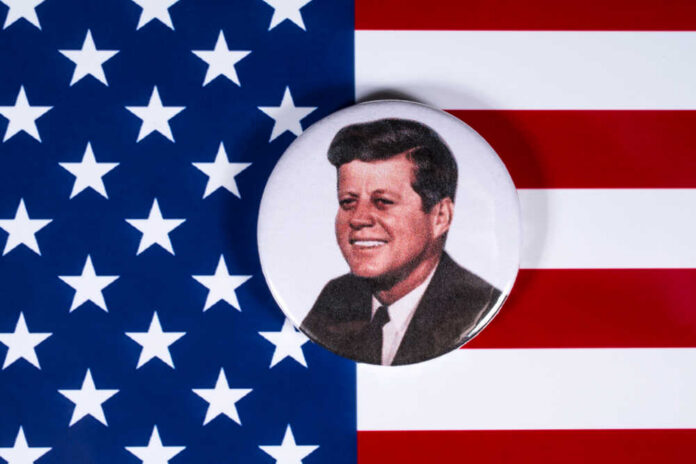
Nine members of the Kennedy family have gone to federal court to stop a 250-foot arch they say will cast a permanent shadow over John F. Kennedy’s grave.
Quick Take
- Kennedy family members joined existing lawsuits fighting President Trump’s planned “Triumphal Arch” near Arlington National Cemetery.
- The family says the arch would block the famous sightline to JFK’s grave and the Eternal Flame from Arlington Memorial Bridge.
- The administration argues the arch honors veterans, marks America’s 250th birthday, and now serves national security needs against drones.
- A judge already paused construction after the project won approval, though the fight over its legal authority continues.
What The Kennedy Family Is Asking The Court To Do
The lawsuit claims the arch would ruin a view “designed to represent the unification of the nation following the Civil War,” a sightline the family says has stood for nearly a century. Court filings describe the structure as fully blocking reciprocal views between the Lincoln Memorial and Arlington House, a finding the National Capital Planning Commission itself reached. The Kennedys want a judge to declare the project unlawful without direct approval from Congress.
The family is not suing alone. Washington, D.C., Virginia, Vietnam War veterans, and an architectural historian have all filed related challenges against the same project. That crowd of plaintiffs strengthens the case that this fight goes beyond one family’s grief. It also means courts must sort through overlapping claims about history, sightlines, and who actually has the legal right to stop a presidential building project.
Why The White House Says The Arch Must Be Built
President Trump has called the arch a tribute to veterans and the nation’s 250th anniversary, saying it would give Arlington National Cemetery “the monumental gateway it deserves”. He later added a new justification entirely. Trump said the military asked him to convert the arch into a “top grade Military Complex,” complete with drone storage, sniper positions, and ammunition rooms.
Defense Secretary Pete Hegseth backed that shift, calling the arch a “generational national defense opportunity” that gives officials an elevation advantage against drone threats. Homeland Security Secretary Markwayne Mullin told the court the structure could add security features without changing its design. Critics note the national security argument appeared only after the original anniversary pitch, raising fair questions about which purpose is driving the project.
The Law Behind Washington’s Memorial Fights
This clash sits inside a system Congress built on purpose. The Commemorative Works Act of 1986 requires lawmakers to authorize new memorials on federal land in Washington, D.C., then hands design and siting decisions to agencies like the National Park Service and the Commission of Fine Arts. The law also says new works should avoid blocking existing memorials and should protect open space and cultural resources whenever possible. That statute is exactly what the Kennedy family says the administration ignored.
The administration counters that a 1924 federal planning report once proposed 166-foot columns near the same spot, suggesting historical precedent for a tall structure there. That argument addresses authority to build, not whether the design blocks the disputed view. A federal judge already blocked construction after the plan won approval from planning boards, showing the courts are taking the authorization question seriously.
What Happens Next For The Arch And The Lawsuits
No final design, completed review, or construction date has been locked in, so the exact shadow the arch would cast remains unproven in court. Still, the dispute captures a real tension conservatives should take seriously. Honoring veterans and marking America’s 250th birthday are worthy goals, but they don’t excuse skipping congressional sign-off or steamrolling a sacred, century-old sightline at a national cemetery. The law exists precisely to prevent that kind of shortcut.
Trump visited Arlington Cemetery even as opposition grew, with White House officials insisting the project would also ease traffic and improve pedestrian safety around the circle. Whether judges ultimately side with the Kennedy family, the administration, or somewhere in between, the case will likely set a lasting precedent for how future presidents can alter the capital’s most solemn ground.
For now, the arch stays frozen, the lawsuits keep piling up, and a family that buried a president at that very spot is betting the law still means something in Washington.
Sources:
kmbc.com, bbc.co.uk, courthousenews.com, abc7chicago.com, usatoday.com, thehill.com, wusa9.com, seattletimes.com, nytimes.com