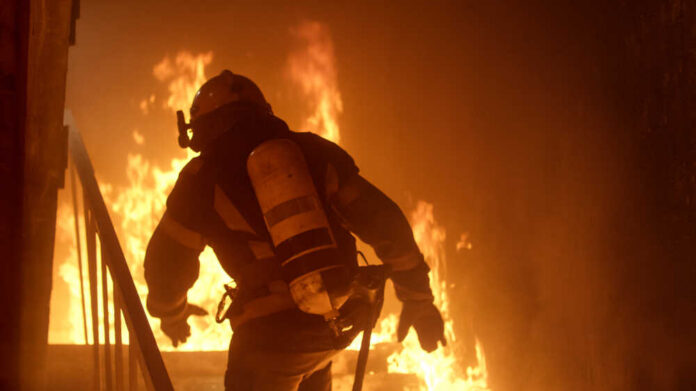
When 600 structures vanish and 60,000 people leave home in a weekend, you are not looking at “wildfire season” — you are watching a community fight for its future.
Story Snapshot
- Three Spokane County fires destroyed about 600 structures and scorched over 7,700 acres.
- About 60,000 people in the Spokane area were ordered to evacuate as flames neared neighborhoods.
- Officials say the Spokane fires are the top wildfire priority in the entire nation right now.
- State leaders declared an emergency and warned that more than 390 square miles have burned across Washington.
Wildfires Turn Spokane Neighborhoods Into Burn Zones
Authorities say wildfires in eastern Washington forced about 60,000 people in the Spokane area to evacuate while destroying at least 600 homes, businesses, and other structures.
Three main blazes — the Old Trails, Fairview, and Autumn Lane fires — tore through the northwest side of Spokane and nearby communities, turning entire streets into ash and twisted metal. Fire crews on the ground described “neighborhoods gone” and called the Spokane area fires the number one wildfire priority in the nation.
Federal incident managers report that the Spokane Complex Fire, as the trio is now known, has burned 7,708 acres and remains at zero percent containment. That means the perimeter is still open to wind, heat, and new fuel, with no solid defensive line in place.
The Old Trails Fire alone has scorched more than 3,600 acres, while the Fairview and Autumn Lane fires have together burned over 4,400 additional acres just outside dense residential zones. Residents had minutes, not hours, to decide what to save and what to leave.
Evacuation Orders Remake Daily Life Overnight
Officials estimate that 60,000 people inside Spokane city limits were placed under evacuation orders as flames crossed natural barriers and raced toward homes. Local reporters describe long lines of cars leaving subdivision streets, hazards flashing, with smoke blocking the sun by midafternoon.
Families grabbed kids, pets, medicine, and documents, then drove away not knowing if their house would still exist by morning. Shelters and churches across the region opened quickly, and neighbors began taking in evacuees they barely knew.
Over 600 buildings burned down and nearly 60,000 were ordered to evacuate after uncontained wildfires spread in the city of Spokane in Washington state, as Mayor Lisa Brown warned of possible loss of life https://t.co/UxMtVwckQ9 pic.twitter.com/FGWPiW38tv
— Reuters (@Reuters) August 3, 2026
Earlier in the weekend, national wires reported about 5,000 homes evacuated, but later counts shifted to total people displaced as officials grasped the true scope of the emergency.
This jump in numbers fits a familiar wildfire pattern: early figures focus on which streets are under orders, later figures focus on how many human beings those streets represent. For residents living that shift, the math is simple and brutal — the fire line moved closer, and the circle of people who had to leave grew fast.
What “600 Structures Lost” Really Means On The Ground
Initial estimates from firefighters and a California incident management team put the number of burned structures at roughly 600, a figure confirmed and repeated in national coverage. Officials stress that this count includes homes, garages, sheds, and outbuildings, not only primary residences.
Spokane County’s fire chief reported 640 structures destroyed in the Old Trails Fire alone, though crews still need to separate which are houses, which are businesses, and which are smaller buildings. For many families, the label does not matter — the place they lived is gone.
Video from local and national outlets shows blocks where only chimneys stand upright amid ash, with cars melted into puddles and street signs bent from heat. Reporters point to the Indian Trail neighborhood as one of the hardest hit, with “entire neighborhoods gone” and residents returning only to rubble.
So far, officials say they have no confirmed deaths or missing persons, an outcome that reflects how quickly law enforcement and fire crews pushed people to leave as soon as the danger became clear.
From Local Disaster To Statewide Warning
While Spokane grabbed the headlines, the fires there burn against a much larger backdrop. State officials and media report that about 390 to 425 square miles have burned across Washington this year, from tribal lands to farm country and mountain forests.
The Kaiser Canyon Fire on the Colville Reservation, for example, grew past 100,000 acres and forced its own waves of “go now” evacuations earlier in the season. When Spokane lit up, the state was already tired, stretched, and smoke-weary.
🇺🇸 Massive wildfires have forced around 60,000 people to evacuate across the Spokane area in eastern Washington.
Officials say about 600 homes, businesses and other structures have been destroyed, while thousands remain without power.
Fire crews are still battling the blazes,… pic.twitter.com/j32ooDBH2Y
— NewsForce (@Newsforce) August 3, 2026
The Washington governor declared a statewide emergency and a burn ban through September, citing extreme drought and a National Weather Service “particularly dangerous situation” fire weather warning for eastern Washington.
More than 4,000 firefighters now battle blazes across the state, with the National Guard mobilized and out-of-state crews arriving to reinforce local departments. From a common sense conservative view, this is the core job of government in a crisis: secure life and property first, argue policy later.
Sources:
washingtontimes.com, spokesman.com, clickondetroit.com, en.wikipedia.org, wasmoke.blogspot.com, usnews.com, frontlinewildfire.com, wfca.com, abcnews.com, apnews.com