The Trump administration is asking the Supreme Court to let a sweeping mail‑in voting order reshape the midterms, by tying ballots to a federal citizenship list and new Postal Service rules.
Story Snapshot
- President Trump’s order builds federal lists of eligible voters using Homeland Security and Social Security data.
- The order tells the Postal Service to deliver mail ballots only to people on those lists.
- States, voting‑rights groups, and lower courts have already clashed over whether this is constitutional.
- The administration now wants the Supreme Court to lift blocks so the new rules apply before November.
The executive order that rewires mail-in voting
On March 31, 2026, President Trump signed an executive order titled “Ensuring Citizenship Verification and Integrity in Federal Elections.” The order’s core idea is simple but dramatic: use federal data to decide who may vote by mail.
It directs the Department of Homeland Security and the Social Security Administration to compile state‑by‑state lists of voting‑age United States citizens. Those lists are then sent to state election officials to check their voter rolls and, crucially, to drive who gets a mail ballot.
The United States Postal Service is no longer just a neutral carrier in this plan. Under the order, Postal Service rules would limit mail‑ballot delivery to people who appear on the approved federal lists.
In practice, that means if a voter does not show up in the national citizenship data, they may never receive a ballot at home. The order also pushes states to preserve election‑related records for five years, pitched as a way to make future audits and fraud investigations easier.
How the administration frames the fight
The Trump administration sells this order as an election‑integrity measure, not a turnout play. Officials argue that federal agencies hold the best data on citizenship and identity, so using them will help weed out non‑citizen registrations and errors in state rolls.
They point to federal responsibilities under the Constitution, including language about guaranteeing a “republican form of government,” as part of the legal backbone for stepping into how federal elections are run.
The Trump administration on Monday asked the Supreme Court to allow it to fully implement an executive order signed by President Donald Trump that seeks to impose additional restrictions on mail-in voting.https://t.co/ZKlX2ZorM5
— SCOTUSblog (@SCOTUSblog) July 27, 2026
Supporters also stress a basic fairness pitch: one citizen, one ballot, with clear rules that look the same across states. From that view, the order solves two problems at once. First, it sets a national standard for who is eligible to vote by mail in federal races.
Second, it gives law enforcement, including the Department of Justice, more tools to investigate officials who issue ballots to ineligible voters. For many who worry that loose mail‑in rules invite fraud, this sounds like long‑overdue house‑cleaning.
Why states and voting advocates are pushing back
State officials and voting‑rights groups hear a very different story. The Constitution gives states the power to run elections and set most voter eligibility rules, subject to limits from Congress, not from the president alone.
Lawsuits filed by coalitions of states and civil‑rights organizations say the order tries to override state mail‑in voting laws by turning the Postal Service into an arbiter of who may cast a ballot by mail. To them, that is not integrity; it is federal control over the machinery of democracy.
Critics also attack the data behind the plan. The federal databases Homeland Security and Social Security rely on were not built to serve as a clean voter registry and have well‑known accuracy problems. In court, even government lawyers have admitted that the new “citizenship lists” will be incomplete.
That means some eligible citizens, especially naturalized voters and people with name or address changes, may never make it onto the list. If the Postal Service ties ballots to those lists, the risk is clear: lawful voters could be shut out.
Lower courts, partial blocks, and an appeal to the high court
The legal battle over the order has already taken several sharp turns. One federal judge declined to block the order in full, accepting the administration’s argument that some challenges were premature because the agencies had not finished writing rules yet.
That early win gave the White House room to keep pushing Homeland Security and the Postal Service to design the new systems. Voting‑rights groups, however, were allowed to continue their core challenge, keeping the fight alive.
Later rulings cut in the other direction. A federal appeals court and other judges have blocked key parts of the Postal Service rules in nearly two dozen states, warning that the order may clash with state election laws and could lead to eligible voters losing access to mail ballots.
Some states that rely heavily on voting by mail, especially in the West, have pressed this point hard. The mix of green lights and red lights from different courts leaves the policy in limbo, and it creates a public sense that the order rests on shaky legal ground.
The Supreme Court’s role and the stakes for November
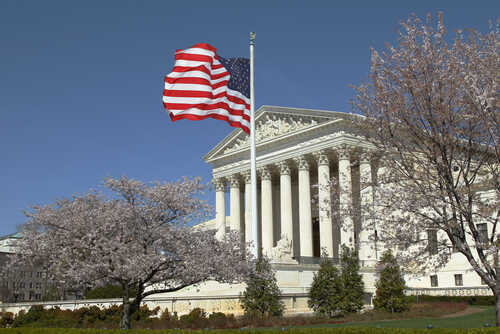
Faced with these blocks, the Trump administration has gone to the Supreme Court, asking the justices to lift the injunctions and allow nationwide implementation before the midterms.
This comes just after the Court rejected a separate Republican effort to force states like Mississippi to stop counting mail ballots that arrive after Election Day but are postmarked on time. That ruling undercut one path to narrowing mail voting, making the executive‑order fight even more important for the White House.
The stakes reach beyond mail ballots. If the Court sides with the administration, presidents could gain a new level of direct control over how federal elections are run, using executive orders and agency power to shape rules that once lived mainly with states and Congress.
If the Court keeps the blocks in place, it will signal that there are real limits on how far a president can go when “integrity” measures start to look like federal gatekeeping over who gets to vote. For voters who care about both clean rolls and easy access to the ballot, this case is where those two goals collide.
Sources:
abcnews.com, cnn.com, politico.com, aclum.org, scotusblog.com, brennancenter.org, nytimes.com, npr.org, washingtonpost.com, youtube.com, bipartisanpolicy.org, reuters.com, issueone.org, archive.org, whitehouse.gov