

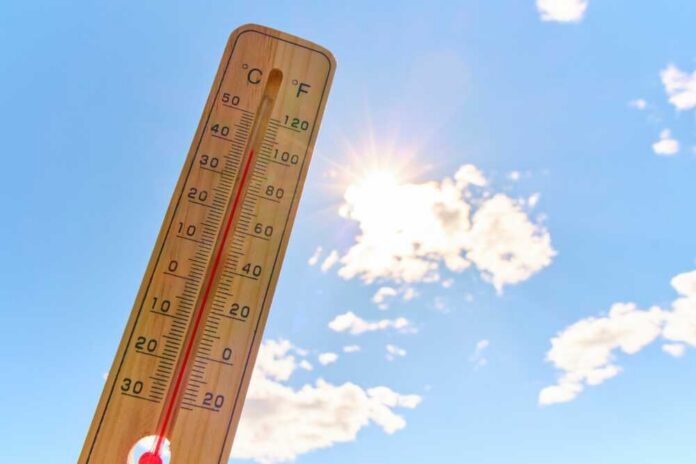
NOAA says July 2026 did more than get hot, as it became the hottest month ever recorded in the contiguous United States.
Quick Take
- NOAA put the Lower 48 average at 76.89 degrees Fahrenheit, which beat the old record.
- The agency said July 2026 was both the warmest July and the warmest month in its 132-year record.
- Nighttime heat was a major part of the record, not just daytime highs.
- Multiple outlets reported the same NOAA finding, using the same basic numbers.
NOAA’s Record Call
The National Oceanic and Atmospheric Administration said July 2026 averaged 76.9 degrees across the contiguous United States and set a new monthly record.
The agency’s monthly climate summary said the month was 0.1 to 0.2 degrees warmer than the previous benchmark, which had been July 1936 and July 2012. That small edge still mattered. NOAA treated it as a clean break, not a tie.
That detail gives the story its sharpest edge. This was not a vague “about as hot as before” month. NOAA’s report said July 2026 was the warmest July and the warmest month of any kind in the 132-year record. The agency also said the monthly average for the contiguous United States stood 3.3 degrees above the 20th-century average.
Why the Heat Stood Out
The record was not driven only by afternoon heat. NOAA said overnight minimum temperatures averaged 64.2 degrees, setting a separate record for the warmest minimum temperatures.
PBS reported that nighttime lows beat the old mark by 0.7 degrees, which matters because hot nights give people, crops, and power grids less recovery time. That is one reason this month felt so relentless.
Other reporting matched NOAA’s conclusion. CNN, Yahoo, Axios, the Associated Press report carried by PBS, and Phys.org all said July 2026 was the hottest month on record for the contiguous United States.
Those stories also used the same core figure, 76.9 degrees, which strengthens confidence that the public reporting reflected the same NOAA release.
How the Record Fits the Bigger Pattern
NOAA’s summary said the average temperature for the contiguous United States was 3.3 degrees above the 20th-century average, and it described the month as the warmest July and the warmest month in the agency’s 132-year record.
Phys.org added that heat waves affected the 48 states, excluding Alaska, Hawaii, and overseas territories, and that the result broke July 1936’s mark. That framing matches a nationwide heat event, not a local spike.
Contiguous US breaks its record for hottest month ever, NOAA says https://t.co/OKy29BYpjZ
— KGET 17 News (@KGETnews) August 11, 2026
There was one small wrinkle in the reporting trail. Some stories in late July described the record as still pending, before the final NOAA monthly release.
That is normal for climate records, which often move from strong early signals to final confirmation once the month closes. By August 10, NOAA’s own summary said the result was in.
What Made This Month Easy to Miss and Hard to Ignore
The numbers were tight enough to invite confusion. Some reports emphasized the old July 1936 record, while others noted that July 2012 had also been a benchmark for the warmest July before 2026.
The difference is simple once you separate the categories. July 2026 was not just the warmest July. It was also the warmest month overall in the contiguous U.S. record.
That is why this story landed the way it did. A record can look modest when the gap is only a tenth of a degree. But NOAA’s report made the case that the whole month crossed a line, and it did so across day and night temperatures alike.
Sources:
washingtontimes.com, pbs.org, climate.gov, lemonde.fr, washingtonexaminer.com, cbsnews.com, facebook.com, wsj.com, npr.org