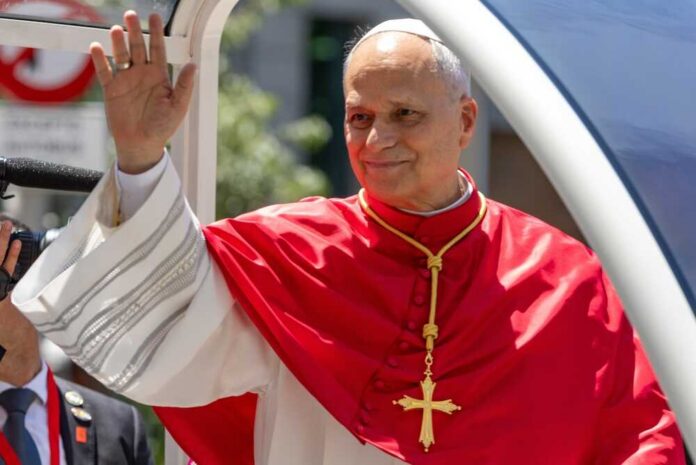
At Lourdes, a shrine famed for healing, Pope Leo XIV warned that helping someone die is not compassion but a moral error.
Story Snapshot
- Pope Leo XIV condemned assisted dying as “false compassion” during a Mass at Lourdes.
- He told a crowd of pilgrims and the sick that law and morality are not the same.
- He urged care for the suffering, not the elimination of the sufferer.
- The remarks land as France advances end-of-life legalization amid strong public support.
What The Pope Said, Where He Said It, And Why It Hit Hard
Pope Leo XIV spoke at Lourdes on Sunday to a vast crowd, many in wheelchairs. He said the dignity of every person does not fade with age, illness, or pain, and called assisted dying “false compassion.”
He added, “What is legal is not necessarily moral,” drawing a sharp line between state rules and right and wrong. The location mattered. Lourdes is where the sick come for hope and care. That stage sharpened his case that mercy means presence, not a lethal dose.
Reports describe Leo urging the faithful to resist cultural pressure that measures life by utility or comfort. He said care teams exist to treat the person, not erase the person.
That message fits long Catholic teaching that life has God-given worth from conception to natural death. America Magazine quoted Leo telling health workers to “care for a suffering person, not to eliminate that person,” and declaring that no one may decide the life of an embryo or older people.
Pope Leo XIV criticized the legalization of medically assisted dying, calling it immoral and an example of "false compassion" during a visit on Sunday to Lourdes, the Catholic shrine in France associated with miraculous cures of the sick.
https://t.co/RKJ7axZh2A— CBS News (@CBSNews) September 27, 2026
The French Policy Backdrop Raises The Stakes
France’s lower house backed an assisted-dying bill this summer after years of debate. Surveys have shown strong support for allowing some form of assisted death. A Reuters brief cited an Ifop poll showing approval in the eighties, a level that shapes lawmakers’ risk calculus.
The pope’s sermon confronted that tide, not with technical legal points, but with a plain claim: a good society shields the most fragile at the edge of life, even when it is costly.
Medical voices in France are not one note, despite broad public backing. Palliative care professionals have warned that changing the law could blur the line between comfort care and killing. A study published in a British medical journal reported that most palliative care stakeholders opposed legal change.
That split highlights the core policy challenge: how to expand relief without pressuring the weak. Leo’s framing echoes that caution and centers the patient’s dignity over convenience.
Why Lourdes, And Why The Words Landed The Way They Did
Lourdes draws the sick first. Wheelchairs roll to the front. Volunteers serve those in pain. By speaking there, the pope put his case in living color. He did not argue abstract theory. He pointed to people who suffer and still deserve full love, time, and resources. That is not only a Catholic claim.
It tracks a broader conservative instinct: measure a culture by how it treats the least powerful, not by how fast it solves hard problems by ending lives.
Leo’s line that “what is legal is not necessarily moral” also met a moment of fast lawmaking. Law and policy move by votes and polls. Conscience moves by duty and first principles. When these collide, societies face hard edges.
The pope answered that tension by asking lawmakers and families to draw bright lines around life. That request calls for better hospice, more home care support, and a culture that stays with the dying to the end.
How His Appeal Fits The Larger European Pattern
Across Europe, end-of-life rules changed step by step, pushed by claims of autonomy and regulated mercy. Opponents argue that laws can drift, and safeguards can erode; France now stands at that crossroads.
The pope’s talk did not offer new doctrine, but it supplied a vivid scene and a stark phrase that will echo in parliament and clinics. He urged citizens to choose care over killing, even under pressure to cut costs or meet demands for control.
Pope Leo XIV criticized the legalization of medically assisted dying, calling it immoral and an example of "false compassion" during a visit on Sunday to Lourdes, the Catholic shrine in France associated with miraculous cures of the sick.
https://t.co/RKJ7axZh2A— CBS News (@CBSNews) September 27, 2026
One caveat: most accounts come from wire services and Catholic outlets, which quoted key lines but did not include a full Vatican transcript in the coverage set. Even so, the reported words align with long-standing church teaching and recent papal speeches.
The core facts are clear: at Lourdes, before a large and frail crowd, Leo called assisted dying “false compassion,” and he asked France to hold the moral line while doubling down on real care.
Sources:
abcnews.com, americamagazine.org, 2news.com, audacy.com, reuters.com