
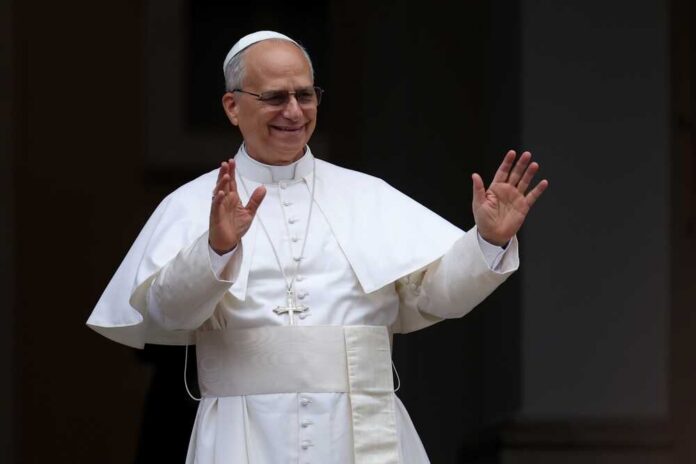
Pope Leo XIV’s first Easter message to the world conspicuously avoided naming the U.S.-Israeli war with Iran or Russia’s campaign in Ukraine, raising questions about diplomatic caution even as American troops remain engaged in the second month of conflict.
Story Snapshot
- First U.S.-born pope delivers inaugural Easter Mass amid multiple conflicts involving American forces
- Pope Leo XIV called for peace and nonviolence, but did not specifically name ongoing wars in the traditional Urbi et Orbi blessing
- Easter Mass occurred during the second month of U.S.-Israeli military operations against Iran
- Israeli authorities restricted Christian religious ceremonies at the Church of the Holy Sepulcher due to conflict
First American Pope’s Restrained Easter Address
Pope Leo XIV celebrated his inaugural Easter Mass as pontiff on April 5, 2026, before crowds gathered in St. Peter’s Square, delivering a message emphasizing peace and nonviolence. The first American-born pope faced the delicate task of addressing global conflicts while U.S. forces remained actively engaged in military operations.
His Easter homily stated that “the power with which Christ rose is entirely nonviolent” and called for respectful relationships among individuals, families, and nations. However, the traditional Urbi et Orbi blessing notably refrained from specifically naming the U.S.-Israeli war on Iran or Russia’s ongoing Ukraine campaign.
In his traditional "Urbi et Orbi" blessing, Pope Leo XIV warned against complacency in the face of relentless violence https://t.co/SigeRdadrR
— DW News (@dwnews) April 5, 2026
Strategic Silence on American Military Involvement
The pope’s decision to avoid naming specific conflicts in his formal address represents a departure from the traditional papal role of cataloging the world’s crises during major holy day messages. Pope Leo XIV addressed “the violence of war that kills and destroys” and condemned “partisan selfishness” and “oppression of the poor” in general terms.
Yet the omission of specific conflicts is particularly notable given his American citizenship and the active involvement of U.S. forces in the Iranian conflict. This restraint suggests diplomatic considerations may be influencing Vatican messaging, even as the pope had previously expressed hope the war would end before Easter.
Religious Freedom Curtailed in Conflict Zones
The impact of ongoing conflicts extended directly to Christian worship, with Israeli authorities restricting traditional Palm Sunday ceremonies at the Church of the Holy Sepulchre. Police prevented Latin Patriarch Pierbattista Pizzaballa and other top religious leaders from celebrating services at the historic site due to missile attacks and public gathering restrictions.
These limitations on religious freedom underscore how security concerns in conflict zones directly threaten the ability of Christians to practice their faith. The restrictions represent a troubling precedent where government authorities determine when and how religious observances may occur, raising constitutional concerns about the primacy of religious liberty even during wartime.
On Palm Sunday, Pope Leo XIV had stated that God does not listen to the prayers of those who make war or cite God to justify violence. The pope has repeatedly called for a halt in hostilities across multiple conflicts.
His Easter message emphasized that true strength “brings peace to humanity” and fosters respectful relationships at every level of society. Leo urged the faithful to ensure “the Easter gifts of harmony and peace may grow and flourish everywhere and always throughout the world.”
Questions About Papal Neutrality During American-Led Conflict
The first U.S.-born pope’s handling of his inaugural Easter message reveals the complex dynamics of maintaining papal moral authority while navigating political sensitivities. Traditional papal Easter addresses have historically served as summaries of global concerns and crises, making the absence of specific conflict naming a noticeable departure.
With American forces in the second month of operations against Iran alongside Israeli allies, Pope Leo XIV faces unique pressures that previous pontiffs did not encounter.
The emphasis on nonviolence and common good establishes his papacy’s tone on global conflict, yet the carefully calibrated language raises legitimate questions about whether diplomatic considerations now outweigh the prophetic voice that conservative Christians expect from religious leaders when confronting the realities of war and peace.
Sources:
Photos show Pope Leo’s first Easter Mass as pontiff – Crux Now
Pope Leo calls for hope amid conflicts in first Easter – CBS News