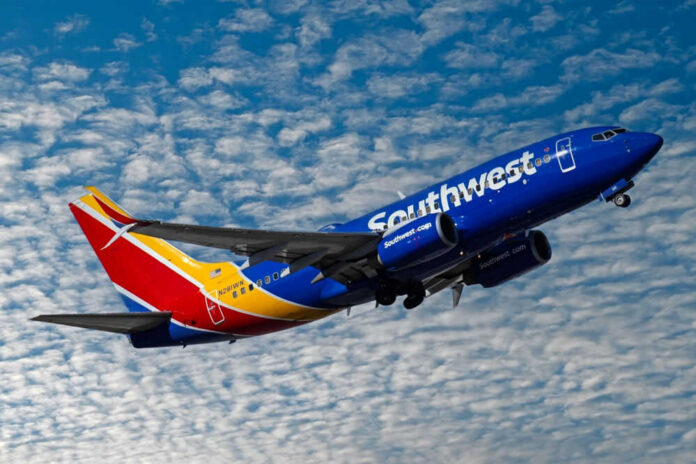
Southwest Airlines’ retreat from two major U.S. airports exposes how federal regulations and fortress hub monopolies are squeezing out competition and leaving American travelers with fewer low-cost options.
Story Snapshot
- Southwest Airlines will completely exit Chicago O’Hare and Washington Dulles airports effective June 4, 2026, ending all service at these major hubs
- FAA-imposed flight caps at congested O’Hare Airport drove Southwest’s decision, demonstrating regulatory barriers to competitive air service
- Passengers lose access to Southwest’s affordable fares at these airports as United and American Airlines consolidate fortress hub dominance
- Southwest redirects resources to secondary airports and launches 31 new routes, prioritizing profitability over competing with legacy carriers
Strategic Retreat from Fortress Hubs
Southwest Airlines announced its complete withdrawal from Chicago O’Hare International Airport and Washington Dulles International Airport, effective June 4.
The decision abandons approximately 15 markets served from O’Hare and represents a full reversal of Southwest’s 2021 expansion strategy into major airline hubs.
All flights booked after June 3 are automatically canceled, forcing passengers to rebook through alternative airports or seek refunds within 14 days. Southwest maintained a 40-year presence at Chicago Midway but lasted only five years at O’Hare before retreating.
Southwest Airlines ending service at Chicago O'Hare, Washington Dulles airports https://t.co/RxlHbKpzE8 pic.twitter.com/y2YVUQRzGn
— New York Post (@nypost) March 15, 2026
FAA Regulations and Competitive Barriers
The Federal Aviation Administration imposed new flight caps at Chicago O’Hare to manage congestion, directly undermining Southwest’s operational viability at the airport.
These regulatory restrictions gave United Airlines and American Airlines—the dominant carriers controlling O’Hare—a distinct advantage over Southwest’s smaller operation.
Aviation analysts confirm that Southwest’s reference to “challenging” operations at O’Hare primarily reflects profitability concerns, not operational difficulties.
The FAA’s capacity management approach essentially protects legacy carrier monopolies at major hubs while penalizing airlines attempting to introduce competition and lower fares for consumers.
Monopoly Consolidation Threatens Consumer Choice
Southwest’s exit reinforces the fortress-hub model, in which dominant carriers maintain strangleholds at major airports, limiting consumer choice and competitive pricing.
United and American Airlines now face reduced pressure at O’Hare and Dulles, potentially leading to higher airfares for travelers who lose access to Southwest’s traditionally lower prices. This market consolidation follows a pattern—Southwest exited Houston Intercontinental Airport in 2024 under similar circumstances.
The trend demonstrates how established carriers leverage their dominant positions to squeeze out competition, leaving passengers with fewer affordable options and less service flexibility at major transportation hubs.
Impact on Travelers and Regional Service
Passengers accustomed to Southwest’s low-cost service at O’Hare and Dulles must now travel to secondary airports, such as Chicago Midway, Baltimore-Washington International, or Reagan National, to access Southwest flights.
This creates inconvenience for travelers and potentially reduces access to air service for communities relying on these major hubs. Southwest employees at the affected airports face displacement, though the airline offers internal position bidding opportunities.
While Southwest simultaneously announced a 31-route expansion into frontier markets, including Anchorage, St. Maarten, and San Jose, Costa Rica, the strategic shift prioritizes profitability over maintaining competitive presence at major hubs where travelers most need affordable alternatives.
Southwest Airlines to end flights at 2 major airports https://t.co/xrXLttF8MU
— FOX Business (@FoxBusiness) March 16, 2026
The consolidation of airline service at fortress hubs represents a troubling trend for American consumers who benefit from competitive markets and diverse carrier options.
Federal regulatory policies that impose flight caps without addressing underlying infrastructure limitations effectively protect monopolistic practices rather than promoting genuine competition.
As Southwest retreats to secondary airports, travelers in major metropolitan areas face fewer choices and potentially higher costs—a predictable outcome when government intervention distorts free-market dynamics and entrenched carriers exploit regulatory barriers to maintain dominant positions.
Sources:
Southwest Airlines to end flights at two major US airports this summer – WBZ NewsRadio
Southwest is officially leaving two major US airports – Parade
Southwest exits two airports – Airline Geeks
Southwest Airlines to end flights at 2 major airports – Fox Business
Southwest Airlines ends Chicago O’Hare flights – One Mile at a Time