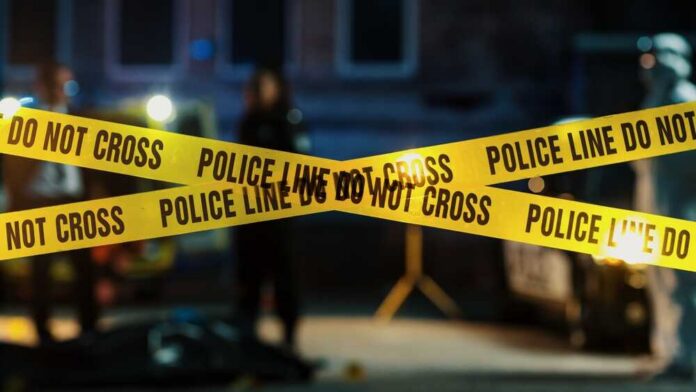
On a warm summer night meant for dancing, two men lay dead on St. Clair Avenue while thousands ran for their lives.
Story Snapshot
- Gunfire at Toronto’s Salsa on St. Clair festival killed two people and wounded several others in minutes.
- Police say this was an exchange of gunfire between individuals, not a classic “active shooter” rampage.
- Two guns and three separate crime scenes now sit at the center of a complex investigation.
- Shock, political outrage, and fear are shaping the story faster than the facts can catch up.
How a summer street festival turned into a killing ground
Toronto’s Salsa on St. Clair festival was packed with about 13,000 people when shots rang out around 8:12 p.m. on Saturday. Families, couples, and seniors filled the closed-off street, listening to music and eating grilled food, when gunfire cut through the noise.
Police and paramedics rushed in and found multiple victims down on the pavement. Two men were pronounced dead at the scene, and several others were rushed to hospital with gunshot wounds.
Chaos spread in seconds. Phone videos show crowds sprinting away, ducking behind vendor tents and parked cars, convinced an active shooter was hunting people up and down St. Clair. Early alerts and media headlines repeated the phrase “active shooter,” telling people to stay inside and away from windows.
A festival billed as Canada’s largest Latin street celebration ended with crime tape, sirens, and abandoned folding chairs scattered on the asphalt.
What police say really happened on St. Clair
Hours later, Toronto Police Deputy Chief Frank Barredo stood before cameras and said the picture had changed. This was not, he stressed, an active shooter in the classic sense of someone roaming and firing at random.
Investigators now believe there was an exchange of gunfire between individuals targeting each other, right in the middle of the festival crowds. Officers recovered two firearms from the scene, which supports the theory of at least two shooters trading shots.
Police also revealed there are three separate but connected crime scenes along St. Clair Avenue, suggesting movement and multiple firing points rather than one fixed ambush. That detail matters.
It fits more with a running gun battle between rivals than a lone attacker mowing people down in one spot. Yet, Barredo also warned that the investigation is still in early stages and will be “complex,” given the size of the crowd and the number of witnesses.
2 killed in mass shooting at Canada’s largest Latin street festival in Toronto, police say https://t.co/PaToGXGBHa
— ABC 27 (@abc27) July 12, 2026
The unanswered questions police still cannot solve
For all the firm talk at the podium, there is still a long list of things nobody can answer yet. No one is in custody.
Police have not confirmed how many suspects they believe were involved, or whether the two men who died were shooters, targets, or bystanders caught in the crossfire. Detectives also have not shared any motive. They have said only that the gunfire was between individuals, not at random festival goers as a group.
That gap between what police can say and what people want to know is now driving public doubt. Some media outlets say four victims were wounded, others report six people hit by bullets and one more injured while fleeing.
When basic numbers seem fuzzy, people start to wonder what else might shift. Yet this is common in large crime scenes: early counts often change as hospitals update records and police separate gunshot wounds from other injuries.
Gun violence, public fear, and the battle over the narrative
Political leaders jumped in quickly with strong language. Ontario Premier Doug Ford condemned the “senseless violence” that claimed two lives and injured others.
Toronto leaders called it “gangster violence” and a “disgusting, reckless act,” hammering the moral outrage but offering no new facts. That framing lines up with a tough-on-crime, law-and-order view: criminals with guns turning a family event into a war zone is exactly what many voters fear most.
The CN Tower dimmed its lights Sunday evening in honour of the victims of the Salsa on St. Clair shootinghttps://t.co/DSxp1n7ubO
Sources : CN Tower – CityNews Toronto#Toronto #CNTower #SalsaOnStClair #StClairWest #TorontoStrong #CommunitySupport #TorontoNews #PublicSafety pic.twitter.com/GCnXbfC2iu
— The Ontario Post (@TheOntarioPostM) July 13, 2026
From a common-sense lens, two things can be true at once. First, police likely did the right thing by treating this as an active shooter at the start. When bullets fly in a crowd, you warn people for the worst-case scenario.
Second, once evidence pointed to a targeted shootout, officials had a duty to say so clearly and quickly. Precision matters. People deserve the truth, not spin, whether it supports a dramatic headline or not.
What comes next for the investigation and the community
Detectives now face a slow, detail-heavy grind. Two recovered guns will go to forensic labs for ballistics testing, which can show if both weapons were fired and how many rounds each sent into the crowd.
Shell casings from the three crime scenes can help map who fired from where, and whether more than two shooters were involved. That kind of evidence has linked weapons in other Toronto attacks to larger gun-for-hire and gang networks in the region.
Police are also asking festival goers to turn over phone videos and photos that might capture flashes, shooters, or fleeing suspects. With thousands of people on site, that digital trail could be massive.
The flip side is that every week without arrests will deepen public doubt about whether the justice system can actually stop repeat shooters. The second day of the festival was cancelled, and residents now talk about feeling unsafe on a street that, for years, was known more for salsa steps than crime tape.
Sources:
apnews.com, youtube.com, globalnews.ca, facebook.com, npr.org, cbc.ca, ctvnews.ca