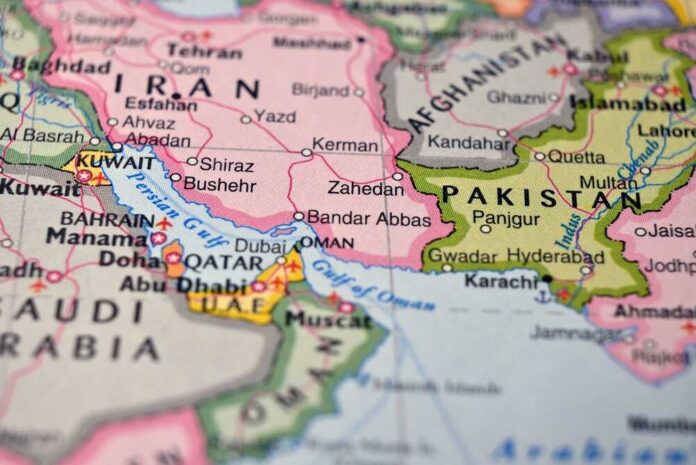
Trump’s promise to avoid new wars is colliding with reality as Fort Bragg’s 82nd Airborne prepares to head back into the Middle East with final orders pending.
Quick Take
- U.S. officials say fewer than 1,500 soldiers from the 82nd Airborne Division are preparing to deploy from Fort Bragg to the Middle East.
- The deployment is part of a wider regional buildup that also includes Marines and sailors aboard the USS Boxer and accompanying warships.
- The Trump administration publicly cited “productive” Iran talks, while Iran publicly denied that any talks had occurred.
- Officials have not disclosed the destination, the mission’s duration, or specific operational objectives.
Fort Bragg’s rapid-response force is being tapped again
U.S. military elements from the 82nd Airborne Division at Fort Bragg, North Carolina, are preparing for deployment to the Middle East in the coming days, according to reporting based on sources familiar with the matter.
One report put the number at less than 1,500 troops, a figure that matters because the division’s Immediate Response Force is larger than that. Final orders were still being developed as the reports were published.
The mechanics of this movement highlight what the 82nd is built to do. The division maintains a brigade-sized rapid-response force designed to deploy on short notice, and it is routinely used when Washington wants speed without immediately signaling a full-scale mobilization.
At the same time, a “measured” deployment can still become a long commitment once forces arrive, especially when the destination and mission parameters are not public.
A broader Middle East buildup is underway, not a stand-alone move
The 82nd Airborne deployment is not happening in a vacuum. Reuters reported that the troop movement supplements an earlier deployment of thousands of Marines and sailors aboard the USS Boxer amphibious assault ship, alongside its Marine Expeditionary Unit and accompanying warships.
That multi-service posture suggests a coordinated buildup designed to provide options: deterrence, force protection, evacuation capability, or a ramp-up if the situation deteriorates quickly.
At least 1,000 troops from the 82nd Airborne Division will be sent to the Middle East in the coming days, according to reports. https://t.co/QxQTvB9bzT
— WUSA9 (@wusa9) March 25, 2026
For Americans watching costs climb at home, the immediate concern is how “limited” deployments stack into open-ended obligations. The available reporting does not specify a target country, rules of engagement, or how long troops might stay. Without those basics, the public is left to infer intent from force packages and timelines.
That uncertainty lands hard with voters who remember past “temporary” deployments that expanded under both parties.
Diplomacy signals are conflicting, feeding mistrust across the base
The timing adds another layer of confusion. Reuters reported the deployment news came as President Trump postponed threats to bomb Iranian power plants after describing “productive” talks with Iran on Truth Social. Iran then denied that any talks occurred.
The result is a fog-of-war problem before the public even knows the mission: Americans are being asked to trust that escalation is calibrated while both sides dispute whether diplomacy is real.
This split-screen—military buildup on one side and contested diplomacy on the other—helps explain why MAGA supporters are divided in 2026. Some prioritize strength and deterrence, arguing that visible readiness prevents a larger war.
Others hear “productive talks” paired with troop movements and recognize the familiar pattern of mixed messaging that has preceded escalation in the past. The reporting available does not independently verify talks, leaving the claim unresolved.
What’s known, what’s not, and why oversight matters
What is known is narrow but important: the deployment is imminent once final orders are issued, it includes ground forces and a headquarters element, and it is tied to a wider regional posture.
What is not known includes the specific destination, the precise mission set, the duration, and the end state. Those missing facts are exactly where constitutional accountability should live, because Congress holds oversight authority even when speed is required.
At least 1,000 US troops from 82nd Airborne set to deploy to Mideast, AP sources say https://t.co/LysokDxDQE
— Michael Chapman (@MWChapman) March 25, 2026
For a conservative audience exhausted by inflation, high energy costs, and the sense that elites never pay for foreign-policy mistakes, the key question is simple: what is the defined objective, and what is the defined off-ramp?
The current reporting does not provide that clarity. Until it does, skepticism is rational—not anti-troop, not anti-strength, but pro-accountability for decisions that can cost American lives and long-term national power.
Sources:
Fort Bragg soldiers set to deploy to Middle East, according ABC News
US expected to send thousands of soldiers to Middle East, sources say