

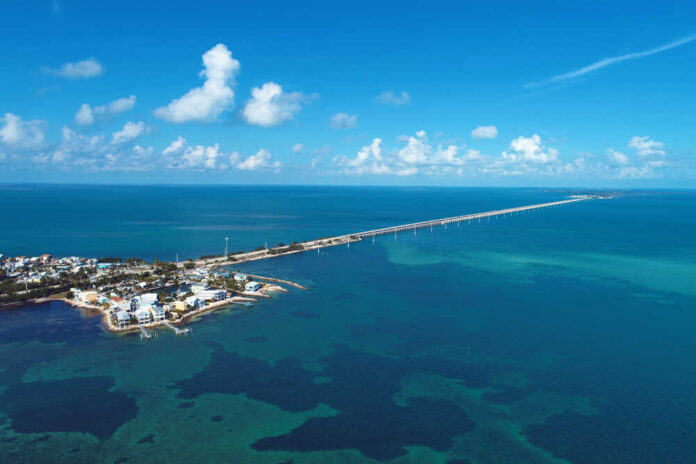
The team reached Nikumaroro, set up camp, and proved the lagoon’s “plane” was not Earhart’s.
Story Snapshot
- A 17-person team landed on Nikumaroro and began on-site work on October 13, 2026.
- The search targeted a single anomaly in the lagoon seen in 1938 photos and 2020 satellite images.
- Purdue University, Purdue Research Foundation, and the Archaeological Legacy Institute led the mission.
- The anomaly was ruled out as Earhart’s Lockheed Electra; no plane was found.
A precise hunt reaches the lagoon and gets to work
Purdue University reported the 17-person Taraia Object expedition reached Nikumaroro after a sea voyage and began setting up gear on October 13, 2026. The crew moved ashore after arriving the prior evening and organized for a focused inspection of a defined target in the atoll’s lagoon. This was not a blind sweep of reef and surf. It was a pin-drop mission. The team planned around a single object, aiming to answer a yes-or-no question that had lingered for years.
The project brought an organized roster and clear roles. Purdue University and Purdue Research Foundation partnered with the Archaeological Legacy Institute, led by Rick Pettigrew. Personnel included maritime archaeologists from RECON Offshore, a medic, a safety officer, and a representative from Kiribati’s Ministry of Line and Phoenix Islands Development. Named leadership and defined scopes matter in fieldwork. They set standards for data, safety, and local coordination, which are table stakes for serious science and basic respect for the host nation.
The “Taraia Object” and why it drew serious attention
The team homed in on a visual anomaly in Nikumaroro’s lagoon nicknamed the Taraia Object. Researchers first flagged it in 2020 satellite imagery, then traced its appearance back to aerial photographs from 1938. That timeline gave the feature a hook: it seemed to persist in roughly the same spot across decades. Supporters of the Nikumaroro hypothesis argue that Earhart and navigator Fred Noonan landed and lived on the island for a time after missing Howland Island, which put any lagoon feature in a new light.
This search aligned with years of work by Pettigrew, the Archaeological Legacy Institute, and contributors linked to The International Group for Historic Aircraft Recovery. The choice to target one object reflected a shift from broad speculation to a testable claim: go to the mark and see what is there. That approach respects common sense and conservative prudence. Define the scope. Test the claim. Report the result. Then let the chips fall where the evidence says they should.
What the team found, and what it means
The expedition concluded the lagoon target was not Amelia Earhart’s Lockheed Electra 10-E. CBS reported that the feature did not turn out to be the missing plane, and the inspection produced no conclusive aircraft evidence. That outcome matters. It closes the book on this specific object without closing the entire Nikumaroro chapter. A negative result is still a result. It cuts away one tempting path and keeps the hunt honest about what remains unproven.
🚨 AMELIA EARHART EXPEDITION ENDS IN DISAPPOINTMENT — MYSTERIOUS “PLANE WRECKAGE” TURNS OUT TO BE TREES
Nearly 90 years after Amelia Earhart vanished over the Pacific Ocean, a Purdue University-backed expedition to a remote island has ruled out another promising clue.
▪️ 17…
— MDBayNews (@MDBayNews) October 19, 2026
The mission still counts as a professional success in process. The crew navigated to one of the most remote atolls on Earth, staged operations, and answered the key question the anomaly posed. Purdue’s step-by-step updates documented the sail, the landing, the on-shore setup, and the start of fieldwork. That kind of transparency, matched with a clear no on the object, models how to test a high-profile claim without theatrics. It also tamps down runaway myths before they harden.
Where the search sensibly goes next
The broader Nikumaroro hypothesis remains a separate issue from this one object. Future work that earns trust will share raw imagery, map data, and survey methods so others can check the math. A focused next step would compare the 1938 aerials with modern data, adjusting for tides, shadows, vegetation, and angle of view. If any recoverable material turns up, metallurgical testing against Lockheed Electra 10-E standards would be decisive, not suggestive.
Big mysteries invite big claims. Real answers come from small, correct moves repeated over time. This team made one of those moves. They sailed, they searched, and they told the truth about what they found. That is how you respect Earhart’s legacy and the public’s trust. Keep the mission narrow, the records open, and the conclusions as firm as the facts allow. The lagoon said no. The island still has other places to ask.