

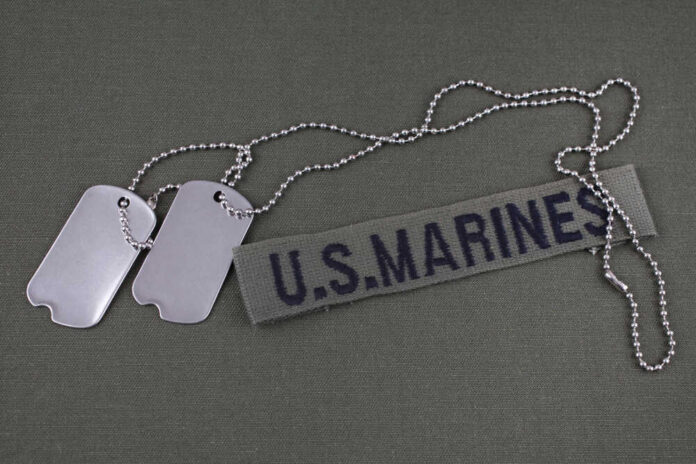
A Japanese prosecutor’s office says a U.S. Marine strangled a 39-year-old woman with a phone cord, then robbed her, in a Naha hotel room.
Story Snapshot
- Lance Cpl. Devin Jacob Ballard, 20, was indicted October 25 on charges of robbery causing death in the killing of Anna Yagi, 39.
- Prosecutors allege Ballard wrapped a telephone handset cord around Yagi’s neck “with intent to kill” and stole her backpack and wallet.
- The alleged crime happened in a Naha hotel room in early October, placing it in Okinawa’s capital city.
- Ballard, stationed at Marine Corps Air Station Futenma, denied the allegations when questioned by police after his arrest.
- The case has reignited long-standing Okinawan anger over crimes tied to the heavy U.S. military presence on the island.
What The Indictment Actually Alleges
The Naha Public Prosecutors Office issued a formal indictment against Ballard on October 25, charging him with robbery causing death. According to the document, Ballard wrapped a telephone handset cord around Anna Yagi’s neck early on October 3 “with intent to kill,” strangled her, and then took her backpack, which held her wallet and other belongings. Japanese public broadcaster NHK confirmed the indictment through the Naha District Public Prosecutors Office.
Reporting based on the indictment places the alleged attack inside a hotel room in Naha, Okinawa’s capital. Yagi was found dead last month, and investigators moved to arrest Ballard soon after. He is stationed at Marine Corps Air Station Futenma, one of the most contested U.S. bases on the island, which has sat at the center of relocation disputes for decades.
Ballard’s Response And The Path To Trial
Ballard denied the allegations when Okinawa Prefectural Police first questioned him after his arrest, reportedly telling investigators, “I don’t know anything about it.” Later questioning produced statements that investigators viewed as partially suggesting involvement, though the full context of those statements has not been detailed publicly. An indictment is a formal accusation, not a finding of guilt, and the case now moves toward trial in Japan’s court system.
Japan’s criminal justice process differs sharply from the American system. Prosecutors there rarely bring charges unless they are confident of conviction, and conviction rates in Japanese courts run extremely high once an indictment is filed. That reality means this case carries serious weight for Ballard, the Marine Corps, and the broader U.S. military footprint in Okinawa, regardless of how the facts are ultimately proven in court.
Why This Case Reopens An Old Wound In Okinawa
Okinawa hosts roughly 70 percent of all U.S. military facilities in Japan, a concentration that has bred decades of local resentment. Academic research shows Okinawan residents hold notably more negative views of the U.S. military presence than Japanese citizens elsewhere, even when they otherwise support the broader U.S.-Japan alliance. Crimes involving American service members do not register as isolated incidents there. They land inside a political environment already strained by base politics and unresolved relocation fights.
That history includes documented patterns of serious offenses. One study citing Okinawa Prefectural Police data found that U.S. military members, their dependents, and employees committed serious offenses, including murder, robbery, arson, and rape, at a rate 2.3 times higher than the local population between 2006 and 2015. Just last year, a U.S. Marine was sentenced to seven years in a Japanese prison for sexually assaulting a woman on Okinawa, a case that also triggered public anger and renewed safety concerns.
US Marine indicted in alleged Okinawa robbery homicide – ABC News – https://t.co/xwwkbqz7nE
— Private Officer (@privateofficer) October 26, 2026
None of that broader pattern proves anything about what happened to Anna Yagi specifically, and the indictment against Ballard must still be tested in a Japanese courtroom. But the timing and setting guarantee this case will be watched closely, both for what it says about accountability for American troops overseas and for how it shapes the always-tense relationship between U.S. forces and the Okinawan communities that host them.
Sources:
us.cnn.com, rmb.reuters.com, stripes.com, cbsnews.com, straitstimes.com, academic.oup.com, suntory.com